

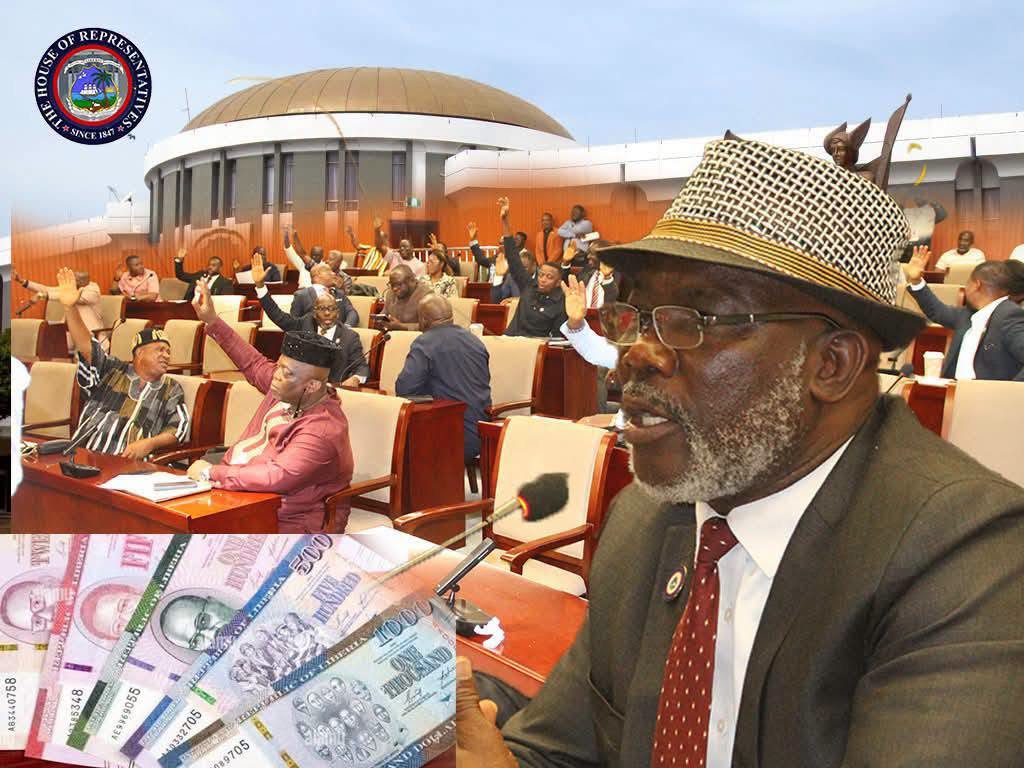
In a dramatic move that could reshape Liberia’s monetary landscape ahead of the 2029 elections, the House of Representatives has authorized the Central Bank of Liberia (CBL) to print up to LRD79 billion in new banknotes. The decision, taken during the body’s 18th Day Sitting, follows weeks of intense hearings, consultations, and public debate that drew in the Executive Branch, the Ministry of Finance and Development Planning, technical experts, private sector stakeholders, and ordinary citizens.
The House Committee on Banking, Currency and Insurance, presenting its report to Plenary, declared that the measure was not a reckless injection of cash but a calculated step to restore confidence in the Liberian dollar. The Committee emphasized that the printing exercise is designed to replace mutilated notes, strengthen the integrity of the national currency, and ensure the efficiency of Liberia’s payment system.
Unlike previous phased approvals, lawmakers adopted what they described as a “stronger legislative approach” by granting the full authorization in one sweeping resolution. This bold move, they argued, eliminates the need for repeated legislative approvals, reduces procurement and production costs, and provides certainty to the Central Bank and international currency printers. The CBL will retain discretion over the sequencing and timing of production, guided by macroeconomic conditions, fiscal policy, and replacement needs.
The Committee’s report underscored that the authorization does not equate to an immediate surge in money supply. “The Legislature is approving the printing of the entire quantity requested by the Central Bank of Liberia. However, the actual production schedule, shipment, storage, infusion, and replacement of existing banknotes shall be undertaken by the Central Bank in accordance with prevailing macroeconomic conditions and prudent monetary policy,” the report stated.
To reassure skeptics, lawmakers outlined a series of safeguards: Strict replacement mandate — approval applies only to printing and replacing existing Liberian dollar notes, controlled infusion — any new currency entering circulation must comply with the CBL Act and monetary policy, quarterly reporting — the Central Bank must submit regular implementation updates to the Legislature, legislative oversight — the House Committee on Banking, Currency and Insurance will monitor the process throughout, and the Committee concluded that the majority of the proposed banknotes will replace mutilated notes already in circulation, not expand the money supply. It stressed that the CBL has a statutory duty to maintain an adequate supply of clean, secure, and serviceable currency, and that newly printed notes may remain in vaults until required.
Lawmakers further argued that granting full authorization now will streamline procurement, transportation, insurance, and storage, avoiding costly delays associated with piecemeal approvals. The move, they said, demonstrates responsible legislative oversight while preserving the Central Bank’s independence in implementing monetary policy.
Following heated debate, the Plenary voted in favor of the resolution, effectively greenlighting the printing exercise. The instrument has since been transmitted to the Liberian Senate for concurrence, in keeping with legislative procedure.
As Liberia edges closer to the 2029 elections, the decision carries both economic and political weight. Supporters hail it as a pragmatic step to stabilize the currency and restore public trust, while critics warn of potential risks if safeguards are not rigorously enforced. For now, the spotlight shifts to the Senate, where the fate of the LRD79 billion printing plan will be sealed.

