

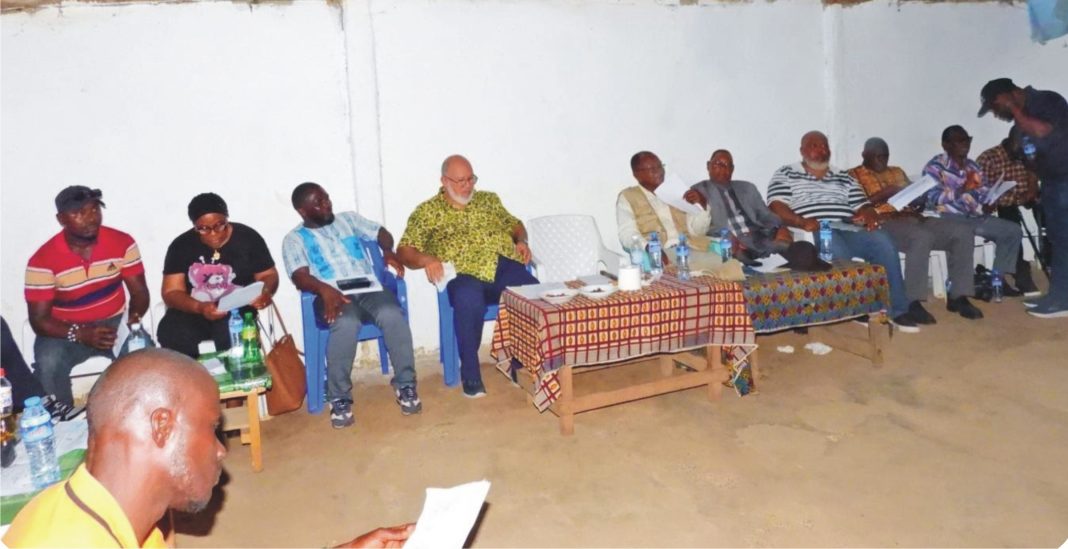
The Forestry Development Authority (FDA) convened a high-level stakeholder engagement in Gaye’s Town to deliberate on the proposed KWA National Park — a conservation initiative poised to reshape Liberia’s environmental governance and community livelihoods.
The one-day meeting brought together government officials, legislators, traditional leaders, civil society, and local residents in a rare show of collective dialogue. At stake: the future of 171,888 hectares of forestland, representing nearly one-third of the historic Krahn Bassa National Forest.
Deputy Managing Director for Conservation, Madam Nora G. Bowier, set the tone by stressing transparency and community participation. “No protected area can succeed without the voices of the people who live closest to it,” she declared, underscoring the FDA’s pledge to ensure that local communities remain active partners in the decision-making process.
Her remarks were echoed by governance consultant E. Ekema A. Witherspoon, who hailed the presence of senior officials and legislators as a sign of Liberia’s growing commitment to inclusive environmental governance.
Representative Jacob C. Debee II revisited concerns raised during earlier consultations in March, when residents feared losing farmland and forest resources vital to their survival. FDA officials countered that farming activities had already spilled into the proposed conservation zone, sparking boundary disputes.
Senator Thomas Yaya Nimley added historical weight, recalling surveys dating back to 1949 that earmarked the region for conservation. He warned that while biodiversity protection is essential, it must not come at the expense of rural livelihoods. “Sustainable conservation must walk hand in hand with community development,” he insisted.
To clarify misconceptions, FDA presented aerial maps and the 1953 Forest Act, showing that the Krahn Bassa National Forest was formally established in 1960. The proposed KWA National Park, they explained, would safeguard a critical portion of this landscape.
Delivering the keynote, FDA Managing Director Hon. Rudolph J. Merab, Snr. reaffirmed the Authority’s statutory mandate to protect Liberia’s forests for future generations. He urged residents to respect existing boundaries while consultations continue, warning against unauthorized farming and encroachment.
Merab raised alarm over reports of foreign nationals, particularly Burkinabé settlers, allegedly engaged in unsustainable cocoa farming under informal “40–60” sharecropping deals. He condemned such practices as accelerants of forest degradation and threats to Liberia’s conservation objectives. “We cannot afford to sacrifice our remaining forests to illegal occupation and reckless land use,” he declared.
After hours of deliberation, stakeholders reached a fragile consensus: both FDA and affected communities will respect current boundaries pending further consultations. They agreed to pursue additional engagements to investigate disputes, review historical records, and craft solutions that balance biodiversity protection with sustainable livelihoods.
The meeting concluded on a hopeful note, with participants reaffirming their commitment to peaceful dialogue and evidence-based decision-making.
Among those present were Senator Nimley, Representatives Jeremiah G. Sokan Snr., Marie G. Johnson, and Jacob C. Debee II, alongside county officials, civil society leaders, youth representatives, and technical experts from the FDA. Institutions including the Liberia Land Authority, Ministry of Justice, Ministry of Finance, and Liberia Refugees Repatriation and Resettlement Commission also lent their voices.
The Gaye’s Town engagement marks a pivotal moment in Liberia’s quest to reconcile conservation with rural development. The proposed KWA National Park promises to bolster biodiversity, strengthen climate resilience, and advance Liberia’s commitments under global accords such as the Convention on Biological Diversity and REDD+.
Yet the meeting also underscored a sobering truth: conservation cannot succeed without the trust and participation of the communities who depend on the forest. By fostering dialogue, respect, and collaboration, the FDA and its partners are laying the foundation for a participatory model that could redefine Liberia’s environmental future.

