

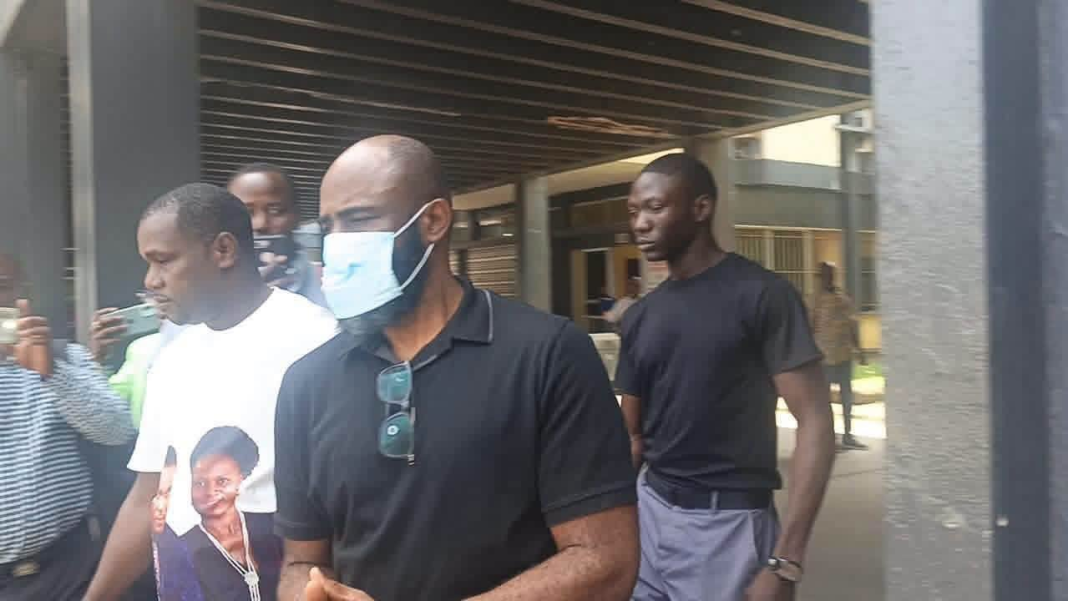
The Monrovia City Court has ruled that there is sufficient evidence to prosecute Paul Jamaal King and several co-defendants in the nation’s largest-ever cocaine trafficking case, binding them over to Criminal Court “C” for trial.
The ruling, delivered by Stipendiary Magistrate L. Ben Barco, follows a preliminary examination requested by King, who faces accusations of masterminding the attempted export of 237.6 kilograms of cocaine valued at more than US$19 million.
Prosecutors alleged King, identified as Operations Manager of Global Logistics Services (GLS), orchestrated the shipment of six boxes falsely declared as containing “Maggie cubes and lappers.” Hidden inside, investigators say, was a massive consignment of cocaine destined for England. The drugs were intercepted at Roberts International Airport on June 7, 2026, after screening equipment flagged suspicious contents.
Testimony from Liberia Drug Enforcement Agency (LDEA) Chief Investigator Colonel Moses L. Meah and Liberia National Police (LNP) Anti-Narcotics Superintendent Joseph M. Kaiffa painted King as the central figure in a sophisticated smuggling ring. Prosecutors presented documentary evidence including Air Way Bills, receipts, photographs, and witness statements to bolster their case.
King’s defense team challenged the credibility of the investigation, citing alleged procedural irregularities and referencing historical U.S. court decisions. But Magistrate Barco dismissed those arguments, ruling that foreign precedents were not controlling under Liberian law. He emphasized that a preliminary examination requires only probable cause — not proof beyond a reasonable doubt.
Finding that prosecutors had established reasonable grounds to believe King and his co-defendants committed the alleged offenses, the court ordered the case transferred to Criminal Court “C.” The defendants now face trial on multiple charges, including unlicensed exportation, importation, possession, sale, and trafficking of controlled substances, as well as criminal conspiracy, facilitation, and solicitation under Liberia’s Penal Law and the Drug Law of 2023.
The case has gripped public attention, raising urgent questions about airport security, institutional accountability, and Liberia’s capacity to combat transnational crime. Analysts warn that the trial will be a defining test of the country’s judicial system and its credibility in the global fight against narcotics trafficking.
As the scandal unfolds, the stakes remain high. With millions of dollars in illicit drugs at the center of the case and international partners watching closely, Liberia’s justice system faces a moment of reckoning.

