

By Sherman C. Seequeh
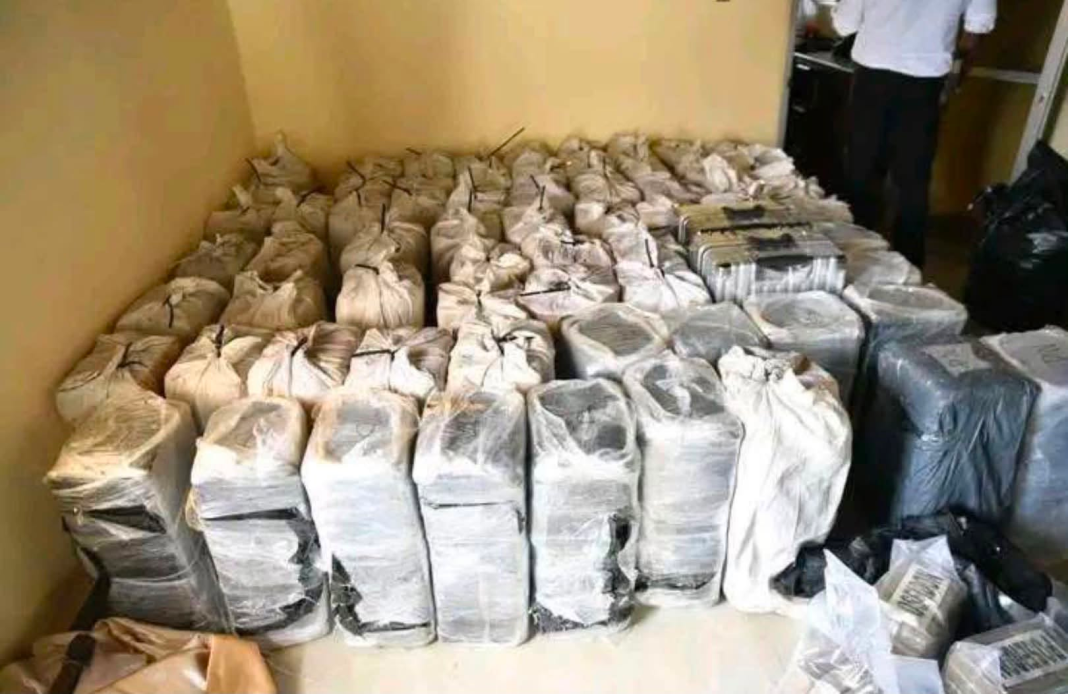
This week security officers entered a compound in Duazon with a court paper and came out carrying suitcases and boxes of cocaine. Two foreigners were arrested, one from Colombia and one from Spain. Government says the load could be worth as much as $50 million. Six weeks ago, 237.6 kilos of cocaine worth more than $19 million were caught at Roberts International Airport, hidden in boxes marked as Maggi cubes. Investigators say another load moved the same way in May. Three shipments. Three months. This is the government that told us it would close the door.
THEY ASKED FOR OUR VOTE ON THIS VERY THING
Let nobody rewrite the recent past. When this party was campaigning in 2023, drugs were one of its loudest issues. They stood on platforms across this country and told Liberians that the Weah government had let kush and hard drugs destroy our children while it looked away. Many Liberians believed them. Many voted for them for that reason among others. A mother who had lost a son to kush did not vote for a road or a budget line. She voted for somebody who said he would stop the drugs.
And the promises did not stop after the election. In January 2024, barely a week into the job, the President stood before the Legislature and declared drugs a public health emergency.
In August 2025, after thousands of Liberians marched in the streets demanding action, he announced a national anti-drug plan promising to seize traffickers’ assets, speed up drug cases, and review the performance of LDEA commanders. He said plainly that no rank, no title, no uniform and no connection would protect anybody caught in the drug business. After the airport seizure in June, he told the nation Liberia would not be a haven, a transit point or a warehouse for criminal networks.
Those are good words. Every one of them was said by this President, not by his critics. So it is by those same words that Liberians are now measuring him.
THE TRAFFIC IS NOT SLOWING. IT IS SPEEDING UP
Let us be fair and honest about the record, because dishonesty helps nobody. The largest single haul this country ever caught — 520 kilos worth about $100 million at the Freeport — came in October 2022, under the last government. Anybody who says the loads are simply bigger now will be answered with that fact.
But look at the pattern instead of the size, and the picture is worse, not better. Under the last government the big catches came years apart. Now they are coming weeks apart. A shipment in May. Another on June 8. Another in July. And the Police boss himself has told us the May and June loads used the same route and the same false description — meaning it was not three accidents but one operation running on a timetable. Traffickers do not send load after load into a country they are afraid of. They send load after load into a country where the last load went through.
AND STILL, NOBODY GOES TO JAIL
Here is the part that should trouble every Liberian. In October 2022 four men were arrested over the Freeport cocaine. In May 2023 the jury said not guilty. The court ordered government to return $200,000 it had seized from them. The men left the country immediately and have never been found. The Supreme Court upheld the acquittal. The American Ambassador said openly that he was troubled, because the evidence looked strong and still nobody was convicted.
That was the case this government pointed at when it was campaigning. So what has it done differently? In the June airport case, five people are charged, but the names were kept from the public for weeks. The Senate had to summon officials because their accounts did not match each other. A man previously imprisoned on drug charges is reported to have escaped custody. A small volunteer worker sits in court while the people described as principals are said to be outside the country. The opposition is now calling for an international investigation, and the sad truth is that many ordinary Liberians agree with them.
THE SILENCE IS THE REAL SCANDAL
A government that is genuinely fighting a drug network has no reason to hide anything from its own citizens. It names the suspects quickly. It publishes the court dates. It tells the country what was found, where it came from and who cleared it. It does not send officials to the Senate with three different versions of the same event.
What Liberians have received instead is drip, delay and correction. Announcements come late. Details come in pieces. Big names are hinted at and never confirmed. And every time the story goes quiet for a few weeks, the public draws the only conclusion available to it: that somebody is being protected. Government may not like that conclusion, but government created the conditions for it.
SIMPLE QUESTIONS THAT MUST BE ANSWERED
So let us ask plainly. How did such a load enter Liberia? Which port or airport, whose name was on the papers, who cleared it, and did anybody open the boxes or did they just stamp and pass? How did it travel by road to Duazon, and past whose checkpoints? Who owns that compound — not the tenant, not the caretaker, but the real owner?
Then the two foreigners. Who invited them here? Who signed for their visas? How many times had they come before, and how long did they stay? Did they register a business, and if so, which Liberians are their partners? Are they connected to the $19 million caught at the airport in June? And finally: will their money be frozen and their property seized, the way our own law already allows? Will the drugs be weighed, sealed and tested in front of witnesses, so that no lawyer can later say the evidence was mishandled — because in 2022 it was not the cocaine that failed, it was our own handling of it.
None of these questions is difficult. The answers are already sitting in government offices: immigration records, business registration, port papers, land records. If government will not answer, that silence is its own answer.
FOREIGNERS CANNOT DO THIS ALONE
Drug networks do not pick countries by accident. They look for a working port or airport, weak checking at that port, somebody inside customs or immigration or security who can be bought, and courts where a case can fall apart. A foreigner cannot bring those things in his bag. He buys them here, from somebody who has them to sell. That is why ownership is the real question. Liberians are not asking who carried the boxes. We are asking who made it safe to carry them.
WE ARREST THE POOR AND WHISPER ABOUT THE RICH
And notice who pays. When the person is poor, everything is loud — young men picked up in the ghetto, lined up, photographed, rushed to court. When the case touches a warehouse, a big company or somebody’s brother in office, everything becomes slow and quiet. The boy sleeping on the corner in Duala did not import anything. Somebody with a suit, a license and clearing papers brought it in. This is the same complaint this party made against the last government. Liberians did not vote for it to continue.
WHAT WOULD CHANGE OUR MINDS
This is not a call for the government to fail. Every Liberian has an interest in it succeeding, because the alternative is a country the cartels own. Two things would show us the promise is still alive. First, a special drug prosecution team that does not change every few months, with lawyers who will still be on the same file two years from now, and who will actually use the seizure powers already in our law. Second, foreign forensic partners standing there when drugs are weighed, sealed and tested, so no case dies again on a technicality.
And then simply publish things. Publish the immigration records. Publish who owns the Duazon property. Publish the business registrations and the court dates. Fund the national drug plan this government itself approved, because a plan that is approved and then starved of money is not a plan, it is an excuse. None of this requires new legislation. All of it requires a decision.
THE JUDGMENT LIBERIANS ARE MAKING
When people say “narco-state,” it is not just an insult. It describes a country where drug money has bought so many people inside government that government can no longer fight it. Liberia is not there yet. But no country arrives there in one day. It gets there through case after case opened with noise and closed with silence, and through what that teaches every young officer about where the real money is.
This government came to power partly by promising to stop this. Two and a half years later the shipments are arriving closer together, the arrests come after foreign or last-minute intelligence, the prosecutions crawl, and the public is told less than it deserves. That is not the opposition talking. That is what Liberians are saying in the markets and on the radio, and much of it is disappointment rather than politics — the specific disappointment of people who believed a promise.
This government still has time to answer it. But it will be answered with a conviction and a published record, or it will not be answered at all.

