

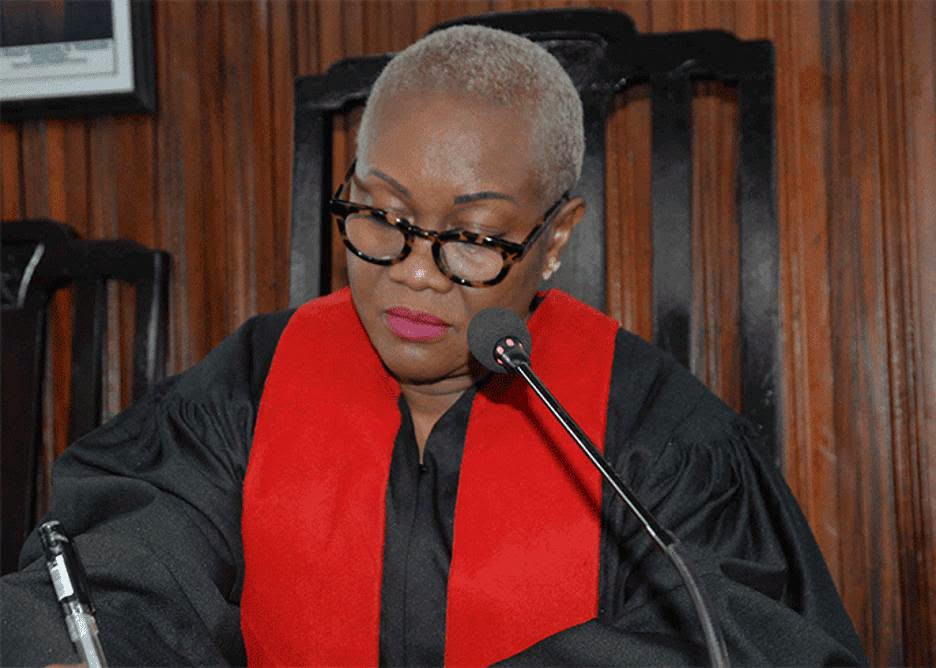
Former Chief Justice Sie-A-Nyene Gyapay Yuoh has said President Joseph Nyuma Boakai’s flagship ARREST Agenda for Inclusive Development (AAID), ‘did not do the Judiciary any good.’
Speaking Thursday, September 10, 2026, at the Central Bank of Liberia’s National Non-Performing Loans Resolution Conference, Madam Yuoh accused the Executive Branch of sidelining the Judiciary during the formulation of the AAID, despite the sector being prominently featured under the Rule of Law Pillar.
According to her, the agenda was crafted exclusively through executive institutions without consultation with the courts, raising serious concerns about judicial independence. “I’m compelled to safely say that, from my experience, the document did not do the Judiciary any good,” she asserted.
Yuoh explained that she made repeated attempts to foster coordination during the drafting process, including initiating meetings between the then Minister of State and the Court Administrator, and engaging the Dean of the Cabinet. All efforts, she said, proved futile.
She lamented that the Judiciary’s Five-Year Strategic Plan—containing reform priorities and modernization goals—was ignored, even after she presented a copy to the Executive. “Had there been good faith, coordination, and collaboration, the AAID could have incorporated the Judiciary’s strategic plan,” she stressed, noting that development grants and assistance flow through the Ministry of Finance and Development Planning, further underscoring the need for inclusion.
The former Chief Justice warned that provisions under the Rule of Law Pillar risk undermining judicial independence if not properly aligned with the Judiciary’s priorities. She emphasized that meaningful reform requires dialogue between the Executive and Judiciary, not unilateral prescriptions.
Her remarks spotlight a growing tension between Liberia’s judicial and executive arms over governance and reform. Analysts say the exclusion of the Judiciary from national planning could weaken the credibility of the courts, especially at a time when public trust in institutions remains fragile.
Yuoh’s intervention adds weight to calls for a recalibration of the ARREST Agenda to ensure that justice is not only a rhetorical pillar but a functioning cornerstone of national development. Her appeal for dialogue signals that the Judiciary is unwilling to remain a passive recipient of executive-driven reforms.
As Liberia pursues inclusive development, the question remains whether the Executive will heed the Judiciary’s demand for genuine collaboration—or whether the courts will continue to be overshadowed in the nation’s grand development blueprint.

