

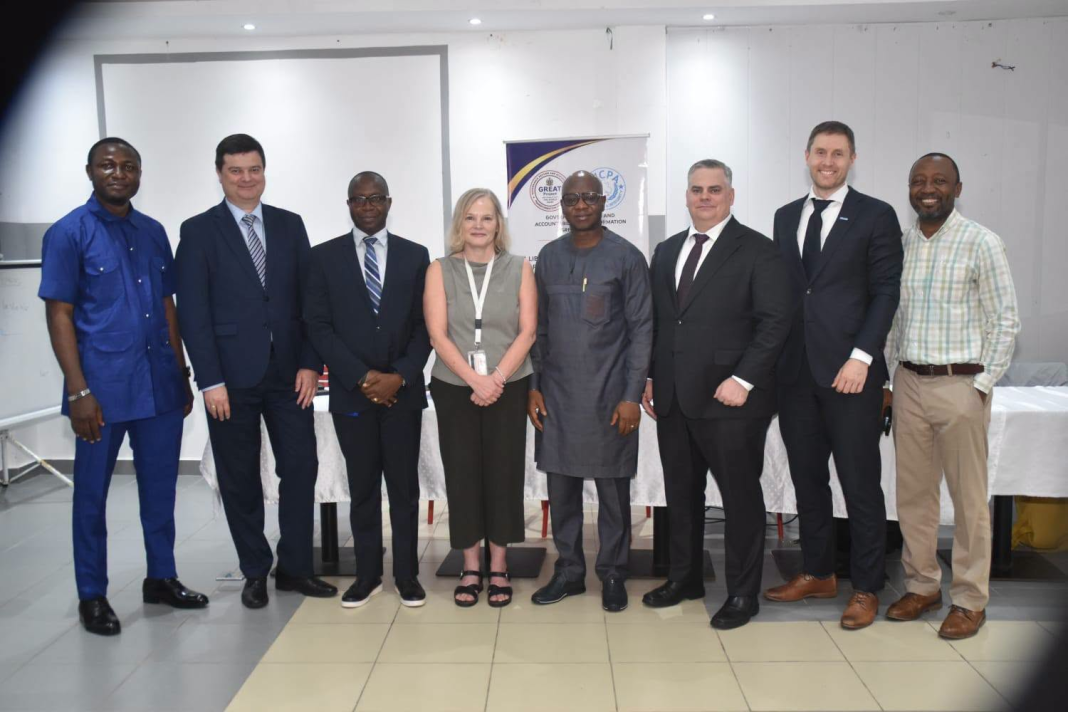
Liberia has taken a decisive leap in its public financial management reform drive, as the Governance Reform and Accountability Transformation (GREAT) Project, in partnership with the Liberia Institute of Certified Public Accountants (LICPA) and the International Public Sector Accounting Standards Board (IPSASB), trained more than 150 financial professionals in cutting‑edge accrual accounting and sustainability reporting standards.
The one day Continuing Professional Development workshop, held Friday, September 11, 2026, at the Alalagune Hotel in Congo Town, Monrovia, drew 156 accountants, comptrollers, spending officers, and public financial managers under the theme: “Strengthening Technical Capacity in Public‑Sector Financial Reporting, Audit and Accountability.”
Opening the program, LICPA President Papin Daniels, Sr. underscored the urgency of strengthening Liberia’s financial reporting framework. Comptroller and Accountant General Elwood T. Nettey and Auditor General P. Garswa Jackson echoed the call, stressing that accountability and sound financial management are indispensable pillars of national governance.
The IPSASB technical team led participants through Liberia’s transition from Cash‑Basis IPSAS to Accrual‑Basis IPSAS. Facilitators explained that accrual accounting recognizes revenues, expenses, assets, and liabilities when they arise—regardless of when cash changes hands—providing governments with a more complete and transparent picture of their financial position.
According to IPSASB experts, the shift will sharpen Liberia’s ability to measure the true cost of delivering public services, strengthen internal controls, improve risk management, and enhance oversight of public assets and liabilities.
“This transition requires a whole‑of‑government approach backed by strong political commitment and leadership at the highest level,” the team emphasized, noting that success hinges on legislation, budgetary support, modern information systems, staff training, and reliable asset registers.
Participants were also introduced to IPSASB’s Pathways to Accrual platform and other resources designed to guide governments through the complex migration from cash‑basis to accrual‑basis accounting.
A major highlight of the workshop was IPSASB’s Sustainability Reporting Standard (SRS 1) on Climate‑related Disclosures, published January 29, 2026, and set to take effect January 1, 2028. Facilitators warned that climate risks—flooding, shifting weather patterns, and threats to agriculture—pose serious consequences for Liberia’s economy and public finances.
SRS 1 requires public‑sector entities to disclose climate‑related information across four critical areas: governance, strategy, risk management, and metrics and targets. By embedding climate data into financial reporting, Liberia can strengthen national planning, improve decision‑making, and bolster public accountability.
LICPA Vice President Mohammed B. Korleh delivered the vote of thanks, praising the GREAT Project, IPSASB, government officials, facilitators, and participants. He reaffirmed LICPA’s commitment to promoting high‑quality financial reporting, professional competence, ethical conduct, transparency, and accountability.
Organizers hailed the initiative as a milestone in Liberia’s reform journey. They noted that successful implementation of accrual accounting and sustainability reporting will demand sustained institutional reforms, professional capacity‑building, improved technology, inter‑agency coordination, and unwavering political will.
For Liberia, the workshop represents more than technical training—it signals a national determination to modernize financial governance and confront climate challenges head‑on. By equipping 156 professionals with advanced IPSAS skills, the country is laying the groundwork for a transparent, accountable, and climate‑resilient public finance system.
As one facilitator concluded, “Accrual accounting and sustainability reporting are not just technical reforms—they are the foundation of trust between government and citizens.”

