

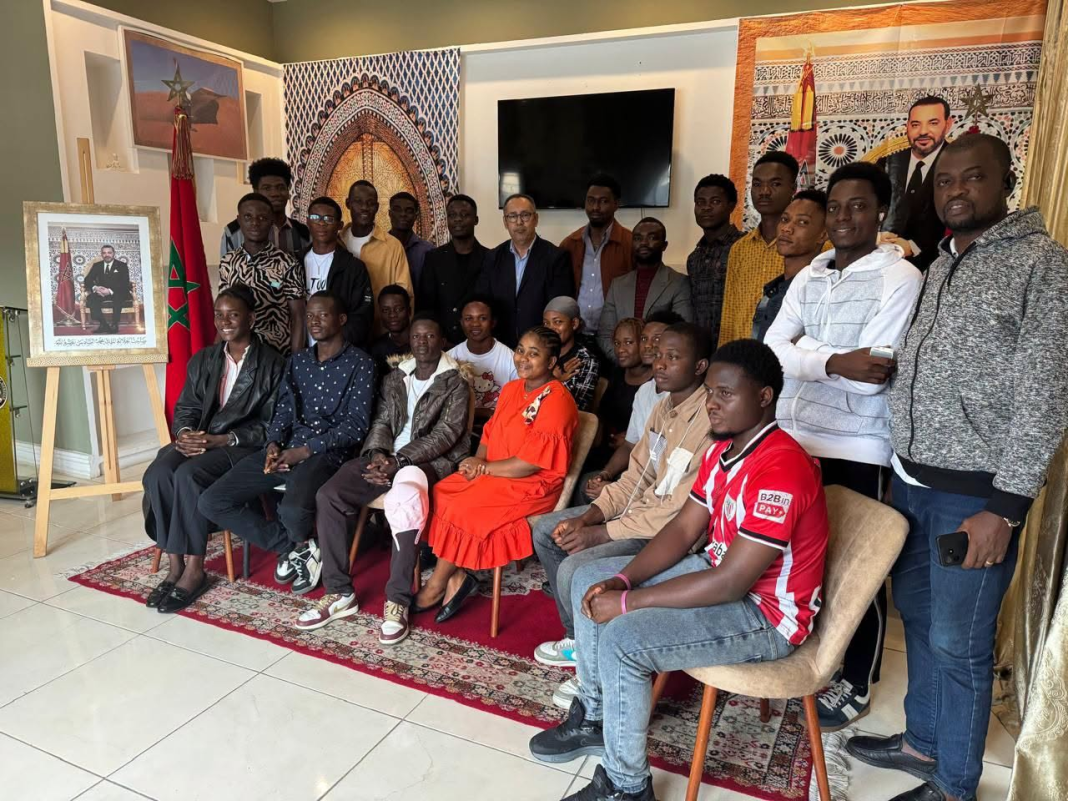
Morocco is deepening its educational partnership with Liberia by expanding scholarship opportunities for Liberian students, reinforcing a bilateral relationship that places human capital development at the heart of cooperation.
For the 2025/2026 academic year, the Government of Liberia, in collaboration with the Kingdom of Morocco, announced 105 scholarships, including 50 places dedicated to Technical and Vocational Education and Training (TVET).
The package also covers bachelor’s, medical, engineering, paramedical, architecture, commerce, and management programs. The announcement was published by Liberia’s Ministry of Education on May 27, 2025.
The scholarships span a wide range of disciplines. TVET opportunities include civil engineering, computer programming, industrial automation, electrical maintenance, mechanical manufacturing, horticulture, logistics, culinary arts, construction, and digital infrastructure.
At the university level, students can pursue geology, biology, chemistry, computer engineering, telecommunications, economics, agriculture, and mining engineering. Programs range from two to seven years, with an additional year of French language preparation, as studies are conducted in French at Moroccan public institutions.
This initiative is not unprecedented. Morocco and Liberia offered identical 105 place packages in 2023 and 2024, underscoring the consistency of education and skills training as pillars of bilateral cooperation.
The scholarships are administered through the Moroccan Agency for International Cooperation (AMCI), established in 1986 as a cornerstone of Morocco’s South South diplomacy. AMCI reports having trained more than 35,000 graduates from 98 countries, including 47 African states. In 2019/2020 alone, Moroccan public institutions hosted 14,500 international students, 12,500 of whom were Africans — with more than 85 percent benefiting from scholarships.
Beyond academics, AMCI’s technical cooperation programs have supported over 10,000 African public-sector professionals, reflecting Morocco’s broader approach of combining university education with professional and institutional capacity building.
Liberia and Morocco trace their partnership back to the 1960s, when both nations were active in the African diplomatic movement that led to the creation of the Organization of African Unity. Liberia opened its embassy near Rabat in 1996, while Morocco reopened its embassy in Monrovia in 2024. The relationship has endured through crises, including Liberia’s Ebola outbreak, during which Morocco maintained Royal Air Maroc flights and provided humanitarian aid.
Momentum has accelerated in recent years. In January 2025, Foreign Ministers Sara Beysolow Nyanti and Nasser Bourita signed 15 cooperation agreements spanning education, agriculture, health, mining, youth empowerment, justice, and tourism. Scholarships and vocational training were highlighted as central to the renewed partnership.
For Liberia, the Moroccan scholarship program extends beyond conventional university education. By allocating nearly half of the slots to TVET, the initiative directly addresses workforce needs in infrastructure, technology, agriculture, healthcare, and industrial growth. This emphasis on technical training aligns with Liberia’s national development priorities, ensuring that graduates return with practical expertise to drive economic transformation.
The challenge, however, lies in ensuring that scholarship beneficiaries complete their programs, return home, and apply their skills to Liberia’s development agenda. The long-term impact of the partnership will depend on translating Moroccan education into measurable contributions across sectors.
As Morocco continues to combine scholarships with technical training and professional exchanges, Liberia’s participation in this model represents a vital pathway for building a skilled workforce capable of supporting national growth.

