

By Cllr. Tiawan Saye Gongloe (political leader, Liberia People’s Party)
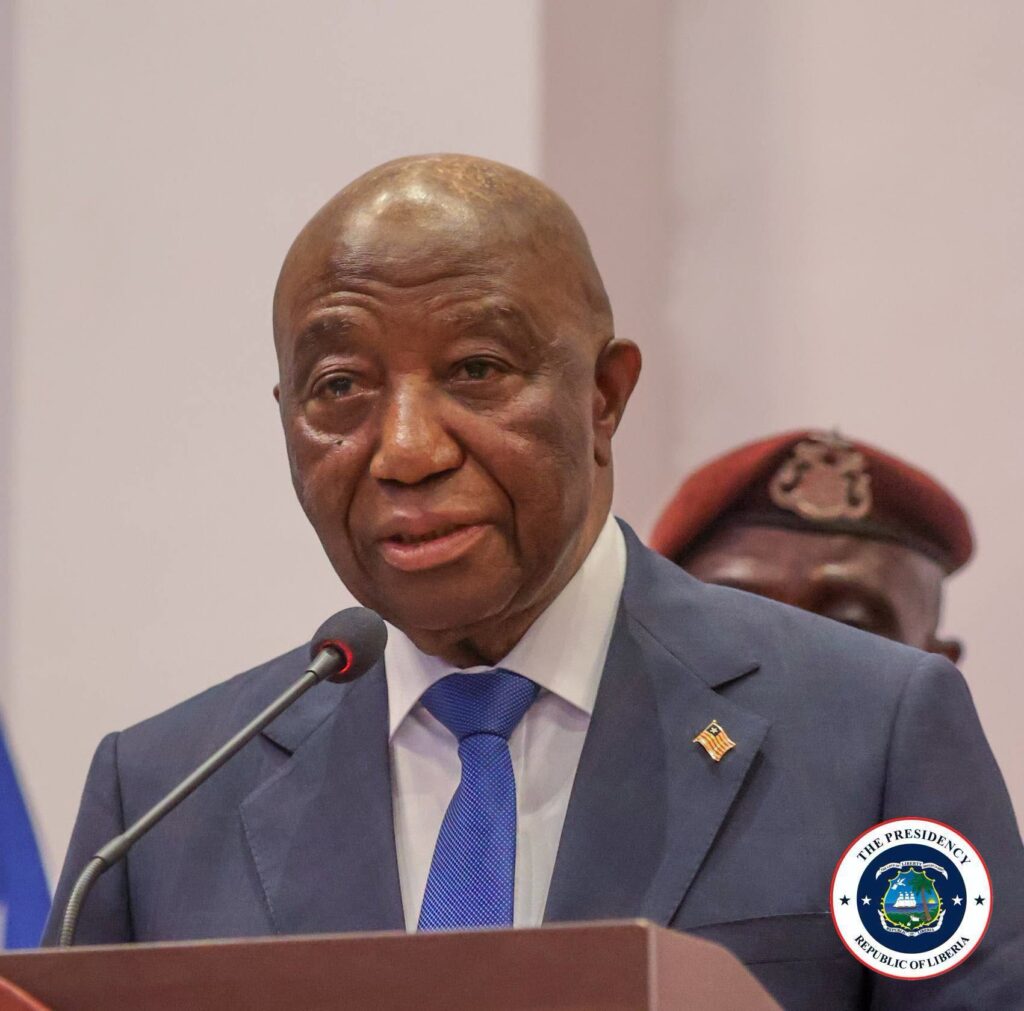
Mr. President, welcome home. The Liberian people deserve a full account of what your journey accomplished and how it will improve their lives.
Your departure to the United States on September 13 and return to Liberia on October 6 represent 23 days away from Liberia. The itinerary reportedly, included congressional meetings, the United Nations General Assembly, diaspora engagements and a planned visit to the Liberian Maritime Registry. These are legitimate activities. Yet our government is under a legal obligation to explain their duration, cost and benefits to the Liberian people.
The announced delegation included Foreign Minister Sara Beysolow-Nyanti, Finance Minister Augustine Ngafuan, Information Minister Jerolinmek Piah, Health Minister Louis Kpoto, Education Minister Jarso Jallah, Gender Minister Gbeme Horace-Kollie and National Security Advisor Samuel Kofi Woods.
That means the official delegation included six cabinet ministers and the National Security Advisor accompanying the President, before accounting for security, protocol and other personnel. What assignment required each person’s presence, and for how long? This question is important because Liberia is listed among the fifteen poorest countries in the world.
Other African countries offer useful comparisons, although we must note differences in their circumstances. Botswana announced President Duma Boko’s participation for September 19–26. His accompanying officials included ministers responsible for international relations, health, minerals and energy, and youth and gender affairs.
Reported engagements included investment discussions and talks about a forthcoming UN Centre of Excellence on Emerging Technologies and Innovation, intended to support opportunities for women and young people. These are identifiable objectives, although meetings alone do not establish that jobs or investments have materialized.
Somalia’s President Hassan Sheikh Mohamud arrived in New York on September 21 and was reported home by September 27. Foreign Minister Abdisalam Ali was among his delegation. Its agenda emphasized security, development, investment and international cooperation. The available reporting does not establish its complete delegation size.
The Democratic Republic of the Congo was represented by Prime Minister Judith Suminwa Tuluka and Foreign Minister Thérèse Kayikwamba Wagner, supported by its diplomatic team. Reporting described a reduced delegation linked to Ebola-related travel restrictions. That circumstance must be acknowledged when making comparisons. DRC’s complete travel dates have not been established, so it would be premature to claim a precise shorter stay.
Somalia and DRC, like Liberia, are non-permanent members of the United Nations Security Council. Liberia and DRC serve for 2026–2027; Somalia serves for 2025–2026. Security Council membership, therefore, cannot by itself explain Liberia’s delegation size or the President’s prolonged absence. What additional or unique responsibilities required Liberia’s arrangements?
Cape Verde provides a particularly relevant comparison because its programme also included diaspora engagements. Its announced mission ran from September 20 to October 1, with return scheduled for October 2. The reported government delegation included Prime Minister Francisco Carvalho and three ministers: Manuel Amante da Rosa, António Duarte and Adélsia Almeida.
Meetings with Cape Verdean communities in Massachusetts and Rhode Island were scheduled for September 27–30, including engagements with young entrepreneurs, professional women and diaspora businesses. This was a programme combining UN diplomacy, official meetings and diaspora outreach within a shorter announced timetable.
Rwanda’s Prime Minister Justin Nsengiyumva represented his country, with Foreign Minister Olivier Nduhungirehe undertaking bilateral engagements. The prime minister was also reported to have met Rwandans in New York on September 25 to discuss investment opportunities. Diaspora engagement was therefore part of Rwanda’s visit too.
These comparisons do not prove that every shorter mission achieved more. They establish that Liberia’s arrangements deserve a specific explanation. Diaspora meetings and diplomatic responsibilities are shared activities; the government must explain what required 23 days abroad and the participation of so many senior officials.
Liberia reported substantive activity, including launching its Third National Action Plan on Women, Peace and Security. The Executive Mansion also described diplomatic, investment and diaspora engagements. Let the government explain the commitments secured and the practical benefits expected from them.
What agreements were signed? What financing was committed, and on what terms? Which investments advanced beyond expressions of interest? How many jobs are expected, where and when? What commitments emerged from the diaspora conference? Who will follow up, and when will citizens receive a progress report?
Diplomatic benefits may take time. A credible account should distinguish discussions from commitments, commitments from implementation, and promised financing from money received.
The “at least” mentality must end. “At least the President met investors” is an inadequate standard for assessing public expenditure. Citizens need to know the benefits of those meetings. Every dollar spent abroad carries an opportunity cost for schools, hospitals, roads, food sufficiency and other needs at home.
We have no doubt, Mr. President, that consistent with the right of the people to know, you will shortly, publish the complete itinerary, delegation list, each delegate’s assignment and travel dates, total public expenditure, agreements and implementation timetable. Such disclosure could help the people to fully understand and appreciate future decisions about delegation size, presidential attendance and the duration of official travel.
Accountability helps a government to correct its practices and direct scarce resources toward national progress. It is a duty owed to the people.
Welcome home, Mr. President. The Liberian people need to know what their money accomplished—and what this journey will bring to their lives.

