

By George K. Werner (former education minister)
I once told a group of protesting Liberian students that education was not free.
It was an unusual thing for a Minister of Education to say, especially in a country where successive governments had proclaimed free public education as a national commitment. But I was not trying to provoke the students or challenge the principle that every Liberian child deserves an education.
I was trying to explain something I had come to understand rather painfully: declaring a public service free does not eliminate the cost of providing it. It merely raises the question of who will pay.
The circumstances of that encounter have remained with me for nearly a decade.
I became Minister of Education in June 2015, when Liberia was emerging from the devastating Ebola epidemic. Schools had been closed since July 2014. Although the government officially authorized their reopening in February 2015, many did not resume classes until March or later. Thousands of children had lost valuable instructional time. Families were struggling to recover from the economic and social consequences of the crisis. Teachers were anxious about their livelihoods, parents were worried about their children’s futures, and the country was trying to regain some sense of normalcy.
But my journey into education reform had begun long before I arrived at the Ministry.
I came from the Civil Service Agency, where I had served as Director-General with an expanded mandate to oversee the postwar rehabilitation of the Liberian government’s human-resource systems.
The civil war had damaged more than buildings, roads, and public infrastructure. It had disrupted the administrative machinery through which government recruited, deployed, supervised, compensated, and held its employees accountable.
Rebuilding the Liberian state therefore required more than reopening ministries and government offices. It required reconstructing the systems that allowed public institutions to function.
At the Civil Service Agency, I had been deeply involved in this process. I understood the importance of credible personnel records, payroll integrity, workforce planning, professional competency, and institutional accountability. I also understood how difficult reform could be when established practices, limited resources, and political expectations collided.
At the time, education was the largest employer in the Liberian government, accounting for approximately 40 to 45 percent of employees on the public payroll. From my experience at the Civil Service Agency, health was the next-largest sector by employee headcount.
That distinction mattered.
The two sectors most essential to rebuilding Liberia’s human capital also accounted for the largest numbers of government employees.
Every decision about teacher recruitment, deployment, qualifications, salaries, and payroll management therefore carried significant consequences for public expenditure.
When I arrived at the Ministry of Education, I encountered many of the same institutional problems I had confronted at the Civil Service Agency, but on a much larger operational scale.
There were serious weaknesses in teacher preparation, payroll management, school supervision, and institutional accountability. Too many schools lacked adequate instructional materials. Qualified teachers were not always deployed where they were most needed. Communities were supporting volunteer teachers while the government struggled to manage its existing workforce.
Ebola had exposed and intensified these weaknesses, but it had not created them.
We were confronting the accumulated consequences of years of conflict, institutional deterioration, and inadequate public investment.
My experience at the Civil Service Agency had convinced me that increasing education expenditure, while necessary, would not by itself solve these problems.
We also had to examine how existing resources were being managed.
Who was on the payroll? Where were they assigned? Were they actually teaching? Did they possess the necessary qualifications? Were qualified teachers being recruited and deployed where they were most needed?
These were not merely administrative questions. They were questions about public expenditure, educational quality, and the ability of the Liberian state to deliver on its promises.
And we had very little time.
President Ellen Johnson Sirleaf would leave office in January 2018. Although my tenure as Minister of Education would continue until March of that year, we knew that the approaching presidential transition left us with approximately two years to advance an ambitious reform agenda.
We needed to restore the academic calendar, address the scheduling of the West African Examinations Council examinations, improve teacher competency, clean up the education payroll, and strengthen institutional accountability.
We were attempting to rebuild an education system while simultaneously reforming it.
Time was a luxury we could not afford.
Neither, it seemed, could we afford the education system we wanted to build.
I remember that our annual Ministry of Education allocation was approximately US$40 million, almost all of which was already committed to salaries and benefits.
A subsequent Harvard Ministerial Leadership Program case study, “Creating Fiscal Space Where There Is None: Examining Liberia’s Teacher Vetting and Testing Project”, documented annual Ministry allocations of approximately US$40–44 million, with about 92 percent budgeted for payroll expenses.
These figures referred to the Ministry’s allocation, not the entirety of education-sector expenditure, which also included other public and externally financed activities.
Think about what those numbers meant.
More than nine out of every ten dollars allocated to the Ministry were already committed before we purchased a textbook, rehabilitated a classroom, strengthened school supervision, or financed teacher professional development.
We had schools without adequate furniture, children without learning materials, teachers needing additional training, and communities demanding better educational opportunities.
Yet the resources available to address these needs were painfully limited.
We were financing the employment structure of an education system without adequately financing the education that the system was supposed to deliver.
This was the contradiction at the heart of our predicament.
The government had committed itself to providing free public education, but the resources necessary to deliver quality education were insufficient.
We were expected to transform an education system with a budget that could barely sustain its existing operations.
I spent considerable time traveling, meeting development partners, mobilizing resources, and negotiating financing arrangements to support the reforms.
We needed financing beyond what the national budget could provide.
But mobilizing external resources was itself a demanding undertaking. Development partners had their own priorities, funding cycles, approval processes, and accountability requirements. Agreements took time. Implementation required institutional capacity. And every month that passed brought us closer to the end of President Sirleaf’s administration.
We were racing against three clocks simultaneously: the recovery from Ebola, the urgency of institutional reform, and the approaching political transition.
Meanwhile, ordinary Liberian families were living through their own crisis.
Parents had lost livelihoods. Household savings had been depleted. Students had missed months of instruction. Families were struggling to finance the return to school.
From the government’s perspective, the reforms were urgent.
From the students’ perspective, they were arriving too quickly, imposing additional burdens at precisely the moment when families were least able to absorb them.
Both realities were true.
I remember one morning when members of the Montserrado branch of the national student union took to the streets of Monrovia.
They were protesting changes to the academic calendar, adjustments to WAEC examination schedules, and the financial consequences these decisions would have for students and their families.
The demonstration escalated.
The students blocked President Sirleaf’s motorcade near Monrovia City Hall as she traveled to work.
I was in my office on Third Street when I heard the approaching presidential convoy.
Against the advice of her security personnel, President Sirleaf stopped her motorcade and engaged the students.
She listened to their grievances and invited their leadership to meet with her at the Ministry of Foreign Affairs, where her office was temporarily located.
She then dispatched officers of the Executive Protection Service to bring me to the meeting.
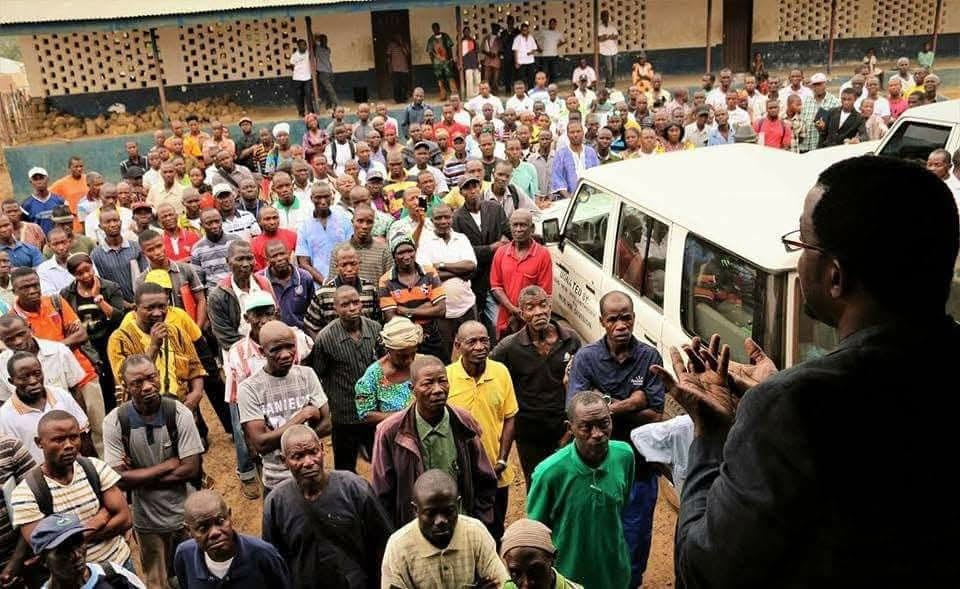
I arrived before the President and was the first to address the students.
I explained the difficult circumstances confronting the education system. I described the disruption caused by Ebola, the need to restore a functioning academic calendar, and the urgency of the reforms we were undertaking.
But I also said something that contradicted the familiar presidential proclamations about free education.
I told them that education was not free.
I explained the Ministry’s budget and the overwhelming proportion committed to salaries and benefits.
I described what remained to finance school infrastructure, textbooks, teacher development, examinations, supervision, and the countless other requirements of a functioning education system.
My point was simple.
Education does not become free merely because a president declares it free. Someone must pay for it.
The students listened.
Mohammed Donzo, who articulated their concerns, explained that they were not necessarily opposed to education reform.
Their argument was that the reforms were too hard-hitting for families emerging from Ebola.
Parents had lost income. Livelihoods had been disrupted. Many households were struggling simply to survive.
Changing examination schedules and adjusting the academic calendar meant additional transportation, feeding, accommodation, and other expenses.
For the Ministry, these were necessary administrative adjustments.
For the students, they represented additional financial hardship.
When President Sirleaf arrived, the students promptly informed her of what her Minister of Education had told them.
Essentially, they said that I had told them not to believe the proclamations that education was free.
The President gave me what Liberians would describe as “one eye.”
I remember that look.
But what I had said was true.
The government had proclaimed free education. Yet the education system did not have sufficient resources to deliver everything that genuinely free, quality education required.
The difference was being absorbed by parents, teachers, school administrators, and communities.
That encounter has remained with me because it exposed a contradiction that continues to shape Liberia’s political economy.
We proclaim public services free without adequately financing them, and then leave ordinary citizens to pay the costs that government has not covered.
There is nothing inherently dishonest about promising free public education. Many countries provide education without charging tuition because they have made a deliberate decision to finance it collectively.
But free at the point of use does not mean free to provide.
Teachers still require salaries. Schools require maintenance. Textbooks must be purchased. Teachers must be trained. Examinations must be administered. Classrooms must be constructed and maintained.
The question is whether government has mobilized sufficient resources to meet these obligations or merely transferred the unpaid costs to parents and communities.
Consider the experience of an ordinary Liberian parent.
A mother selling vegetables in a market has three children attending government schools. She has been told that public education is free.
There may be no official tuition to pay. But her children need uniforms, notebooks, shoes, transportation, and sometimes money for instructional materials, examinations, or school maintenance.
When the school lacks basic supplies, parents may be asked to contribute.
When teachers are absent or instruction is inadequate, some families pay for additional lessons.
When the academic calendar changes, parents must find money to support children for longer than anticipated.
For that mother, education is not free in the ordinary sense of the word.
It is an expense she must somehow accommodate within an already strained household budget.
Now consider a father who takes his sick child to a government hospital.
He has been told that healthcare is free or subsidized.
But when he arrives, certain medicines are unavailable. He is directed to a private pharmacy. Perhaps the hospital lacks the necessary diagnostic equipment, and he must pay for tests elsewhere.
The consultation may have been free.
The treatment was not.
Or consider a family living in a community without reliable public electricity.
They purchase a generator, fuel, batteries, or solar equipment. They spend money maintaining systems that households in countries with functioning public utilities do not need to purchase individually.
They pay again for water because the public water system does not reach their home.
They pay more for transportation because deteriorating roads damage vehicles and increase operating costs.
These expenses do not appear as taxes on a government revenue statement.
But they are real costs imposed on households by inadequate public services.
And unlike a properly designed progressive tax system, these burdens are often deeply unequal.
The wealthy can afford alternatives.
They send their children to private schools, seek private medical treatment, and purchase independent electricity and water systems.
The poor have fewer options.
They must either sacrifice a larger proportion of their limited incomes or go without essential services.
This is the irony of underfunded public services.
Policies announced in the name of protecting the poor can end up imposing disproportionate costs on them.
We have developed a political culture in which the generosity of a promise often receives more attention than the credibility of its financing.
During election campaigns, politicians promise free education, better healthcare, affordable electricity, clean water, functioning roads, and improved public institutions.
These promises respond to genuine needs. They are attractive precisely because so many Liberians struggle to afford basic services.
But how often do we ask what these commitments will cost?
How much does it actually cost to provide quality education to every Liberian child?
How many teachers are required? What qualifications should they possess? What should they be paid? How many classrooms must be constructed or rehabilitated? How many textbooks are needed?
What does it cost to operate a hospital with adequate medicines, equipment, trained personnel, and reliable electricity?
What investment is required to expand public water systems or provide dependable electricity?
And where will the money come from?
These are not minor technical questions.
They are the difference between political declarations and functioning public services.
The arithmetic of government does not change because a politician makes a promise.
Teachers must be paid. Hospitals need medicines. Electricity requires generation and distribution. Water systems require treatment plants, pipes, and maintenance.
Someone must finance these services.
The question is whether they are financed collectively through fair and accountable public systems or transferred, often invisibly, to individual households.
My experience at the Ministry of Education also taught me that inadequate financing is only part of the problem.
We must ask whether the resources already available are being used effectively.
When we began examining the education payroll, we discovered serious weaknesses.
There were individuals receiving salaries who were no longer teaching. There were unqualified personnel occupying positions while qualified graduates of teacher training institutions remained unemployed. There were communities supporting volunteer teachers because the formal system could not adequately staff their schools.
We were spending money without always receiving the educational services for which that money had been allocated.
This was why payroll verification and teacher competency assessments became central to our reform agenda.
Building on an earlier donor-supported pilot in three counties, we developed a nationwide teacher vetting and competency assessment initiative intended to restore payroll integrity, improve teacher quality, and create fiscal space for education.
We needed to establish who was teaching, where they were teaching, whether they possessed the necessary qualifications, and whether government was paying the right people.
The reforms were difficult and politically contentious.
But the financial logic was straightforward.
Every dollar paid to someone who was not teaching was a dollar unavailable to support a functioning classroom.
The results eventually demonstrated what was possible.
Princeton University’s Innovations for Successful Societies program examined the reforms in a case study titled “Managing the Business of Education: Liberia Cleans Up Its Teacher Payroll, 2015–2017”.
The study documented the effort to verify teachers, assess competency, and address irregularities in the education payroll.
The reform initiative identified 2,046 ghost teachers, with approximately 83 percent removed by February 2018. It generated approximately US$2.3 million in annualized savings and helped create opportunities to recruit 1,371 newly trained teachers.
The competency assessments also revealed serious weaknesses in teacher preparation. Approximately 49 percent of teachers who took the assessments failed to meet the required standard.
The Harvard Ministerial Leadership Program examined the same reform effort from the perspective of financing and political leadership.
Its case study documented the fiscal constraints, the difficult choices, the external financing arrangements, and the institutional challenges involved in implementing the reforms.
It also noted that our principal reform priorities were estimated to require approximately US$100 million.
Consider the contradiction.
We had identified an ambitious reform agenda requiring roughly US$100 million, while the Ministry’s annual domestic allocation was approximately US$40–44 million, most of which was already committed to payroll.
We were attempting to improve the education system while searching for the resources necessary to sustain it.
The payroll reforms created some fiscal space.
But they also demonstrated the limits of efficiency improvements.
Even if we eliminated every ghost worker, improved payroll management, and reduced administrative waste, we would still face a substantial financing gap.
We needed more qualified teachers, better classrooms, textbooks, learning materials, professional development, and stronger systems of accountability.
We needed to finance the education system we had while finding additional resources to build the education system we wanted.
And we were attempting to do this before a presidential transition.
This experience raised another uncomfortable question.
What happens when a country depends on development partners to finance essential reforms?
What happens when donor priorities change?
What happens when a political administration leaves office?
And what happens when the external financing that supports reform is no longer available?
The Harvard case study documents how we sought support from development partners and philanthropic organizations to finance reforms that the domestic budget could not adequately support.
One important example was the support provided by Big Win Philanthropy for teacher vetting and competency assessment.
The financing arrangement was intended to generate domestic savings that could be reinvested in education.
This was an attempt to use external resources to strengthen domestic capacity.
But external assistance cannot substitute indefinitely for domestic revenue, political commitment, and institutional capacity.
A country cannot build a sustainable education system on temporary financing arrangements alone.
External assistance can support reform, strengthen institutions, and help governments overcome immediate financing constraints.
But the ultimate objective must be a system that Liberia itself can progressively sustain.
This brings us to a larger national question.
Can Liberia afford the public services its citizens deserve?
The answer is not as simple as yes or no.
Liberia has a limited revenue base relative to the demands placed on the state. But financing is also a matter of priorities, institutional efficiency, economic growth, and political choices.
A national budget is more than a collection of numbers.
It is a statement of what a government considers important.
Every government must make choices about how to collect, allocate, and spend public resources.
Every tax exemption has a potential fiscal cost.
Every decision to expand administrative expenditure must be considered alongside competing demands for education, healthcare, infrastructure, and other essential services.
The issue is not simply whether Liberia has enough money to meet every national need.
No country does.
The issue is whether available resources are allocated transparently, used efficiently, and directed toward clearly defined public priorities.
Liberia must also confront the difficult relationship between taxation and public services.
Citizens understandably resist additional taxes when they see waste, corruption, and weak accountability.
Government cannot demand greater contributions without demonstrating responsible management of existing resources.
But the opposite is equally true.
A country cannot sustainably finance modern public services without adequate domestic revenue.
Countries that provide universal education, comprehensive healthcare, reliable infrastructure, and strong social protection systems do not do so without mobilizing substantial public resources.
They finance these commitments through taxation and other revenue arrangements, supported by institutions capable of managing public resources effectively.
Liberia cannot escape this reality.
The challenge is to build a fairer system in which those with greater economic capacity contribute appropriately, public resources are managed transparently, and citizens receive services that justify their confidence in government.
The debate should not begin with whether poor Liberians should pay more taxes.
It should begin with whether our existing tax system is fair, whether revenue is being collected effectively, whether exemptions serve the public interest, and whether public expenditure produces measurable benefits.
Because the poor are already paying.
They pay when public schools lack materials.
They pay when government hospitals lack medicines.
They pay when electricity is unreliable.
They pay when clean water is unavailable.
They pay when bad roads increase transportation costs.
They pay through lost income, reduced productivity, preventable illness, and diminished opportunities for their children.
Much of this expenditure is inefficient, unpredictable, and deeply unequal.
A well-designed system of public financing can reduce these burdens by pooling resources, spreading risks, and ensuring that access to essential services is not determined entirely by household income.
This is the fundamental logic of public provision.
It is not that services have no cost.
It is that society chooses to finance certain services collectively because the benefits extend beyond individual households.
When a child becomes literate, society benefits.
When a mother receives appropriate healthcare, her family and community benefit.
When a business has reliable electricity, workers, consumers, and the broader economy benefit.
When clean water reduces disease, the public health system benefits.
These are investments in national development.
But they must be financed.
I return to that meeting with the students because it illustrates something governments frequently overlook.
Public policy is experienced differently by those who design it and those who live with its consequences.
At the Ministry of Education, we were confronting genuine institutional problems.
The education system needed reform. The academic calendar needed adjustment. Examination schedules required attention. Teacher quality, payroll integrity, and institutional accountability demanded action.
These were not imaginary problems.
But neither were the financial hardships described by Mohammed Donzo and his fellow students.
Both realities existed simultaneously.
The government had legitimate responsibilities to reform the education system.
The students had legitimate concerns about the immediate burdens those reforms could impose.
The challenge of leadership was to reconcile these realities.
The Harvard case study includes a reflection I offered about that period.
I described myself as having been blinded by the urgency of the moment.
That remains an important admission.
What I saw in schools across Liberia disturbed me profoundly. I wanted to address problems immediately because the consequences of delay were being borne by children who could not afford to wait.
But urgency can also make it difficult to appreciate the cumulative burden that reforms impose on the people expected to live through them.
A reform can be technically sound, institutionally necessary, and politically defensible, yet still impose unbearable costs on its intended beneficiaries.
Good intentions do not eliminate financial consequences.
And public policies cannot be judged solely by what governments intend to accomplish.
They must also be judged by what citizens are required to sacrifice.
Liberia needs to move beyond the politics of promising everything.
We need a national conversation about what government should provide, what those services actually cost, how they should be financed, and what citizens should reasonably expect in return.
When politicians promise free education, we should ask for the financing plan.
When government announces free healthcare, we should examine the resources allocated to medicines, equipment, and personnel.
When electricity tariffs are reduced, we should ask how the utility will finance operations, maintenance, and future expansion.
When budgets are presented, we should ask whether allocations are sufficient to deliver the services promised.
And when reforms are proposed, we should ask who will bear the transition costs.
The Legislature has a particularly important responsibility.
Its role should extend beyond approving aggregate budget figures.
It must examine the relationship between public commitments, actual service-delivery costs, budget execution, and measurable results.
A ministry receiving a larger allocation than the previous year does not necessarily mean that its services are adequately financed.
The relevant question is whether the resources are sufficient to achieve clearly defined outcomes.
Nearly a decade later, I still remember the students, the meeting at the Ministry of Foreign Affairs, and the look President Sirleaf gave me when they repeated what I had said.
I had told them that education was not free.
I was not arguing that Liberian children should be denied free public education.
Quite the contrary.
I believed then, as I do now, that every Liberian child deserves access to quality education regardless of the economic circumstances of their parents.
But I also understood something that our political discourse has too often avoided.
Education costs money.
Good education costs even more.
And transforming a struggling education system requires investments that cannot be financed through presidential proclamations, campaign promises, or the goodwill of development partners alone.
We had approximately two years to pursue reforms that should have been sustained over decades.
We were trying to recover from Ebola, repair institutional weaknesses, improve teacher quality, clean up the payroll, and restore public confidence in education.
We were attempting to build the education system Liberia deserved with resources that could barely sustain the one it already had.
The experience taught me that the greatest danger is not necessarily that a country has limited resources.
It is that political leaders and citizens fail to confront those limitations honestly, make credible choices about priorities, and establish sustainable arrangements for financing their ambitions.
Liberia deserves quality education.
It deserves functioning hospitals, reliable electricity, clean water, and public institutions that serve its people.
But we must stop pretending that declaring these services free makes them affordable.
We must ask what they cost, who pays, and whether the public receives value for the money spent.
Above all, we must acknowledge that when government fails to finance its promises, the costs do not disappear.
They are transferred to households, communities, and future generations.
And those least able to pay often bear the greatest burden.
Liberia deserves an education system it cannot seem to afford.
The challenge is not to abandon that ambition. It is to build a state capable of financing it.
Because education is not made free by presidential proclamation.
Healthcare is not made accessible by political declaration.
And public services do not become affordable simply because politicians promise that they will be.
Someone always pays.
The question is whether we will finance these services fairly and transparently through functioning public institutions, or continue forcing the poorest Liberians to pay for the difference between what their government promises and what it actually provides.
Read more about our work here:
- Harvard Ministerial Leadership Program. *Creating Fiscal Space Where There Is None: Examining Liberia’s Teacher Vetting and Testing Project.* [Harvard case study](https://ministerialleadership.harvard.edu/…/creatin…/…).
- Princeton University, Innovations for Successful Societies. *Managing the Business of Education: Liberia Cleans Up Its Teacher Payroll, 2015–2017.* [Princeton case study]

