

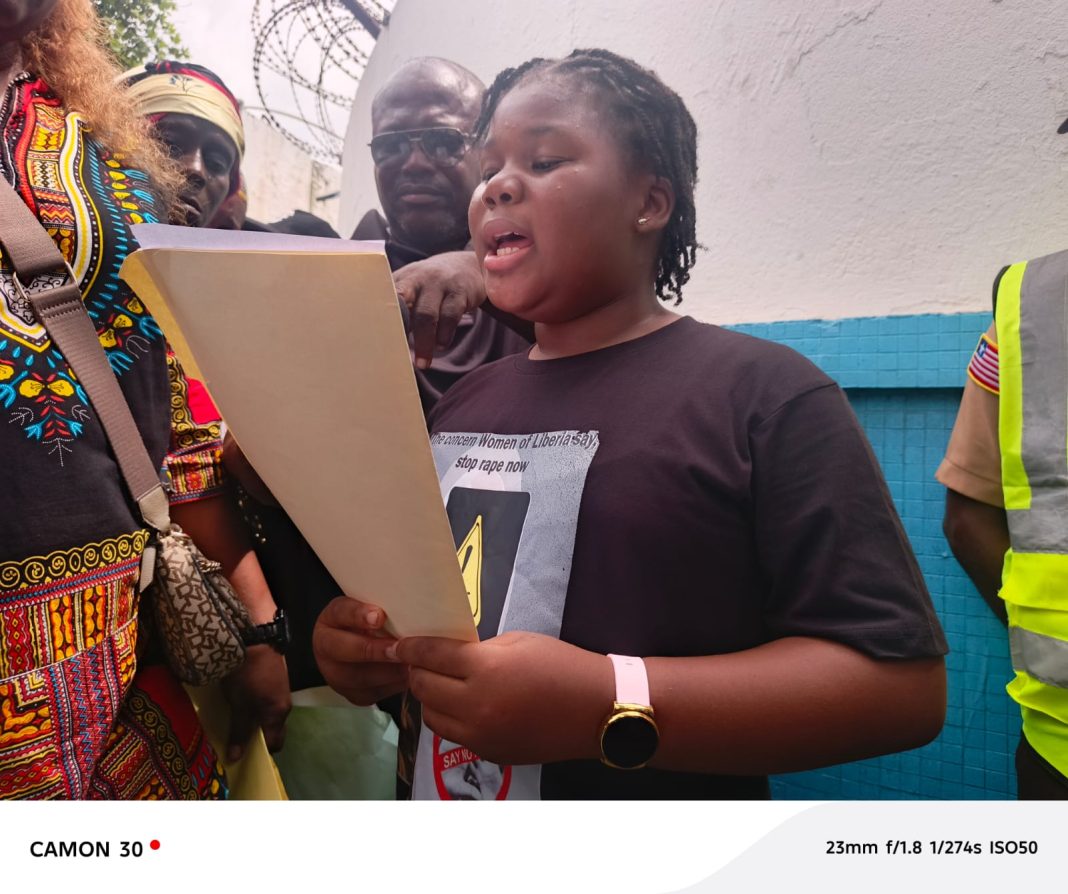
A petition delivered to the United Nations Resident Coordinator in Liberia by a coalition calling itself the Women and Girls of Liberia warn that a wave of unprosecuted sexual-abuse cases is undermining rule of law and could have material consequences for the country’s business and donor environment.
Presented by activist Juren Korlu Morlu, the document accuses the administration of President Joseph Nyuma Boakai of allowing politically connected suspects to evade accountability.
It says, “more than 2,000 rape and sexual violence cases have been left without answers,” alleges files and cases have been deliberately delayed or dropped, and recounts a specific accusation that a 14-year-old girl was allegedly raped by a deputy minister whose political ties have prevented effective investigation and protection for the survivor.
The petition asks the UN to open an independent inquiry and to apply public pressure on the government to prosecute abusers, protect survivors from threats and interference, and ensure officials who block justice are held accountable.
It also urges collaboration with women’s groups to create emergency protection and assistance for girls.
Business and donor communities typically view governance, the rule of law, and human-rights protections as core indicators of political risk. Lawyers and analysts say sustained allegations of state capture of the justice system can translate quickly into practical economic consequences.
“Perceptions of impunity at senior levels of government raise the risk profile for investors and may prompt donors to condition or reallocate aid,” said a West African governance consultant not involved with the petition.
“They heighten reputational risks for companies that operate in Liberia or have government contracts and can dampen tourism and investor appetite for long-term projects.”
Liberia’s economy is significantly dependent on extractive industries, agriculture, and donor flows. Any erosion of confidence among international partners could affect sovereign financing, development projects and private sector operations.
The petition’s call for UN engagement increases the probability of international scrutiny that could bring immediate diplomatic and financial reverberations — from targeted investigations to calls for stricter oversight of aid and loan disbursements.
Civil society leaders say the move is meant to force quicker action after years of what they describe as “neglect” of victims.
“We cannot stay quiet while girls are being hurt,” the petition states. If the UN accepts the request for an independent probe, its findings could prompt policy changes, prosecutions, or demands from donor governments for accountability measures before providing further assistance.

