

By Myer Saydi
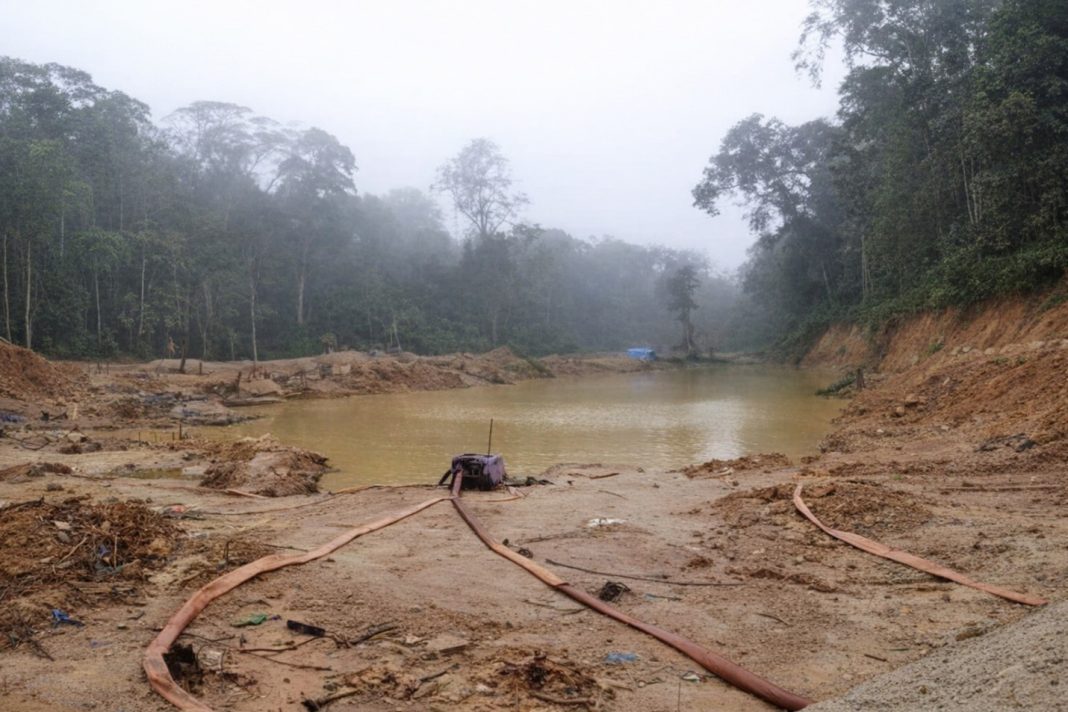
The Greenville Magisterial Court has fined 28 men and ordered them to perform community service after they admitted to illegal mining inside Liberia’s Sapo National Park, the country’s largest protected forest reserve.
Each defendant was fined US$1,300 and instructed to cut grass at the Presidential Palace in Greenville for seven working days. The ruling followed their arrest in February during a joint security operation led by park rangers.
Prosecutors charged the men with theft of property and criminal trespass, but they avoided prison because the state failed to prove prior convictions.
Defense lawyer Franklin Myers welcomed the outcome, noting that his clients were spared incarceration. “I am happy for my clients despite government fines and community services because they are not going to jail,” Myers said. “The court ruling is not based on public sentiment but on what the law says.”
Court documents show that security forces seized 4.2 grams of gold, a half-filled 25-kilogram bag of rice, six gallons of gasoline, and eight pieces of carpet during the arrests. Authorities concluded the group was actively engaged in unauthorized mining, a violation of Liberia’s forestry, mining, environmental, and wildlife laws.
John Smith, Chief Warden of Sapo National Park, described the ruling as a deterrent to future offenders. “Liberia’s protected areas are critical to biodiversity conservation,” Smith said. “We urge citizens to respect conservation laws and support sustainable practices.”
Sapo National Park spans 697 square miles and is internationally recognized as a biodiversity hotspot. It is home to rare species and plays a vital role in environmental protection. Over the years, thousands of illicit occupants have been removed as part of government efforts to curb degradation and safeguard the park’s ecological integrity.
The February arrests highlight the ongoing challenges of enforcing conservation laws in Liberia. Illegal mining, logging, and settlement have long threatened the park, despite repeated crackdowns by joint security forces. Environmental advocates argue that stronger penalties and consistent enforcement are needed to protect the reserve from further damage.
The case also underscores the tension between economic survival and conservation. Many rural residents turn to mining and logging as sources of income, often clashing with national laws designed to preserve forests. The government has pledged to balance community livelihoods with environmental protection, but enforcement remains uneven.
For now, the Greenville court’s ruling sends a message that violations will not go unpunished, even if sentences stop short of imprisonment. As Liberia continues to confront illegal exploitation of its natural resources, Sapo National Park remains a test case for how the country manages conservation, law enforcement, and community needs.

