

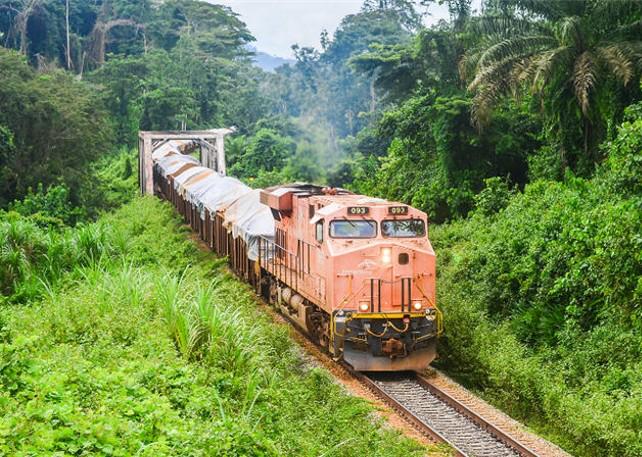
Liberia could emerge as a key West African gateway for critical minerals bound for the U.S. and other global markets if lawmakers formalize a National Rail Authority to govern critical rail infrastructure including the Yekepa Buchanan corridor, government backers and industry participants said.
President Joseph Boakai reaffirmed the Liberian National Railway Authority by Executive Order 153 in October 2025, and the House of Representatives approved a $1.8 billion rail access and concession package with Ivanhoe Atlantic in December 2025 aimed at unlocking the Liberty Corridor linking the lucrative Nimba mining zone at Yekepa to the deepwater port at Buchanan.
The project, which is advancing towards final regulatory approvals, is expected to generate more than $1 billion a year in rail revenues, attract about $800 million in infrastructure investment and create thousands of jobs.
Proponents argue that statutory backing for the National Railway Authority (NRA) through the National Railway Authority Act is a precondition for turning the corridor into a transparent, multiuser export hub that meets the supply chain, environmental and governance standards sought by U.S. buyers and international financiers.
“Codifying the NRA would shift the corridor from a single operator model to a regulated, multiuser network that can service multiple miners, agribusiness and forestry firms,” said a senior transport adviser to the government.
“That transparency and access are what will convince offtake partners and lenders to commit.”
The NRA is central to President Boakai’s ARREST economic agenda, which targets average annual GDP growth of 5.9% over the next five years.
Officials say efficient, reliable infrastructure is essential to deliver that growth and to integrate Liberia into critical minerals supply chains for battery metals and other strategic commodities.
Multiuser framework seen as investor magnet
Industry analysts and potential investors say a legislated NRA would address key risk factors that typically hobble African rail projects: governance, open access, safety and consistent maintenance.
Once the country pursues enforcing open access to tracks and capacity, the authority would aim to prevent monopoly control, set performance benchmarks, scrutinize concession finances and impose sanctions for noncompliance — measures intended to reassure U.S. and European buyers concerned about ESG compliance and supply security.
The Yekepa Buchanan line’s multiuser framework is singled out as particularly important. Under a regulated regime, multiple producers could route ore and concentrates via the same corridor into Buchanan port for onward shipment, concentrating exports and lowering per tonne logistics costs — a potential selling point for major importers seeking diversified and traceable sources of critical minerals.
Operational safeguards and broader economic benefits
Backers say an independent NRA would also standardize health and safety protocols, mandate routine track monitoring, and provide dispute resolution mechanisms — steps that could reduce delays and accidents that scare off long-term financing.
Beyond mining, the corridor is expected to broaden access for agriculture, forestry and industrial freight, creating diversified revenue streams that stabilize the public case for investment.
Momentum is building among rail workers and civil society groups calling for the Authority’s legal establishment to ensure that infrastructure upgrades deliver national benefits rather than privileging a single operator.
“If the law is passed before commercial operations ramp up, Liberia can lock in a multi-user, transparent regime that attracts the types of buyers and financiers needed to turn its mineral wealth into sustainable growth,” the transport adviser said.
Timing will be critical: failure to enshrine the NRA in statute risks concentrating control over the corridor and undermining the competitive, transparent platform Liberia needs to integrate into U.S. and global critical minerals supply chains.

