

By E. J. Nathaniel Daygbor
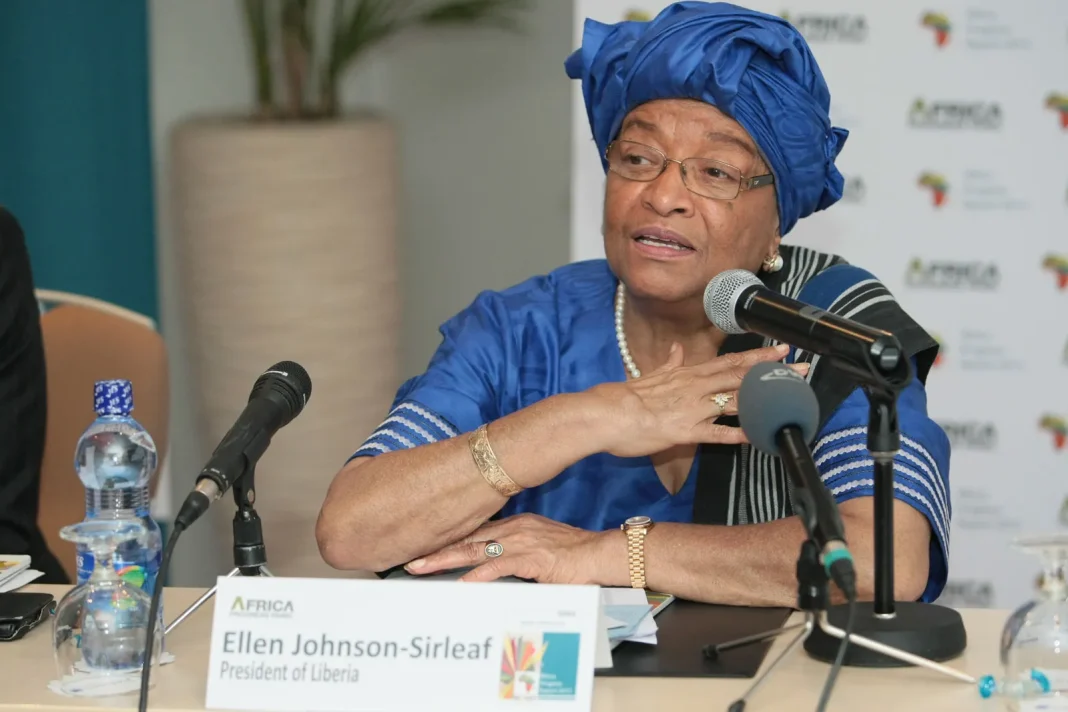
Former President Ellen Johnson Sirleaf has reignited debate on Liberia’s political future, declaring that national unity and responsible leadership are non‑negotiable pillars for progress. Her remarks came against the backdrop of mounting political tension, including the expulsion of controversial lawmaker Yekeh Kolubah from the House of Representatives.
Speaking at an intergenerational dialogue hosted by the Movement for One Liberia (MOL), a political party led by MacDella Cooper, Senior Political Advisor to President Joseph Nyuma Boakai, Sirleaf drew on her tenure steering Liberia through post‑war recovery. She urged Liberians—particularly the youth—to embrace responsibility alongside critique, stressing that governance demands discipline, sacrifice, and preparedness.
In a compelling fireside conversation, Sirleaf balanced encouragement with challenge. She acknowledged the frustrations of young Liberians facing unemployment and limited political participation, but insisted that readiness for leadership requires more than protest. “National unity and responsible leadership are not optional—they are the foundation of progress,” she emphasized.
Her intervention set the tone for a dialogue that sought to bridge Liberia’s widening generational divide. The MOL event was designed not merely as a forum but as a catalyst for change, confronting the realities of governance, accountability, and youth inclusion.
Panel discussions moved beyond rehearsed talking points, delving into corruption, leadership gaps, and the urgency of reform. Senior figures called for patience and gradual institutional change, but youth participants pushed back forcefully. They argued that Liberia’s challenges—economic stagnation, governance inefficiencies, and corruption—demand faster, more inclusive action.
Armed with lived experiences, young voices challenged leaders to move beyond symbolic gestures and create genuine opportunities for participation. Their interventions were bold, unapologetic, and resonated with observers who saw the dialogue as a turning point in Liberia’s civil discourse.
At the heart of the event was MacDella Cooper’s vision for unity. Her Movement for One Liberia seeks to dismantle divides across generational, political, and social lines. Cooper underscored that Liberia’s progress depends on collaboration, not competition, between generations.
“Liberia cannot move forward divided by age, experience, or opportunity,” she declared. Her call for inclusivity—integrating women, youth, and marginalized communities into leadership and policymaking—echoed throughout the gathering.
Despite the energy of the dialogue, skepticism lingered. Observers noted that Liberia has seen similar forums before, often with limited follow‑through. The challenge now lies in translating conversation into concrete policy shifts and sustained engagement.
Still, the significance of the event was undeniable. For several hours, Liberia’s past and future occupied the same space—not in opposition, but in dialogue. Disagreements and tensions surfaced, yet there were also a shared recognition of the country’s challenges and the need for collective action.
Whether this intergenerational dialogue becomes a catalyst for change or fades into symbolism will depend on what follows. For now, one thing is certain: the conversation has begun, and it is gaining momentum.
“The Dialogue is a structured exchange between young political enthusiasts and senior political legends of our time, aimed at addressing national political issues, bridging ideological divides, and fostering long‑term social cohesion,” Cooper explained.
She added: “It seeks to transcend casual conversations by creating an intentional space where participants from different generations and political persuasions can engage on equal footing, sharing perspectives on governance, rights, and public policy.”
Intergenerational dialogue is widely recognized as a powerful tool for national development. Globally, it unites youth and older generations to exchange ideas, dismantle stereotypes, and co‑create sustainable solutions. In Liberia, where post‑war recovery remains fragile and governance challenges persist, such dialogue is particularly vital.
As Sirleaf reminded the audience, progress is impossible without unity and responsible leadership. Her words, delivered with the authority of experience, now challenge Liberia’s leaders and youth alike to prove that this moment can evolve into a movement.

