

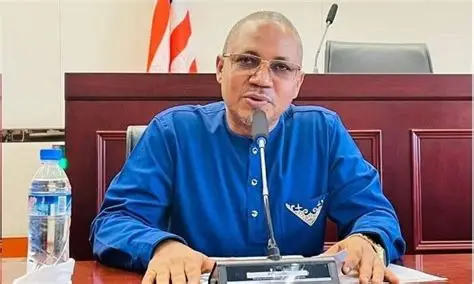
Liberia is intensifying its push to secure universal access to clean water, sanitation, and hygiene (WASH) services through renewed global partnerships, as senior government officials met with Tim Wainwright, Chief Executive of WaterAid, during the ongoing World Bank/IMF Spring Meetings.
The high-level talks, led by Mohammed Ali, Managing Director of the Liberia Water & Sewer Corporation, and Finance Minister Augustine Kpehe Ngafuan, underscored Liberia’s determination to confront its chronic WASH challenges while preparing for the mounting risks of climate change.
Liberia’s water and sanitation crisis remains acute. International development estimates reveal that nearly one in four Liberians still lacks access to basic drinking water, while millions endure inadequate sanitation facilities, particularly in rural and peri-urban communities. Poor sanitation continues to fuel outbreaks of cholera, typhoid, and diarrhea, illnesses that disproportionately affect children and undermine national productivity.
Officials stressed that WASH reform is not merely a social service but a cornerstone of Liberia’s post-conflict reconstruction and economic transformation agenda. “Improved water systems are directly linked to health, education, and poverty reduction,” one delegate noted, emphasizing the urgency of scaling up infrastructure and policy coordination.
Globally recognized for its impact, WaterAid operates in more than 20 countries, helping millions gain sustainable access to clean water and sanitation. In Liberia, its interventions have been particularly visible in rural counties, where access rates lag behind national averages.
The organization has supported schools, health facilities, and underserved communities by constructing safe water systems, promoting hygiene education, and strengthening sanitation governance.
These efforts have provided lifelines to communities otherwise left behind, reinforcing WaterAid’s role as a critical partner in Liberia’s development journey.
The Washington engagement carried strategic weight. Liberia is seeking external support to modernize aging urban water networks, expand sewer services in Monrovia and other cities, and build resilience against climate shocks such as flooding, coastal erosion, and drought variability.
Experts warn that climate change is increasingly destabilizing water security across West Africa, making infrastructure investment more urgent. Finance Minister Ngafuan emphasized the need for innovative financing models that blend government resources, donor support, and private-sector participation to close Liberia’s infrastructure gap.
The breadth of Liberia’s delegation signaled the national priority attached to WASH reforms. Alongside Ali and Ngafuan were Nyekeh Forkpa, Deputy Education Minister; Jerolinmek M. Piah, Minister of Information; and Henry Nyanquoi, Assistant Minister for Economic Policy. Their presence highlighted the cross-sectoral impact of water and sanitation systems on schools, hospitals, urban planning, and economic productivity.
“This is not just about pipes and pumps,” one official remarked. “It is about healthier families, stronger schools, and a more resilient economy.”
Liberia’s renewed partnership with WaterAid is being viewed as another step in its broader diplomatic and development push to attract strategic alliances capable of transforming essential public services. If successful, the cooperation could help Liberia move closer to achieving the United Nations Sustainable Development Goal 6 — universal access to clean water and sanitation by 2030.
For ordinary Liberians, that milestone would mean more than statistics. It would mean children spared from preventable diseases, communities shielded from climate shocks, and a stronger foundation for national growth.
As Liberia deepens its global partnerships, the challenge now lies in translating high-level commitments into tangible results. The Washington talks may prove pivotal in ensuring that clean water and sanitation — long elusive for millions — finally become a reality across the nation.

