

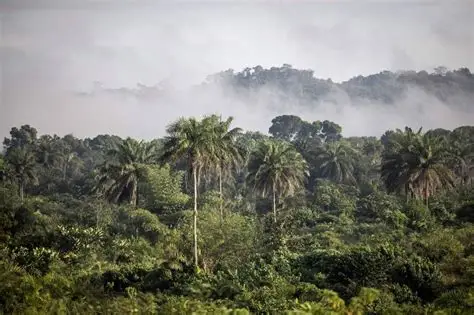
Liberia faces losing vital development bank support unless it approves the sale of carbon credits, as rainforest nations come under pressure to sell the credits to airlines, said people familiar with the matter. Under a UN trading system launched over a year ago, big polluting nations and their airlines can offset their carbon footprints by buying credits generated from projects that remove carbon dioxide from the atmosphere, often through protecting or restoring forests.
Airlines including British Airways, Emirates and Ryanair must buy credits to offset some emissions by 2028 after their home countries signed the scheme into law. There is also heavy demand for credits among wealthy governments themselves.
But there is a shortage of credits as their sale can be cumbersome — and can make it harder for forested countries to meet their own climate goals. Liberian government departments have been told that a portion of the country’s funding from the African Development Bank (AfDB) — which has previously provided budget support and loans to the country’s private banks — depends on its approving a carbon sales framework, according to two people familiar with the matter.
The country has been urgently reviewing its carbon framework over the past week, said two more people. The AfDB said it was holding ongoing discussions with the Liberian government about “potential areas of support, including strengthening fiscal stability, promoting key sectors and enhancing climate governance frameworks”.
As of Friday, it had not approved any support for the 2026 budget. The bank’s carbon support facility was still being designed, with “high integrity carbon credit generation” in mind, it said. Last year, the AfDB approved a $20mn loan facility to Liberia’s private banks. It extended $18.3mn to the government — equivalent to roughly 2 per cent of Liberia’s annual budget — in a package designed to boost governance and tax receipts.
It has in recent years committed $680mn to develop the country’s transport, agriculture and financial systems. While the carbon credits could bring millions in revenue, rushing to put a policy in place could ultimately harm Liberia’s ability to generate income through protecting forests, said Rudolph Merab, a former timber baron who is head of Liberia’s Forestry Development Authority.
“We cannot be rushed into a policy,” he told the FT. “Immediate gain today and no gain for tomorrow does not really attract us.” The Liberian government did not respond to requests for comment. Merab said he was not aware of the alleged AfDB pressure.
Liberia, which is still rebuilding after more than a decade of civil war, has been burned once by international carbon market trading. Last year, a proposed deal with a Dubai royal fell through, following complaints by forest-dwelling communities that they had not been consulted on it.
The former head of the AfDB, which is based in Abidjan in Ivory Coast, warned last year about the risk of “carbon grabs” from foreign investors. But under new president Sidi Ould Tah, Mauritania’s former economy minister, the development bank has been pushing members to develop a set of norms for selling carbon.
Nigeria and others have recently launched frameworks that govern taxation and community consultation for carbon sales. Liberian NGOs responded with alarm to a draft framework last month.
The document, marked “final”, said it aims to ensure a “fair and equitable” distribution of benefits from carbon, but would give local communities a maximum of 50 per cent of profits after tax — and a minimum of just 10 per cent, depending on the ownership model for carbon credits. Members of the NGO coalition of Liberia told the FT they had not been properly consulted on the policy, which they believed would endanger communities’ right to say no to projects on their land.
This could undermine both the country’s reputation and its ability to meet climate targets under the 2015 Paris Agreement, they wrote in a draft letter to Liberia’s President Joseph Boakai. The policy must not be “shaped by compressed timelines or external pressures”, they said. Ben Rattenbury, vice-president for policy at Sylvera, a carbon data provider, said there was a current shortfall of 80 per cent of the credits that airlines would need to buy by January 2028.
He expected the supply to rise rapidly before then, with airlines expected to spend at least $2bn on credits. “Host countries in some cases fear getting a bad deal because they feel they have imperfect information about the decisions they’re being asked to take, and don’t want to shoot themselves in the foot.
– Financial Times

