

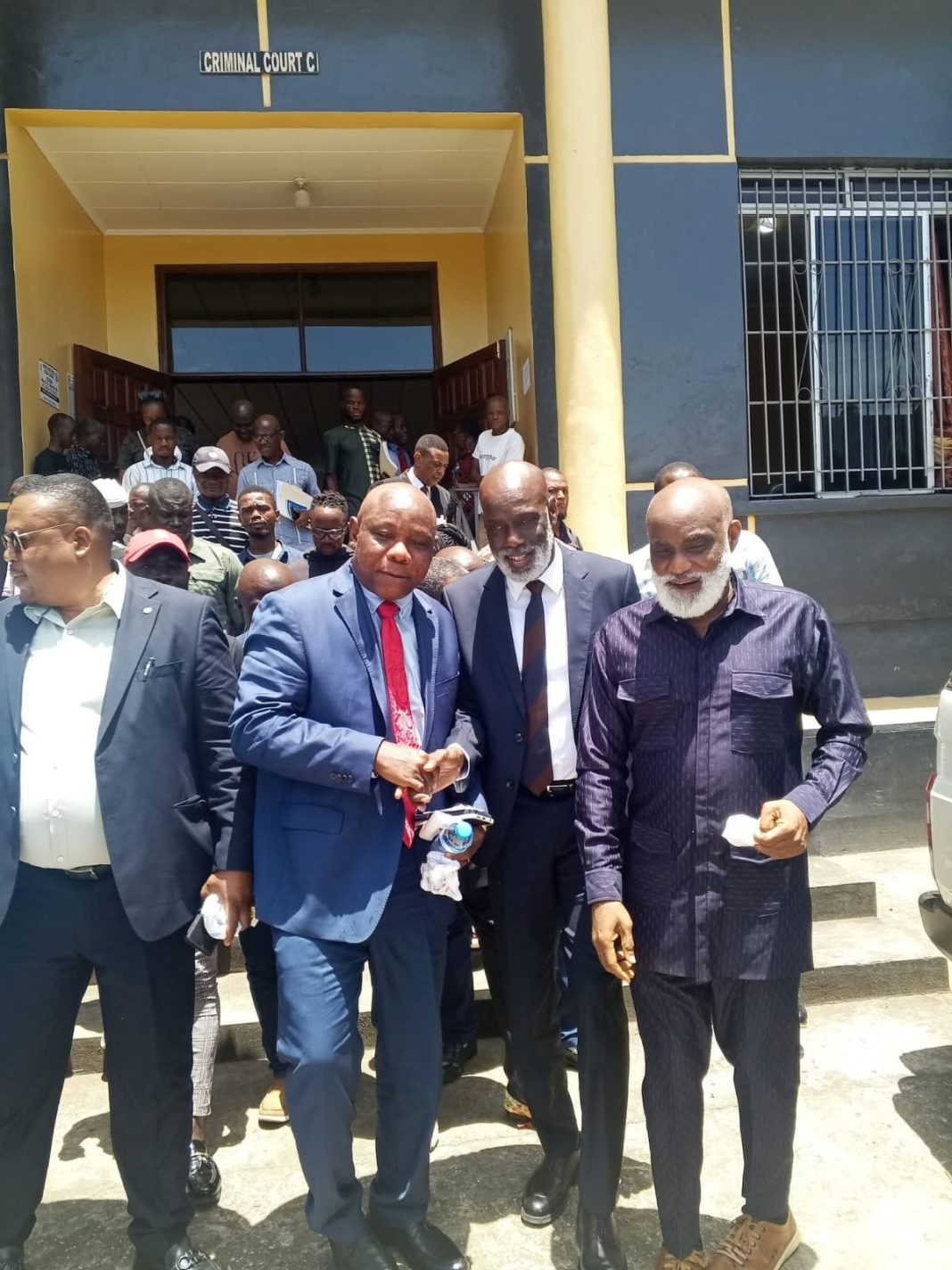
The prosecution in the national-security trial suffered a major setback on Tuesday after it effectively abandoned efforts to rebut testimony from former Finance Minister Samuel Tweah that he lawfully authorized transfers totaling US$500,000 and LRD 1.05 billion to the Financial Intelligence Agency.
After eight days on the stand, Tweah gave detailed, statute-based explanations for his actions under the Public Financial Management law and national security procedures.
Prosecutors repeatedly flagged they would call financial and legal experts to challenge his reading of the law. They never did.
With no expert witnesses produced to contest Tweah’s account, the minister’s assertions on authority and procedure stand largely uncontradicted — a development with potentially decisive impact as the jury prepares to weigh intent and legality.
Prosecution narrows focus
Rather than test Tweah’s statutory interpretation, the prosecution recalled lead investigator Baba Borkai to defend the probe’s methodology, after Tweah denounced the investigation as “based on assumptions, inferences and suppositions.”
Borkai’s testimony centered on investigative choices and whether procedural steps were followed, not on the minister’s claimed authority to approve the transfers.
The prosecution also called a Ministry of Justice coordinator to contest Tweah’s contention that the FIA is part of the National Joint Security framework.
The witness testified that, in his view and under the 2011 National Security law, the FIA is not a member. Defense witnesses had already countered that the FIA’s role was operationally integrated via a coded communication channel, not formal admission.
A juror query compounded prosecution troubles when asked whether membership in Joint Security is limited to entities listed in statute, the witness answered that the justice minister can determine membership.
The legally inaccurate response undercut the prosecution’s theory that the FIA required formal admission by the Justice Ministry to participate in national security operations.
The absence of rebuttal experts prompted sharp commentary. One government analyst, speaking anonymously, suggested prosecutors may have been reluctant to present witnesses who would contradict practices used by the current administration. Others speculated potential experts were unwilling to publicly dispute positions grounded in the PFM law and established administrative practice.
As the trial moves into its final phase, the prosecution appears to be shifting its theory from lack of legal authority to questions about accountability for how the funds were used — an argument prosecutor did not emphasize at the outset.
Lead investigator Borkai acknowledged he had not pursued operational accounting for the disbursed funds, focusing instead on which agencies received them. That gap undercuts the pivot to “accountability of funds,” defense lawyers say.
Statutory framework and presidential audit process
Tweah’s defense maintained that the transfers were authorized under Section 2 of the National Security law and the PFM framework, and that any forensic review of operational spending falls to a specialized national security audit process authorized by the presidency.
By bypassing that process, the prosecution, the defense says, ensured it could not obtain the granular operational detail needed to prove misspending.
With the prosecution unable or unwilling to refute Tweah’s legal explanations in open court, the defense has left the government’s central claim that the minister lacked authority to affect the transfers in tatters.

