

Liberia is pushing to build a single credible system for tracking carbon as it seeks to catch up with other African nations with frameworks to verify emissions cuts and trade carbon credits globally.
Officials say the country’s immediate priority is to merge fragmented datasets and establish a single national system capable of supporting credible carbon trading under the Paris Agreement.
Recently, the country’s Carbon Markets Authority convened a workshop to begin designing a national emissions verification platform, widely seen as the backbone of any credible carbon market system.
The one day session, held on April 24 in the country, brought together government agencies, development partners and private sector actors to align fragmented data systems and strengthen coordination across institutions.
The biggest development from the meeting, however, was the push to establish a unified national platform that can track emissions, verify carbon credits and meet international standards required for trading.
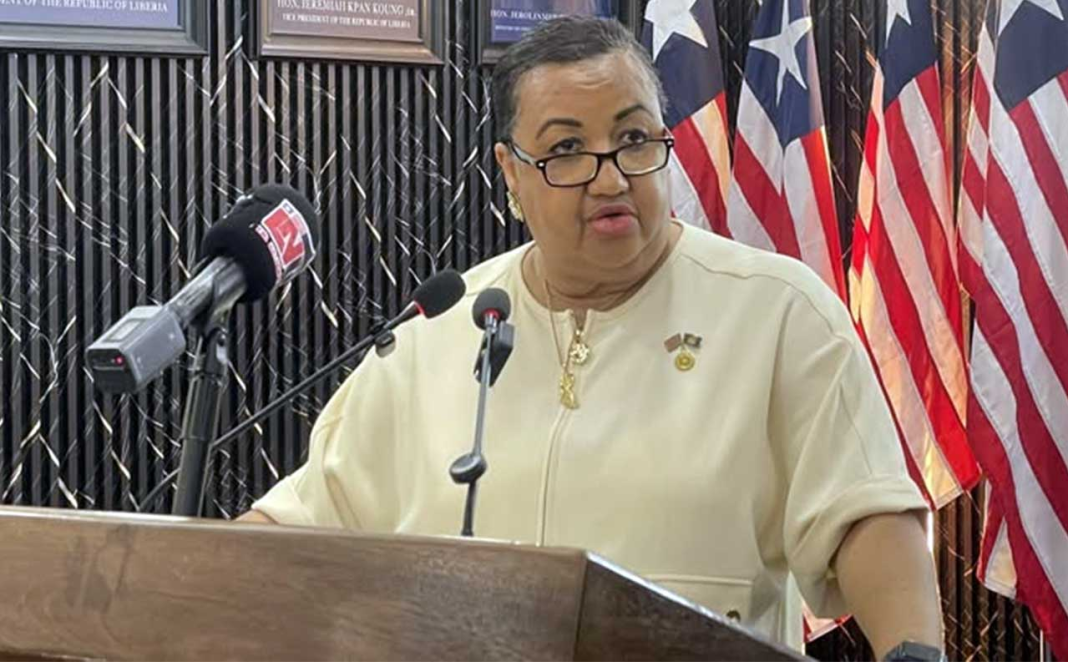
Liberia’s Special Envoy for Climate Action and Chief Executive Officer of the Carbon Markets Authority, Jeanine Cooper, described the initiative as a turning point for the country’s climate governance.
“This workshop is a foundational moment for Liberia’s environmental governance. Effective climate governance begins with credible, coordinated information systems,” said Cooper.
Drawing comparisons with humanitarian coordination systems, Cooper underscored the importance of clarity in institutional roles and data flows.
“We must understand who does what, where and when if we are to build a system that is credible and trusted,” she said.
Participants reviewed existing tools and datasets, explored ways to improve data sharing, and began laying the groundwork for what officials described as a “One Government Approach” to environmental reporting.
According to Cooper, the country’s immediate priority is to bring together scattered environmental data into a single, functional system.
“The workshop seeks to consolidate fragmented environmental datasets, map institutional responsibilities and establish a single, traceable and bankable national system that supports carbon trading and meets international verification standards,” Cooper said.
“A robust MRV system is essential for countries seeking to participate in global carbon markets and comply with international climate frameworks,” she added.
The Environmental Protection Agency signalled strong institutional backing for the initiative, with its Chief Technical Advisor, Ben Karmouh, affirming the framework would address longstanding data challenges and improve access for stakeholders.
“The proposed MRV framework will improve the acquisition and accessibility of national data for stakeholders,” Karmouh said, while pledging the agency’s full support for the Carbon Markets Authority’s efforts.
Across sectors, concerns remain about the technical capacity required to run such systems.
Liberia’s Deputy Minister for Planning and Development at the Ministry of Agriculture, David K. Akoi, warned that gaps in expertise could slow implementation if not urgently addressed.
“There is an urgent need for technical capacity building to address existing knowledge gaps among practitioners tasked with implementing MRV systems across sectors,” Akoi said.
Conservation International Country Director, Momodu Michael Kemokai, said his organisation is already investing in tools that could feed into the national system.
“Conservation International has already established a natural capital accounting scheme intended to help Liberia derive sustainable value from its environmental resources,” Kemokai said, reaffirming the institution’s support for the broader initiative.
Liberia’s push comes amid increasing pressure to formalise its carbon market framework, with international financing potentially tied to progress.
According to the Financial Times, government departments have been advised that part of the country’s funding from the African Development Bank depends on it “approving a carbon sales framework.”
Sources cited by the publication said Liberia has been reviewing its draft National Carbon Market Framework in recent weeks.
The African Development Bank has indicated it is in discussions with the government on “potential areas of support, including strengthening fiscal stability, promoting key sectors and enhancing climate governance frameworks,” although no funding has yet been approved for the 2026 budget.
Under Article 6 of the Paris Agreement, countries retain full control over their national carbon markets, including the types of credits they authorise and the rules governing their trade. This has triggered a wave of regulatory development across the continent, as governments seek to capture value from carbon trading while safeguarding national interests.
In Southern Africa, countries such as Malawi, Namibia, Tanzania, Zambia and Zimbabwe have already established carbon market frameworks, with many putting in place dedicated regulations to operationalise them.
Other countries, including South Africa and Botswana, are at various stages of developing their systems.
- By Conrad ONYANG

