

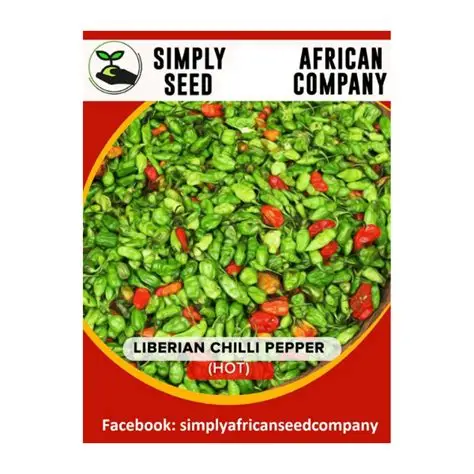
Liberia sets eyes on the global spice trade as Agriculture Minister Alexander Nuetah rallies farmers behind a bold new vision: transforming the nation’s famed “Kanyan Pepper” into an international export sensation.
Nuetah declared that Liberia is ready to storm Asian and European markets with its blistering chili variety, sparking hopes of a fiery agricultural renaissance.
Speaking at a seed distribution ceremony, Dr. Nuetah unveiled sweeping government plans to shoot Liberia into the ranks of major pepper exporters. “This is not just farming—it is a revolution,” he said, as farmers cheered.
He revealed that buyers from Turkey and China have already signaled strong interest in the Liberian-grown pepper, renowned for its scorching flavor and resilience. “Last year, a group came from Turkey and told us there is a huge market for what we call Kanyan Pepper. It is very hot, very strong, and highly demanded,” he said, his words igniting excitement among rural producers.
The Minister’s overseas engagements have further fueled momentum. In China’s city of Wulun, local officials urged Liberia to begin exports immediately, citing the nation’s insatiable appetite for chili. “The Mayor of Wulun told me they would be very happy if Liberia could export this pepper to China because Chinese people consume a lot of it,” Nuetah recounted. Upon his return, the Chinese Ambassador in Monrovia confirmed the immense economic potential of the initiative.
Determined to outshine regional competitors, Nuetah pointed to Zimbabwe’s export of 10 metric tons of chili to China last year—a feat that made headlines worldwide. “I want Liberia to make news too,” he declared. Raising the stakes, he announced Liberia’s target: at least 20 metric tons of Kanyan Pepper exported by late 2026 or early 2027. The goal, he emphasized, is not only to diversify exports but to ignite rural incomes and strengthen foreign exchange earnings.
Liberia’s economy has long leaned on rubber, iron ore, gold, and timber, while agriculture employs nearly 70 percent of its population. Yet the sector has been plagued by low productivity, poor infrastructure, and limited market access. Officials believe the pepper initiative could break that cycle, opening a new chapter for non-traditional exports. “We want farmers to go into this business with confidence and commitment,” Nuetah assured, pledging that government will purchase harvested peppers directly before exporting them abroad.
The plan is ambitious: specialized pepper cooperatives, improved seed distribution through the IFAD funded STAR Project, technical training, and modern drying facilities to meet international standards. “As harvest approaches, we will bring in dryers so the peppers can be dried properly without losing quality,” Nuetah promised, vowing to tackle post-harvest losses that have crippled past ventures.
Agriculture experts agree Liberia’s climate is ideal for high-value crops like chili. If successful, the initiative could create thousands of jobs for rural farmers, women, and youth, while repositioning agriculture as a driver of national recovery. For many farmers, the fiery seeds distributed this week symbolize more than income—they represent Liberia’s chance to blaze a trail into the global spice market.
Liberia’s export of pepper is extremely low, with the country operating primarily as a net importer of pepper products. Recent data indicates minimal, sporadic exports, with one report showing only roughly 25 kg to 100 kg exported annually in recent years.
There is a year-round demand for peppers in Liberia, with peak production occurring during the rainy season.

