

By Lucie Calléja
A new book reveals how the grassroots “Peace Huts” are doing what formal institutions have often failed to do, and what it costs the women who run them.
In August 2019, in the rural community of Weala, Liberia, a group of women wore their uniforms and crossed a bridge to a neighboring village. A rape had been reported. They called the police, applied pressure, and ensured the perpetrator was arrested. “I told him it’s not for me,” one participant recalled. “It is about women’s rights and about Liberia.”
These women are members of a Peace Hut – one of 38 community-based spaces operating across Liberia that have quietly become one of the country’s most widely recognized grassroots peacebuilding initiatives. This open access book (Calléja, 2026) published by Palgrave Macmillan, offers the first in-depth academic study of the initiative, based on fieldwork conducted across seven Peace Huts between 2019 and 2021.
These Structures Emerged From Women’s Wartime Courage
The Peace Huts did not emerge from a donor strategy or a government policy. They emerged from exhaustion, grief, and collective determination.
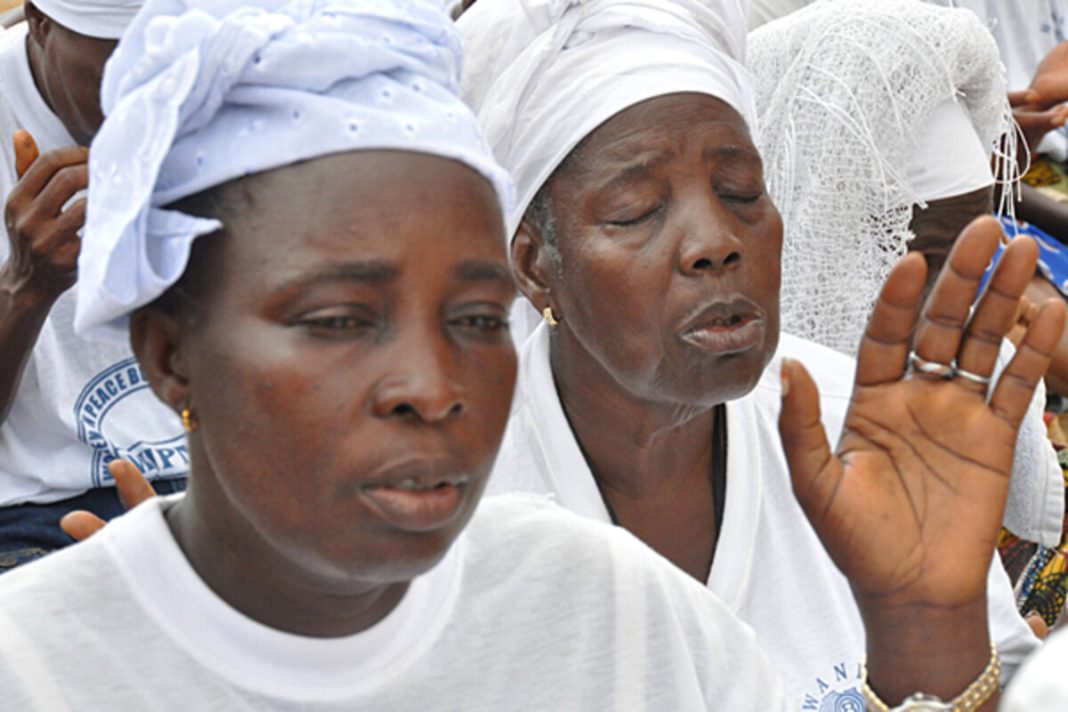
During Liberia’s brutal civil wars (1989-2003), women organised themselves in white clothing as a symbol of peace, staging mass demonstrations to demand an end to fighting. Led by WIPNET (the Women in Peacebuilding Network), they mobilised tens of thousands of people and pressured warring parties into the negotiations that produced the 2003 Accra Comprehensive Peace Agreement. WIPNET leader Leymah Gbowee was later awarded the Nobel Peace Prize for this work.
After the war, some women began meeting informally, first under trees, to process trauma and resolve disputes. From these spontaneous gatherings emerged the formal Peace Hut model, launched in 2006. The name was deliberate. The traditional Palava Hut system, used for centuries, often reproduced the very patriarchal structures that women were trying to dismantle. They wanted something new.
They Resolve the Conflicts that Courts Cannot Reach
In communities where formal justice is distant, expensive, or distrusted, the Peace Huts fill a critical gap. Members mediate cases of domestic violence, land disputes, child abandonment, rape referrals, and adolescentpregnancy, often meeting weekly, sometimes more frequently.
In Ganta, all Peace Hut groups gather on the last Saturday of each month to review community developments. In Totota, where the very first hut was built, women report that people used to travel four or five hours to bring their cases. In Bo-Waterside, decisions are made collectively by all members, including widows and people with disabilities, distinguishing the model from the traditional Palava Hut where a paid Town Chief holds authority.
Serious crimes like rape and murder are referred to law enforcement. But Peace Hut women do not simply step aside, they accompany survivors, support them through the legal process, and maintain pressure for accountability. In several communities, local police have formally acknowledged that the Peace Huts have reduced violence and conflict.
They Have Transformed Women’s Economic Lives
Since 2009, with support from UN Women, the Peace Huts have introduced Village Savings and Loan Associations (VSLAs): community funds from which members borrow to launch small businesses and repay with modest interest. The results have been significant. According to survey data gathered for the research, 63% of Peace Hut members reported starting their own business through the initiative, and nearly 60% said they were better able to pay their children’s school fees.
“The Peace Hut changed my life,” one woman from Weala said. “I learnt how to make 10 dollars out of 5. My husband used to beat me, but now we are good at home. I feel at peace.”
Activities vary by community: cassava farming in Gbarma, tailoring and baking in Weala, financial literacy and business management in Bo-Waterside. During the 2014 Ebola crisis, the Huts also served as public health hubs, helping to contain the outbreak in rural areas where state institutions were absent.
They Are Translating Resolution 1325 into Everyday Practice
UN Security Council Resolution 1325 adopted in 2000, was a landmark commitment to including women in peace processes. But this book shows a persistent gap between that global commitment and what actually happens in rural Liberia.
The Peace Huts bridge that gap, not by citing the resolution’s language, but by materialising its goals. They train women in conflict resolution, trauma healing, early warning, and human rights. They facilitate women’s participation in town hall meetings, with 91.6% of survey respondents reporting active involvement in women, peace and security work in their community. In Malema, a male participant confirmed that no major decisions are now made without women’s input.
These are not small shifts. In deeply patriarchal settings where women historically sat at the back of community meetings, the Peace Huts have changed the rules of local governance.
But They Are Running On Goodwill and Very Little Else
The book does not shy away from the structural contradictions that threaten the initiative’s future. Funding is the central problem. A UN-World Bank joint report estimated that making the Peace Huts fully effective would cost around $1.5 million per year – a fraction of the $95 million allocated annually to Liberia’s formal justice sector. Yet most huts receive little to no regular financial support.
“The biggest obstacle is the continued lack of funding,” one UN official expressed. “So much of the work that the Peace Hut women did was volunteer-based, or they got a little tiny stipend. The investment was so tiny compared to the billions of dollars that went into Liberia to do other things.”
Women in Gbarma said they receive no support from either government or civil society. In multiple communities, facilities are damaged, there is no electricity or running water, and members rely entirely on their own savings contributions to keep the initiative running. The COVID-19 pandemic reversed years of progress when village savings groups collapsed under unpaid loans and suspended meetings.
The Liberian government officially recognises the Peace Huts as a national peacebuilding model, and the National Peace Huts Women of Liberia won the 2019 UN Population Award. But formal integration into national budgets remains elusive. As one civil society leader put it: “oftentimes, these politicians make key commitments that they know they will never carry out.”
The Peace Huts represent something rarely seen in peacebuilding: a model that is genuinely bottom-up, community-owned, and grounded in the lived experience of those most affected by conflict. Their success, where it has been achieved, is a testament to what ordinary women can build when given even minimal support.
The question this book ultimately poses is not whether the model works. The evidence suggests it does. The question is whether the international community is willing to invest in it, not on its own terms, but on the terms of the Liberian women who have been doing this work, largely alone, for nearly two decades.
Lucie Calléja, “The Peace Huts: Empowering Women in Liberia’s Peacebuilding Efforts” (Palgrave Macmillan, 2026) is available open access.
By Lucie Calléja
Lucie Calléja is a Post-Doctoral Fellow in Integral Human Development at Universidade Católica Portuguesa (UCP) and Invited Assistant Professor at the Institute for Political Studies (IEP-UCP). Her work focuses on conflict resolution in Africa, with a particular interest in community-based approaches and women’s roles in peace processes, drawing on fieldwork experience in Liberia and Mozambique. She is the author of the book The “Peace Huts”: Empowering Women in Liberia’s Peacebuilding Efforts (2026, Palgrave Macmillan).

