

By Rural Reporters News Network
Eastern Nimba County is witnessing a dramatic upheaval in its economic and environmental landscape, as the West African CFA franc—locally dubbed “Cefas”—surges into dominance across rural communities. Alongside this monetary shift, allegations of rampant forest destruction by Burkinabè settlers have ignited growing fears among residents and community leaders.
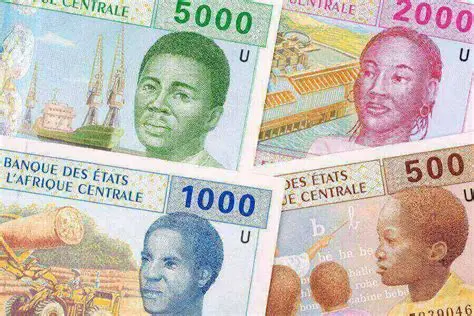
An investigation by the Rural Reporters News Network (RRNN) and Heritage Newspaper reveals that in districts such as Kparblee and Gbi-Doru, the CFA franc has eclipsed the Liberian dollar and even the United States dollar as the preferred medium of exchange. Villagers report that transactions in Liberian currency are increasingly rejected, with sellers demanding payment in CFA francs instead. Even the U.S. dollar—long considered a reliable fallback in Liberia’s dual-currency economy—is losing ground in certain remote settlements.
Residents warn that this trend is destabilizing Liberia’s monetary identity. “If you carry Liberian dollars here, you struggle to buy anything,” one villager lamented. “The sellers want Cefas, not our own money.” Such testimonies underscore a growing sense of exclusion, as communities feel their national currency is being sidelined in favor of a foreign one.
The investigation found that the phenomenon is most pronounced in forested border zones, where Burkinabè nationals have reportedly established sprawling settlements. These communities, situated deep within the forests near the Liberia–Ivory Coast frontier, are said to be hubs of logging, farming, and cross-border trade. Their economic ties to Ivory Coast, where the CFA franc is standard, have accelerated the currency’s penetration into Liberia’s rural economy.
Community leaders allege that the influx of Burkinabè settlers has not only altered local commerce but also triggered widespread environmental damage. Forest elders accuse the settlers of clearing vast tracts of land without authorization, fueling deforestation and threatening biodiversity. “Our forests are vanishing,” one elder warned. “The animals, the trees, the resources we depend on—they are being destroyed.”
The environmental concerns are compounded by disputes over land ownership and resource use. Local leaders say tensions are mounting as settlers expand their presence, often without clear legal documentation. Calls are intensifying for government intervention, with residents urging immigration, forestry, and local authorities to investigate alleged illegal occupations and enforce stricter monitoring in border communities.
Despite the upheaval, Tappita stands out as a rare exception. In this bustling town, the Liberian dollar and U.S. dollar remain firmly entrenched in daily commerce, offering a stark contrast to the surrounding villages where Cefas reigns supreme. For many, Tappita represents a fragile bastion of Liberia’s economic sovereignty amid the encroaching tide of foreign currency.
The dual crises—currency displacement and forest destruction—have converged to create a volatile situation. Citizens warn that unchecked expansion of Burkinabè settlements could spark conflict between locals and foreigners, eroding trust and destabilizing fragile border communities. “If the government does not act, tensions will rise,” one community leader cautioned. “We cannot allow our land, our money, and our forests to be taken away.”
As Liberia grapples with these challenges, the story unfolding in Lower Nimba is more than a local issue—it is a test of national resilience. The dominance of the CFA franc threatens to undermine Liberia’s monetary system, while the destruction of forests jeopardizes environmental sustainability. Together, they pose a formidable challenge to governance, sovereignty, and community survival.
For now, the people of Lower Nimba wait anxiously, demanding answers and action. Their voices echo a stark warning: if left unaddressed, the rise of Cefas and the fall of the forests could reshape Liberia’s future in ways too costly to ignore.

