

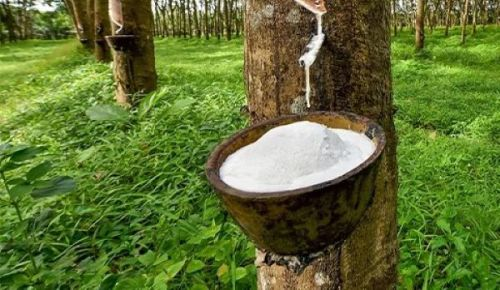
Liberian President Joseph Boakai has offered multiple investment incentives to domestic firms in the rubber industry while maintaining ban on exports of unprocessed natural rubber starting July 1, 2026. The measure will remain in force indefinitely according to a new executive order issued on Friday, June 26. The move is part of the ARREST Agenda for Inclusive Development.
The ban covers natural latex, coagulum, cup lumps, bark scraps, ground scraps and all other forms of raw rubber. The executive order states that “the continued export of raw natural rubber has deprived Liberia of significant downstream manufacturing opportunities, industrial employment, expanded tax revenues, and improved foreign exchange earnings.”
To enforce the ban, violators will face penalties, including the immediate seizure of illegal shipments and administrative fines of up to $100,000 for companies and $50,000 for smallholders for a first offense. Several ministries have also been tasked with inspecting, detaining and confiscating any shipment of unprocessed rubber intended for export.
The government also committed to adopting new regulations within 30 days to improve producers’ access to the domestic market, particularly those in remote communities.
It also plans to introduce incentives for domestic rubber-processing industries through tax breaks, preferential financing, infrastructure support and policies aimed at expanding the manufacture of finished products such as tires, gloves and footwear.
The announcement follows a $36 million investment secured by Liberia in May 2026 from Cambodian-based agro-industrial group Mainland to strengthen local rubber processing and better integrate smallholder rubber farmers into value chains.
According to the Central Bank of Liberia (CBL), natural rubber production fell 2.3% in 2025 because of lower output from smallholders.
West Africa’s third-largest producer of natural rubber after Côte d’Ivoire and Nigeria, Liberia plans under its 2024–2030 National Agricultural Development Plan (NADP) to establish 20,000 hectares of new rubber plantations for smallholders and rehabilitate 10,000 hectares of existing plantations.
Lydie Mobio

