

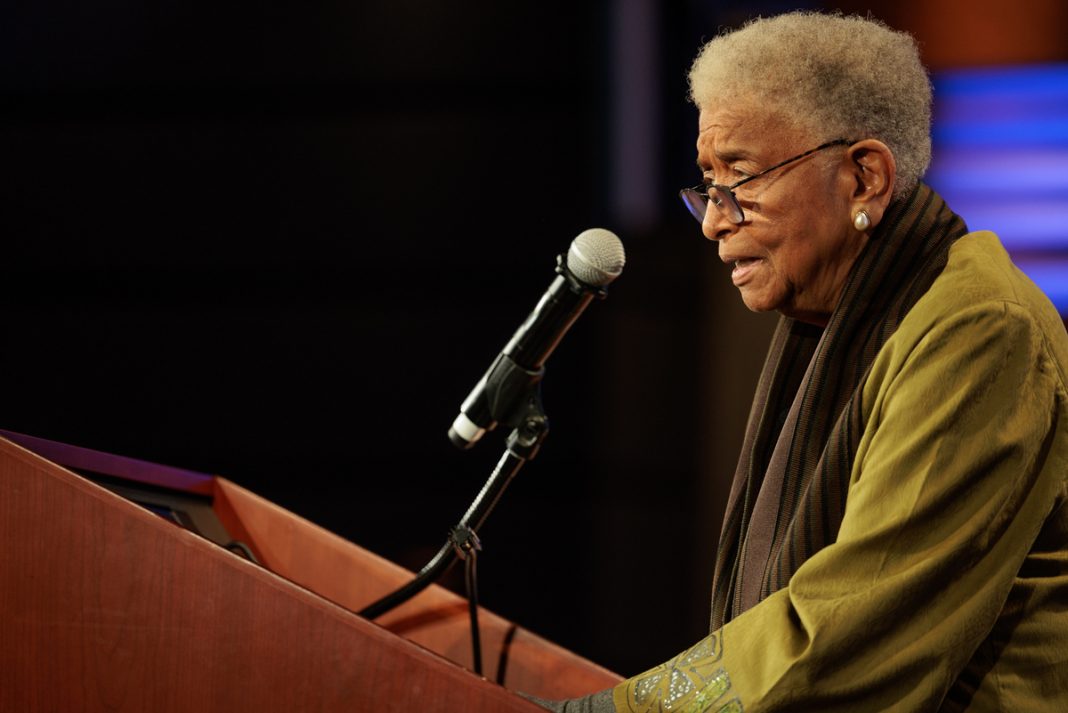
Former Liberian President Ellen Johnson Sirleaf said the country is falling short in its fight against corruption because investigations rarely lead to convictions, calling for the urgent creation of a specialized anti-corruption court to speed up prosecutions.
Speaking at a national anti-corruption policy dialogue in Monrovia, Sirleaf said Liberia has spent years building accountability institutions, but enforcement remains weak, undermining public confidence and allowing graft to persist.
“An Anti-Corruption Commission that investigates but cannot see prosecution through to conviction is a commission that diagnoses the disease but fails to administer the cure,” Sirleaf said at the event organized by the Center for Transparency and Accountability in Liberia and partners.
Sirleaf, who took office in 2006, said she inherited a system in which “corruption was largely an operating system,” prompting her administration to strengthen institutions including the Liberia Anti-Corruption Commission, the Internal Audit Agency, the General Auditing Commission and the Public Procurement and Concessions Commission.
But she said the reforms have not delivered enough results because corruption cases often lose momentum once they enter the regular court system. That, she said, has created a credibility gap among citizens who see cases announced but rarely see punishment.
The former president urged President Joseph Boakai, the judiciary and lawmakers to back the proposed specialized court and strengthen the wider accountability framework. She said the fight against corruption cannot be left to one administration and must involve the government, civil society, the private sector and ordinary Liberians.
Sirleaf also warned that laws and institutions alone will not end corruption unless public attitudes change and the country’s three branches of government respect the independence of watchdog institutions.
“No court, existing or new, will achieve the desired results if the authorities of our three branches of government fail to respect the independence of our institutions and fail to be accountable,” she said.
She called on Liberians to reject the normalization of graft and support efforts to build a more transparent and accountable state, saying the country’s future depends on collective action.
The iron ore, rubber and gold exporter’s economic development drive has been beset by decades of graft. Liberia scored 28 out of 100 on 2025 Corruption Perceptions Index (CPI), ranking 136th out of 182 countries according to global governance watchdog Transparency International.

