

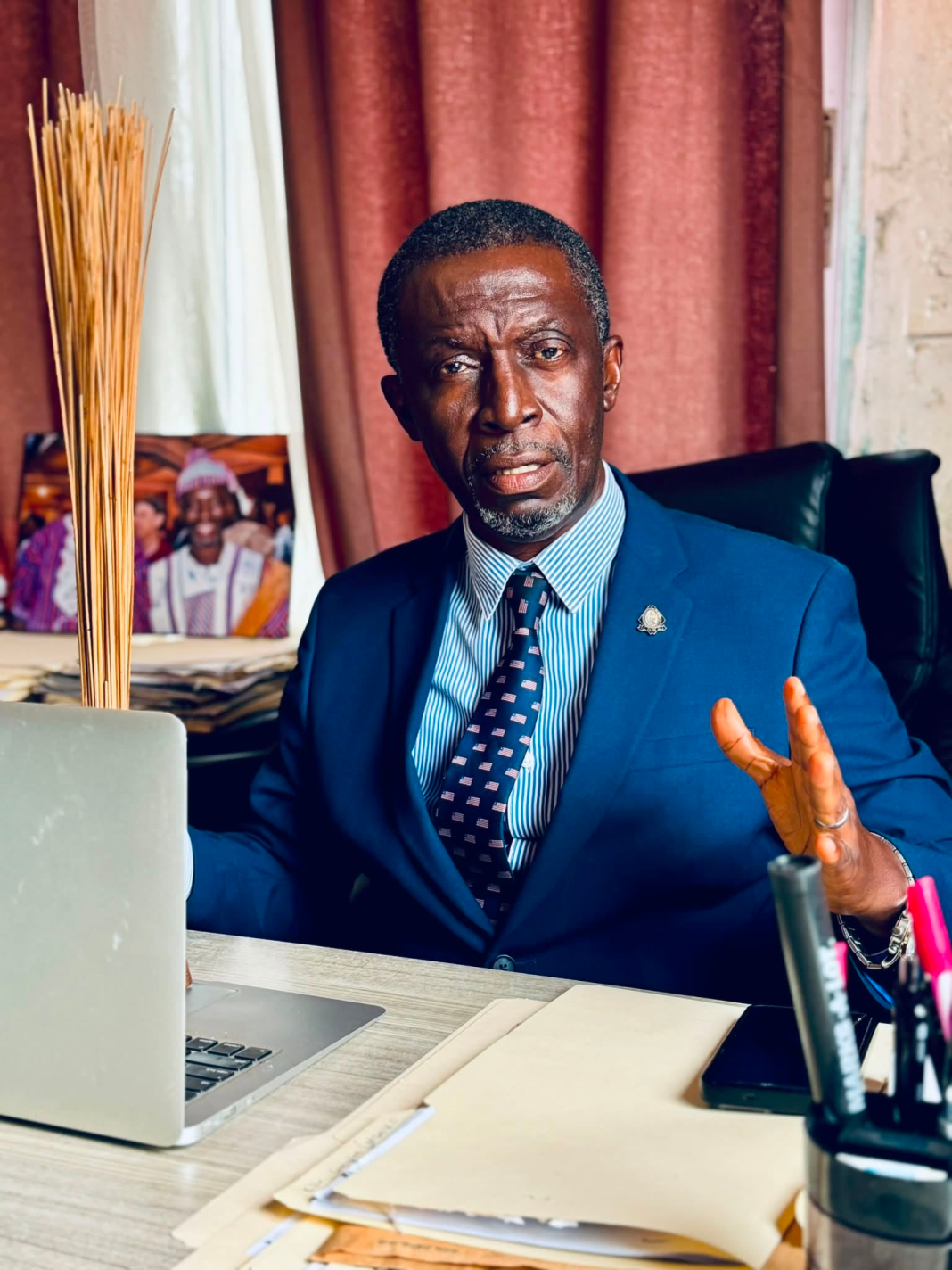
By Cllr. Tiawan Saye Gongloe
As Liberia prepares for the next elections, the most important question is not, only who should govern us, but also, how Liberia should be governed. My appeal to the Liberian people is to vote for a presidential candidate that will lead in a manner to make Liberia the Botswana of West Africa, just as Botswana became the Singapore of Africa.
For almost two centuries, Liberia has enjoyed advantages that many nations only dream of. We gained our independence in 1847, more than a century before Botswana became independent in 1966. We are blessed with abundant rainfall, fertile agricultural land, a long Atlantic coastline, navigable rivers, rich forests, fisheries, iron ore, gold, diamonds, amongst other valuable mineral resources, rubber, coaco, coffee, oil palm, and a youthful population capable of transforming these resources into national prosperity.
Botswana possesses just a few of these natural advantages. Nearly seventy percent of its territory is covered by the Kalahari Desert. It is landlocked, water-scarce, drought-prone, and has limited agricultural land. Yet today Botswana is an upper-middle economy because it is one of Africa’s least corrupt countries and widely respected for its adherence to the Rule of Law as well as prudent public financial management, while Liberia is among the fifteen poorest countries of the world.
The lesson is unmistakable: natural resources alone do not create prosperity. Good governance does.
Botswana has consistently invested public resources in education, healthcare, roads, water systems, and capable public institutions. Primary education is free, secondary and tertiary education are heavily subsidized, public healthcare is affordable, and infrastructure has steadily expanded.
The country has also negotiated resource agreements that allow the State to share directly in mining profits while collecting taxes and royalties. Its total income its diamonds is more than what Debeers, the investor gets. These revenues have been invested for the benefit of past, present and future generations of Botswanans.
The result is that the citizens of Botswana are happier with their government. Therefore, no frequent protests, strikes and demonstrations by the citizens of Botswana. One does not hear about Botswanans being victims of human trafficking like other Africans.
Liberia’s experience has been markedly different. Many families continue to bear substantial costs for education, including registration fees, uniforms, books, Parent-Teacher Association dues, and graduation fees from kindergarten through university. In some cases, university graduation-related charges reportedly are in the range of hundreds of United States dollars.
Healthcare likewise requires significant out-of-pocket spending for consultations, medicines, and diagnostic services. Today, Liberians who can afford it go to Ghana and India to reliable diagnosis and treatment. Additionally, Liberia continues to import a large proportion of its food despite having fertile land and favorable climatic conditions.
The contrast extends beyond natural resources to public priorities. Botswana has demonstrated that fiscal discipline and investment in people yield lasting national development. Liberia, by contrast, continues to struggle with governance challenges, corruption, and limited public resources for essential social services.
Another important lesson concerns public leadership. Botswana has generally maintained a reputation for modest compensation of senior public officials relative to the services delivered to its citizens. More importantly, public expenditure has translated into visible improvements in education, healthcare, infrastructure, and public administration. Citizens judge government not by the size of official salaries but by the quality of public services they receive.
Transparency is equally important. Public confidence is strengthened when citizens know how public funds are collected, allocated, and spent. Public officials should be accountable for the use of public resources, and major contracts and procurement processes should be conducted openly. Corruption flourishes in secrecy, while transparency strengthens democracy.
Liberia’s natural wealth gives us every opportunity to achieve similar success. What has too often been lacking is not resources but consistent adherence to the Rule of Law, prudent financial management, and sustained investment in our people.
The comparison with Botswana is not intended to suggest that Liberia should copy every policy adopted by another country. Rather, Botswana demonstrates timeless principles of good governance: respect for the Rule of Law, low tolerance for corruption, careful management of natural-resource revenues, investment in education and healthcare, fiscal discipline, and strong public institutions. No extravegance!
As citizens prepare to elect the next President, Senators, and Representatives, we should ask every candidate a simple question:
Do you intend to govern Liberia along the path that has made Botswana one of Africa’s most respected democracies?
Will you strengthen the Rule of Law?
Will you reduce corruption through transparency and accountability?
Will you have the political will to conduct quarterly lifestyle audits?
Will you invest more of the national budget in education, healthcare, food production, and infrastructure?
Will you negotiate resource agreements that maximize benefits for the Liberian people?
Will you practice frugality in public expenditure instead of extravagance?
These questions are more important than campaign slogans or political promises. They go to the heart of the kind of nation we want Liberia to become.
Our votes should not be cast merely for familiar names, political parties, or generous campaign financiers-political investors. They should be cast for leaders who are prepared to build institutions stronger than individuals, manage public resources honestly, and place the welfare of the Liberian people above personal or political interests.
Liberia has the natural endowment to become one of Africa’s most prosperous nations. Botswana has shown that disciplined governance can overcome even severe environmental disadvantages. If a country with deserts, limited water, and few agricultural and mineral resources can become a model of good governance, there is no reason why Liberia—with all its blessings—cannot do the same.
The next election should therefore be about more than choosing leaders. It should be about choosing a model of governance.
The choice before Liberia is clear.
Let us choose the path of Botswana!
Government is a place to serve, not to steal!
A Better Liberia is possible!

