

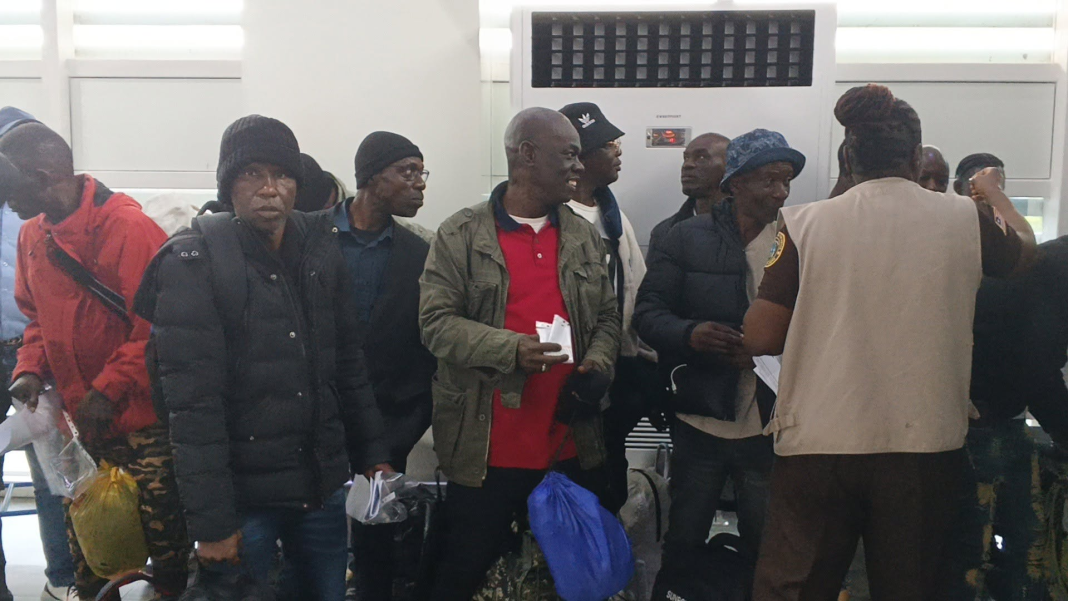
The Liberian government has welcomed home its first batch of citizens fleeing South Africa’s recurring xenophobic violence, a chilling wave of attacks that has left foreign nationals living in fear.
On Wednesday at exactly 2:35 p.m., 17 Liberians touched down at Roberts International Airport boarded Ethiopian Airlines, marking the beginning of a government led repatriation effort. The Liberia Refugees Repatriation and Resettlement Commission (LRRRC), working in concert with the Ministry of Foreign Affairs, facilitated the return after the group voluntarily requested immediate evacuation.
They were received by LRRRC’s Executive Director, Cllr. Jeror Cole Bangalu, who assured the weary travelers that the government is committed to helping them rebuild shattered lives. “Remain hopeful,” Bangalu urged, promising that Liberia will stand by its citizens in their hour of need. He disclosed that another batch of returnees is expected in the coming days, bringing the total to 29.
For many, the ordeal has been devastating. Alexander Saytonneh, one of the returnees, recounted how his business was destroyed amid the violence. “It was frightening,” he told journalists, describing the attacks that forced him to abandon everything. Saytonneh revealed that his son, a 12th grade student, will return once his school closes, while his wife, a Zimbabwean national, remains in South Africa for now.
The xenophobic assaults, often fueled by economic tensions and resentment toward migrants, have repeatedly erupted in South Africa, leaving foreign communities vulnerable. Liberians living there say they have endured intimidation, property destruction, and threats to their lives.
The government’s swift intervention underscores the urgency of protecting citizens abroad, especially in volatile environments. For the returnees, the journey home is bittersweet — a relief from danger, yet a painful reminder of livelihoods lost and families divided.
As Liberia prepares to receive the remaining evacuees, the nation watches closely, mindful that xenophobia remains a persistent threat across borders. For those who have returned, the hope is simple: safety, stability, and a chance to start anew on home soil.

