

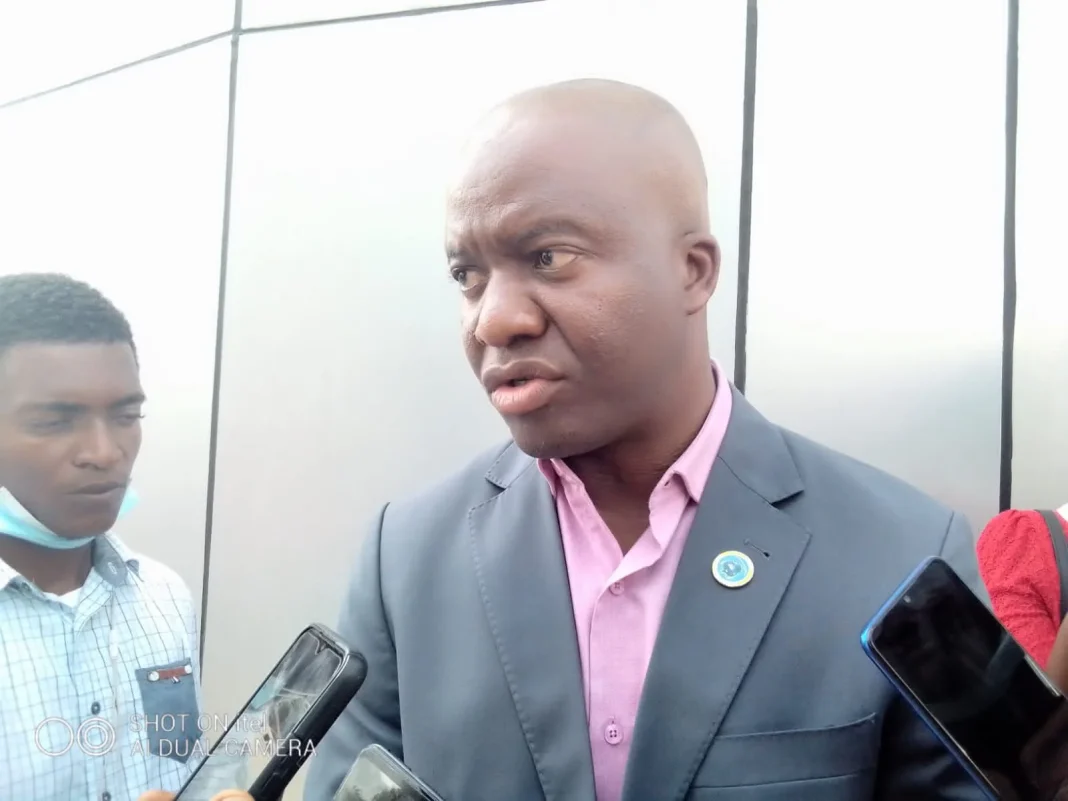
A refusal by Liberia Telecommunications Authority (LTA) Chairman Clarence Massaquoi to disclose how much revenue the regulator collected over the past year has raised fresh questions about transparency and accountability in an institution entrusted with regulating one of the country’s most important economic sectors. Massaquoi continues to keep his silence on the whereabouts of millions being generated for the state in the telecommunication sector.
Speaking during the Ministry of Information, Culture and Tourism press briefing on Thursday, July 30, Massaquoi defended the integrity of the LTA and its Board of Commissioners but declined to publicly state the amount of revenue generated by the Authority.
Massaquoi said the financial information had been reported to President Joseph Nyuma Boakai and assured the public that the LTA’s financial transactions were conducted in accordance with established rules.
But for an institution that collects and manages resources on behalf of the Liberian people, that assurance leaves an important question unanswered.
How much money did the LTA collect?
And where did the money go?
Those questions have become increasingly relevant as the LTA implements a series of regulatory reforms aimed at increasing government revenue, strengthening oversight and improving the telecommunications sector.
Massaquoi told journalists that critics were not accusing the LTA because they believed the Board had committed wrongdoing, but because, in his view, the reforms being implemented were affecting certain interests.
He further argued that attempts to portray the LTA as corrupt were part of a broader effort to create the impression that the Boakai administration was on the wrong footing.
“If you are looking for that source path, the LTA is the wrong place,” Massaquoi said, while maintaining that the Authority’s integrity remained intact.
The Chairman also said the LTA was available for investigation, arguing that an investigation could help preserve public confidence in the character of the institution and its officials.
That position presents an interesting contradiction at the heart of the current controversy.
On one hand, the LTA leadership says its financial transactions are conducted according to established rules and that its integrity is intact.
On the other hand, the Chairman declined to provide the public with the actual amount of revenue collected during the period in question.
For the Center for Transparency and Accountability in Liberia (CENTAL), the principle is straightforward.
Anderson Miamen, responding to an inquiry from this newspaper, said the LTA is answerable to the public in the same way as the Liberia Revenue Authority and other institutions responsible for collecting and spending public resources.
“Nothing about resources generated should be secret,” Miamen said.
He added that public disclosure is necessary for Liberians to know how much was collected and how those resources were spent in ways that directly or indirectly benefit the public.
CENTAL’s position goes to the heart of public financial accountability.
A public institution does not become transparent merely by assuring citizens that its officials are people of good character.
Transparency requires verifiable information.
For the LTA, that means publishing revenue figures, explaining the sources of the revenue, identifying how much was transferred to government accounts where applicable, accounting for expenditures and making supporting financial reports available for independent review.
The issue is particularly significant because telecommunications is a major revenue-generating sector.
The LTA’s own published industry statistics show the scale of economic activity within the sector. The regulator says telecommunications sector revenue had recovered to more than US$150 million by 2021 following years of decline, while mobile and broadband services have continued expanding.
More recent LTA data also show substantial growth in mobile-sector revenue. Its 2025 midyear data report recorded total revenue of approximately US$96.1 million for January through June 2025 across Orange Liberia and Lonestar Cell MTN, up from US$79.8 million during the same period in 2024. The figures are sector revenue and should not be confused with revenue collected by the LTA itself, but they demonstrate the substantial financial activity occurring within the telecommunications industry.
That distinction is important.
The LTA regulates the sector, but the billions or millions generated by telecommunications companies are not automatically government revenue or LTA revenue.
Therefore, the public needs precise figures from the regulator rather than broad references to sector performance.
Indeed, the LTA’s own 2025 performance documents demonstrate that revenue mobilization is among its institutional targets. The Authority’s performance contract included resource mobilization through licensing fees, special numbering resources and tariffs on value-added services.
In June 2026, the Board of Commissioners signed a 2026 Performance Contract that the Authority described as a commitment to performance, transparency and service delivery. Massaquoi said the agreement established goals and benchmarks against which the institution’s performance would be measured.
The question now is whether that commitment to transparency extends to financial disclosure.
The LTA has published annual and institutional reports on its website, including its 2025 performance assessment.
That means the institution already has mechanisms through which it can provide information to the public.
The challenge is therefore not necessarily whether information can be produced.
The challenge is whether the specific revenue figures being requested will be made available and independently verifiable.
Massaquoi’s statement that the figures were reported to President Boakai also raises a constitutional and governance question.
Reporting financial information to the President does not necessarily answer the public’s right to know how public resources are collected and managed.
The President is not the only stakeholder.
The Legislature has an oversight responsibility.
The Auditor General has an audit mandate.
The Liberia Anti-Corruption Commission has a statutory role in investigating corruption.

