

A bold new chapter in Liberia’s higher education is unfolding as the University of Liberia (UL) embarks on strategic talks with Germany’s LD DIDACT Education Group to modernize and transform its laboratory facilities across science, engineering, agriculture, fisheries, and health programs.
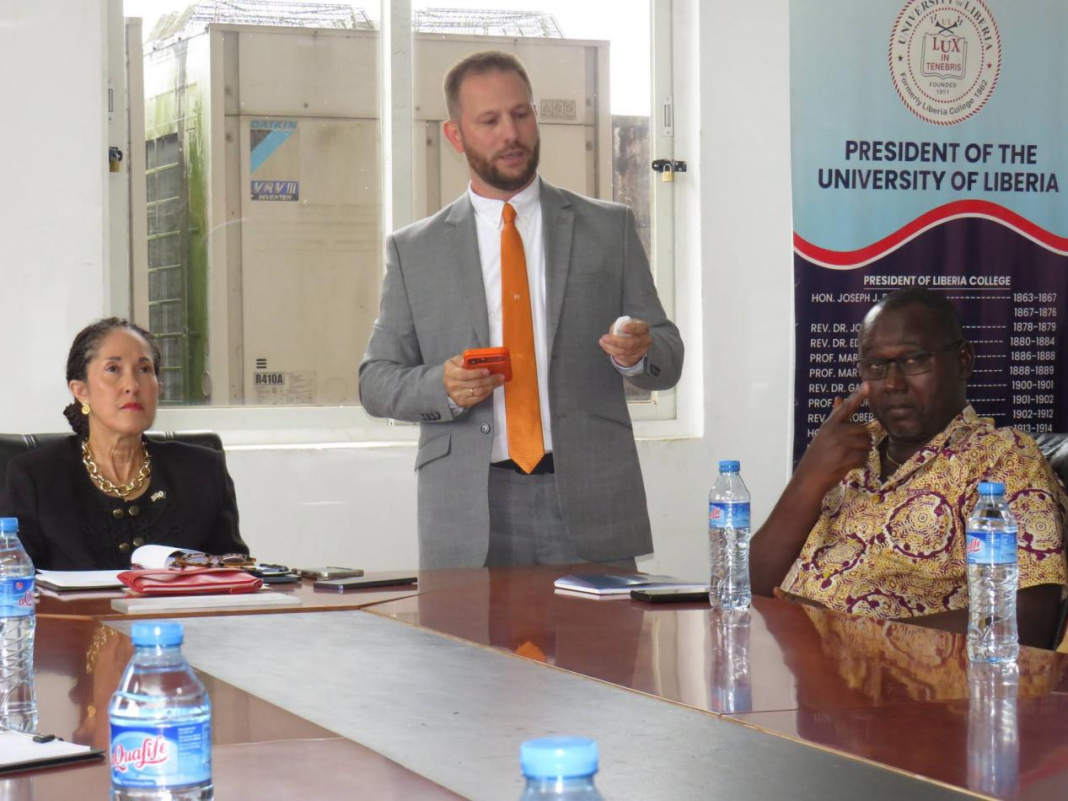
The initiative, unveiled during a high-level meeting on campus, was spearheaded by UL President Dr. Layli Maparyan, who welcomed LD DIDACT representatives Mr. Vladimir “Vladi” Shalakov, International Projects Representative, and Dr. Michael Flowers. Dr. Maparyan described the engagement as a cornerstone of the University’s sweeping institutional transformation agenda.
“This visit represents one of several strategic initiatives currently underway to advance the University of Liberia,” she declared. “Our goal is to provide students and faculty with modern laboratories that support quality teaching, meaningful research, and innovation capable of contributing to Liberia’s national development.”
Mr. Shalakov, delivering a detailed presentation, showcased LD DIDACT’s global footprint in equipping educational laboratories across more than 170 countries. He underscored the rising importance of hands on learning, digital technologies, artificial intelligence, and modern laboratory systems in preparing students for the demands of today’s rapidly evolving workforce.
The German group’s offerings include comprehensive laboratory solutions: needs assessments, design and installation, staff training, curriculum support, educational software, and long term technical assistance. Faculty members listened intently, recognizing the potential to bridge longstanding gaps in UL’s academic infrastructure.
Deans, department chairs, and faculty representatives seized the moment to outline their challenges. They cited inadequate laboratory space, outdated equipment, limited opportunities for practical training, and surging student enrollment as obstacles undermining teaching and research. Several stressed the urgent need for modern facilities in disciplines such as physics, chemistry, biology, engineering, public health, fisheries, agriculture, environmental science, and information technology.
The University administration reaffirmed its commitment to fully renovating academic facilities and integrating modern laboratory spaces into ongoing and future infrastructure projects. The LD DIDACT delegation, meanwhile, pledged to spend several days conducting detailed assessments of UL’s laboratories. Their findings will inform a comprehensive proposal tailored to the specific needs of each department.
For UL, the collaboration promises more than just upgraded equipment. It represents a leap toward strengthening practical education, expanding research capacity, and fostering innovation. By aligning its laboratories with international standards, the University aims to position graduates to compete successfully in both national and global labor markets.
The initiative also reflects UL’s broader mission: to deliver quality higher education while driving Liberia’s long term scientific, technological, and economic development. Analysts say the partnership could mark a turning point, transforming classrooms into hubs of discovery and laboratories into engines of national progress.
As Liberia grapples with the challenges of modernization, the University of Liberia’s pursuit of this German alliance signals a clear message: the nation’s premier public university is determined to equip its students not only with knowledge but with the tools to innovate, compete, and lead in the global arena.

