

By E. J. Nathaniel Daygbor
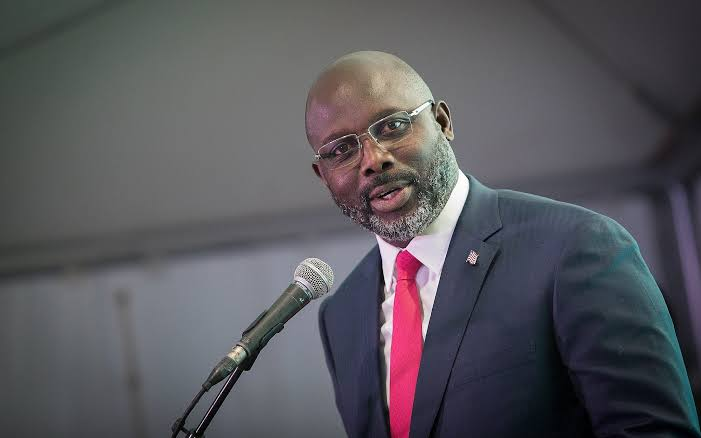
Former President George Manneh Weah has call to arms for Africa’s political and legal communities, warning that democracy cannot be reduced to ballot casting and ceremonial inaugurations. Speaking as keynote guest at the Nigerian Bar Association’s 66th Annual General Conference in Port Harcourt, Rivers State, Weah declared that the continent must confront the perilous reality that elections alone do not guarantee freedom.
“Democracy does not survive on the strength of elections alone. Elections are the doorway into democracy, not the house itself,” Weah told a packed audience of lawyers, judges, and policymakers.
He argued that Africa faces a dual crisis—military officers who topple elected governments and civilian leaders who exploit electoral victories to dismantle the very institutions meant to restrain them. “A tyrant with a certificate of return is still a tyrant,” he declared, a line destined to echo across the continent’s political debates.
The former football star turned statesman spoke against a backdrop of democratic turbulence. Since 2019, nine African countries have suffered coups, with Mali and Burkina Faso enduring multiple takeovers. Freedom House’s 2026 report paints a grim picture: global freedom has declined for the 20th consecutive year, driven by military interventions, institutional erosion, and elected leaders undermining checks and balances.
Weah’s intervention was not abstract. He placed lawyers at the frontline of Africa’s democratic struggle, urging them to defend judicial independence and ensure the law applies equally to presidents, citizens, and powerful interests. “The rule of law is not an abstract phrase for law school lecture halls. It is the practical guarantee that a citizen’s rights do not depend on who is in office,” he said.
Nigeria, Africa’s most populous democracy, provided a fitting stage for Weah’s message. Despite maintaining civilian rule since 1999, its institutions remain fragile. Freedom House currently rates Nigeria “Partly Free,” citing electoral irregularities, corruption, and judicial interference.
For Weah, neutrality is no longer an option. He described the Nigerian Bar Association as a “standing sentinel” of democracy, challenging lawyers to speak out whenever judicial independence and civil liberties are threatened.
Weah’s words carried unusual weight, rooted in Liberia’s painful history. The 1980 coup unleashed decades of instability, culminating in civil wars that killed or displaced hundreds of thousands. The economic collapse was catastrophic: Liberia’s GDP fell by 90 percent between 1987 and 1995. Only after the 2003 peace agreement and UN intervention did Liberia begin its democratic recovery.
That history, Weah argued, proves democracy is not a slogan but a matter of survival. He invoked his own political journey, recalling his concession in Liberia’s razor-thin 2023 presidential runoff. “I chose to concede while the counting was still underway, because I have always believed, and still believe, that the will of the people must stand above the ambition of any one man in a democratic setting,” he said.
Supporters hail that decision as a milestone in Liberia’s post-war democratic culture, though critics note that true leadership requires consistent respect for institutions beyond a single election.
Weah challenged the narrative that Africa’s democratic enemy is solely the military. He warned of gradual erosion through constitutional manipulation, weakened courts, media restrictions, and executive dominance. His stark phrase—“a tyrant with a certificate of return”—underscored the danger of elected authoritarianism, forcing electorates to ask: when does electoral legitimacy cease to be enough?
Expanding the conference theme “Beyond Limits,” Weah urged Africa’s professionals to rise above political loyalty. Judges must rule without fear, legislatures must scrutinize presidents, journalists must investigate freely, and citizens must retain the right to criticize governments without being branded enemies of the state. He also called for mobilizing Africa’s vast human capital, including diaspora professionals, to strengthen institutions and modernize judicial systems.
As he concluded, Weah’s appeal was sweeping yet sharp: peaceful coexistence, fairness, impartiality, gender equality, accountability, humanity, and democracy. His message was clear—Africa cannot protect democracy merely by condemning coups or celebrating election victories. The real battle begins after the ballots are counted, when institutions must confront power and citizens must be shielded from the very governments they elect.
For a former president whose nation endured coups, civil war, and economic collapse before clawing back to constitutional order, this was not just rhetoric. It was a lesson written in blood and history. The Nigerian Bar Association honored Weah for his eloquence, but the true honor may lie in whether Africa heeds his warning.

