

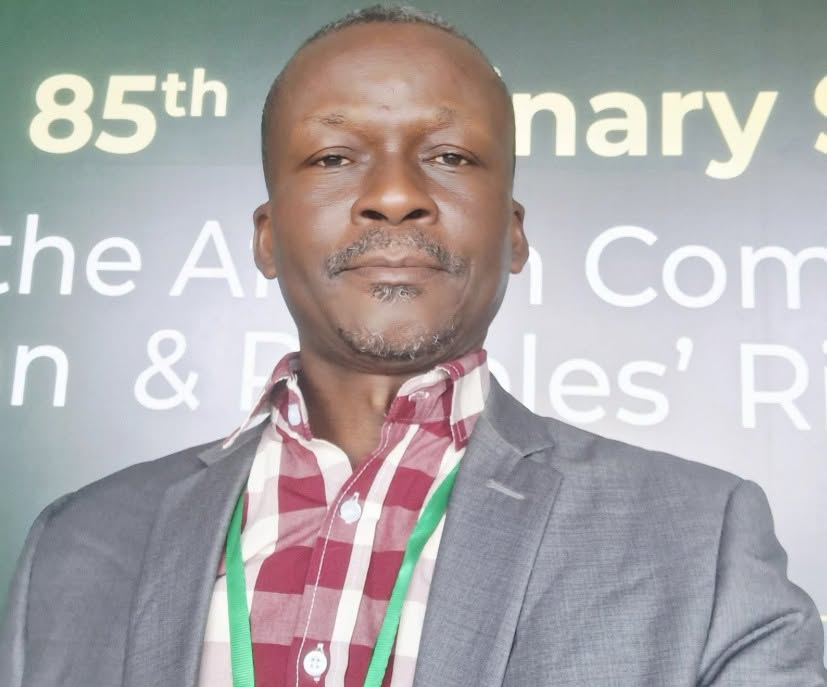
The President of the West African Journalists Association (WAJA), Peter Quaqua, has raised alarm over Liberia’s Cybercrime Act of 2025, describing it as “a decree in disguise” that risks undermining hard-won press freedoms and constitutional rights.
Quaqua argues that while Liberia needs legislation to combat digital threats such as hacking, fraud, identity theft, and online exploitation, the current law grants sweeping powers to the state that could criminalize legitimate expression.
“The question is not whether Liberia needs a law to combat cybercrime. It does,” he wrote. “The question is what happens when a law designed to protect citizens online also gives the State unrestrained powers over what people can say, publish and share?”
Liberia’s press freedom landscape shifted significantly in 2019 with the passage of the Kamara Abdullah Kamara (KAK) Act, which repealed criminal libel against the President, sedition, and criminal malevolence. That reform was hailed as a milestone in protecting free speech.
Quaqua warns that the Cybercrime Act risks undoing those gains by reintroducing speech offences under a digital guise. “A speech offence does not become less of a speech offence because it is transmitted electronically,” he cautioned.
Several provisions of the Act have drawn scrutiny, particularly Sections 15, 17, 19, 28, and 29.
Section 15 – Cyberstalking: Criminalizes transmitting computer data with intent to “bully, threaten or harass.” Quaqua acknowledges the need to protect citizens from genuine threats but warns that vague terms like “bully” and “harassment” could be stretched to silence critics, activists, or journalists.
Section 17 – Racist and Xenophobic Offences: Restricts racial, ethnic, or religious incitement. While legitimate in principle, Quaqua stresses that insult is not the same as incitement. Offensive speech, he argues, must remain protected unless it directly advocates violence or discrimination.
Section 19 – Harmful Data Messages: Criminalizes distribution of “harmful” messages, including information deemed “inherently false.” With penalties of up to three years in prison, Quaqua warns this provision could ensnare investigative journalism, whistleblowing, satire, or political commentary. “People can be wrong without being criminals,” he noted.
Sections 28 & 29 – Searches and Interception: Allow warrantless searches in urgent cases and interception of communications with ministerial approval. Quaqua likens these powers to state surveillance, raising concerns about privacy, source protection, and confidential communication.
Quaqua points to past cases highlighting inconsistent enforcement. He recalls the dismissal of a lawsuit against “Prophet Key” for allegedly insulting Julie Endi, contrasted with the Supreme Court’s sentencing of the same individual to six months in prison after insulting the Chief Justice’s mother.
Such disparities, he argues, show how discretion in speech-related laws can lead to selective justice. “Is it fair to suggest that the application of the law depends on who is involved?” he asked.
Liberia’s Constitution, particularly Article 15, guarantees freedom of expression, speech, and press, alongside the public’s right to be informed. Quaqua emphasizes that these protections extend to digital platforms such as Facebook, WhatsApp, and YouTube.
International frameworks—including Article 19 of the ICCPR, the Universal Declaration of Human Rights, and the African Charter—reinforce that restrictions on expression must be lawful, necessary, and proportionate. The African Commission on Human and Peoples’ Rights has also affirmed that freedom of expression applies to new technologies.
Quaqua insists that protecting citizens from cybercrime does not require criminalizing opinion. Fraud, threats, and incitement can be punished without silencing criticism or dissent. “Liberia does not have to choose between cybersecurity and freedom of expression. It can protect both,” he wrote.
He calls for precise drafting of laws, clear safeguards against abuse, and consistent application regardless of who is speaking or being criticized. Without such measures, he warns, the Cybercrime Act risks becoming a tool of repression rather than protection.
As Liberia navigates the digital age, Quaqua frames the debate in stark terms: “Is Liberia building a law to protect its citizens in the digital age—or creating a decree in disguise?”
His warning underscores a broader challenge facing democracies worldwide: balancing cybersecurity with the fundamental right to free expression. For Liberia, the stakes are particularly high, given its fragile democratic gains and history of suppressing dissent.

