

By E. J. Nathaniel Daygbor
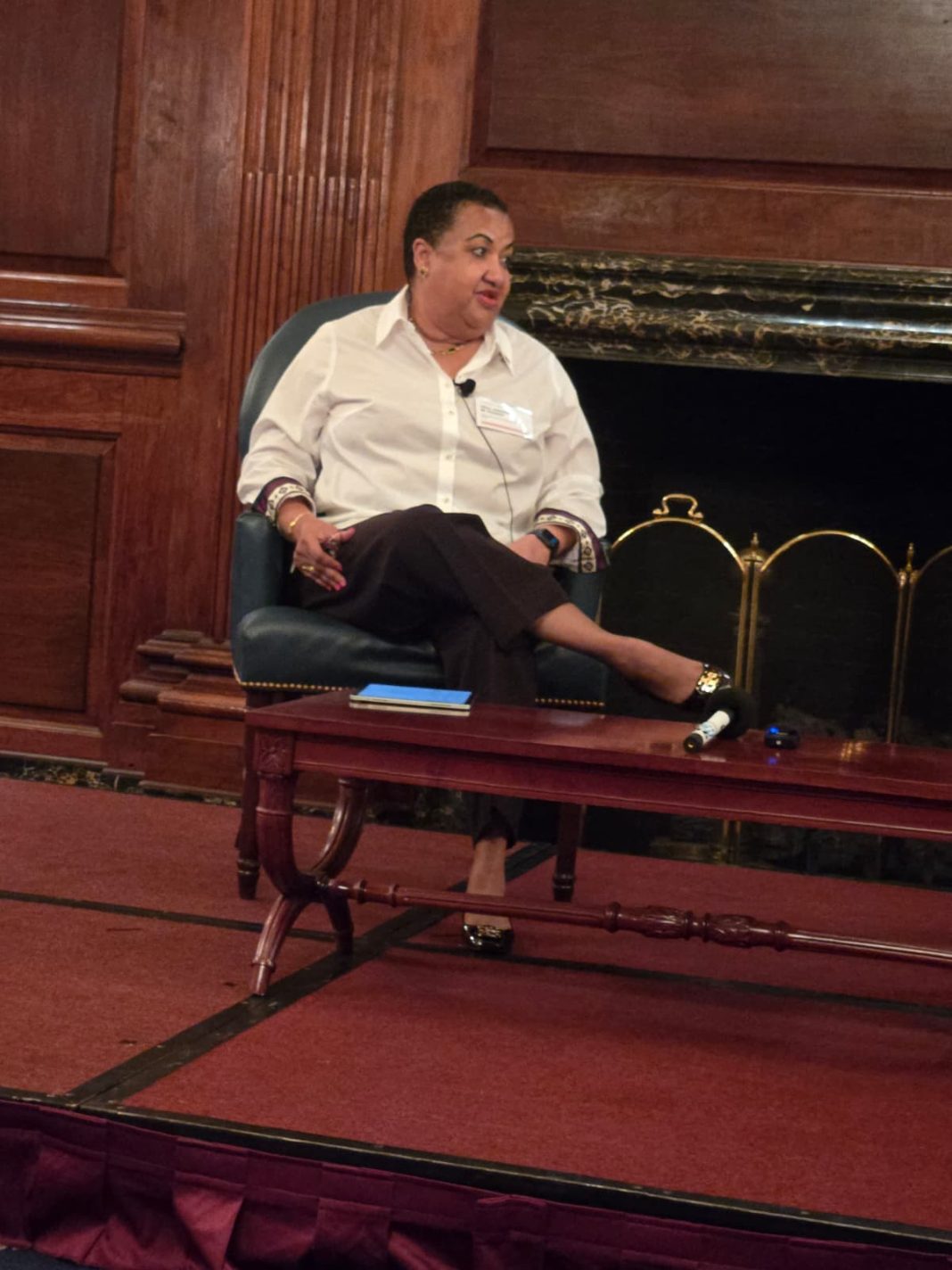
At the 81st session of the United Nations General Assembly, Liberia’s voice rang clear on the global stage as Madam Jeannie Cooper, Chief Executive Officer of the Carbon Markets Authority, delivered a compelling address on how the nation’s abundant natural capital can be harnessed to secure peace, resilience, and sustainable development.
Unlike many regions where scarcity drives conflict, Madam Cooper emphasized that Liberia’s challenge lies in managing abundance. With rainfall averaging over 5,000 millimeters annually — and topping 9,000 mm in Monrovia in 2025 — alongside six months of sunshine and fifteen rivers coursing through the country, Liberia’s wealth of natural resources demands equitable sharing to sustain peace.
President Joseph Boakai, she noted, has valued Liberia’s natural capital at more than $30 billion. His vision is not merely conservation but transformation: channeling this wealth into equitable revenue streams that strengthen resilience and deliver tangible benefits to Liberians.
To achieve this, he established the Carbon Markets Authority, tasked with integrating Liberia’s forests, mangroves, biodiversity, coastline, river systems, rainfall, and solar potential into a unified natural capital framework.
“Liberia is West Africa’s most important carbon sink and biodiversity hotspot,” Cooper declared. “The idea now is to shift the national discourse from viewing Liberia only through a conservation lens to positioning it as a source for high-integrity, nature-based solutions that combat climate change — and to get paid for that.”
Earlier this month, Liberia presented its National Carbon Policy to President Boakai, marking a milestone in this journey. Throughout 2026, the country has invested in digital infrastructure and regulatory frameworks to value and manage its environmental assets transparently. These systems allow Liberia to determine the carbon value of specific lands, paving the way for green industrialization — from biofuels to green ore — and attracting investments that prioritize community benefits.
Cooper underscored that Liberia is treating natural capital as “peace infrastructure.” Peace, she argued, is often local before it becomes national, and climate action at the community level can prevent disputes before they arise.
She illustrated this with practical examples: Coastal protection: Restoring mangroves and wetlands reduces storm surges and flooding, preventing displacement that often sparks land disputes, climate-smart agriculture: Helping farmers maximize yields on existing land reduces pressure to encroach on neighboring forests or farmland, addressing the root causes of boundary conflicts, and these are peace dividends that arrive before a single carbon credit is sold,” Cooper said. “Because the climate action itself can remove the reason for conflict between communities.”
The Carbon Markets Authority, working closely with the Forestry Development Authority, the Environmental Protection Agency, and the Ministry of Finance, has already begun registering projects and promoting nature-based solutions. The goal is clear: equitable sharing mechanisms that put people first, resilience and prosperity next, while preserving the planet.
Liberia’s message at the UNGA was not only about climate finance but about redefining peacebuilding in the age of climate change. By leveraging its natural abundance, the country seeks to demonstrate that environmental stewardship can be a foundation for stability and growth.
As Cooper concluded, Liberia’s story is one of transformation — from abundance to opportunity, from natural wealth to shared prosperity, and from climate action to lasting peace.

