

By Emmanuel Koffa | Grand Kru County
Grand Kru County’s fertile soil and hardworking farmers hold immense promise for Liberia’s agricultural future. Yet poor roads, scarce farming inputs, and suspended support programs continue to trap most farmers at subsistence level, limiting their ability to produce commercially and earn sustainable incomes.
Joseph Nimely Toe, a United States-based Grand Kru native who has invested in a 150-acre farm in Grandcess, says the county’s land and people are ready for agriculture — but the infrastructure is not. “Farmers here are willing to work,” Toe explained, “but without tools, inputs, technical assistance, and farm-to-market roads, they cannot expand production.”
Toe’s SAMJEBO Farm, established three years ago between Wedabo Beloken and Grandcess, is a model of what private investment can achieve. Focused on cassava, plantain, and other food crops, the farm aims not only to produce food but also to create jobs for young people in surrounding communities.
Toe believes agriculture can become a viable career path for Liberia’s youth if farmers receive consistent support. “We are open to assistance from government, NGOs, and private individuals to expand our activities, especially to create income for surrounding communities and ensure food security,” he said.
Farmers’ struggles have been compounded by the suspension of the Rural Economic Transformation and Resilience Project (RETRAP) in Grand Kru for more than three months. Toe noted that RETRAP had previously provided farmers with technical support, logistics, and inputs, but those activities have halted in the county while continuing elsewhere in Liberia.
“The absence of such support has added to the difficulties already facing farmers,” he said.
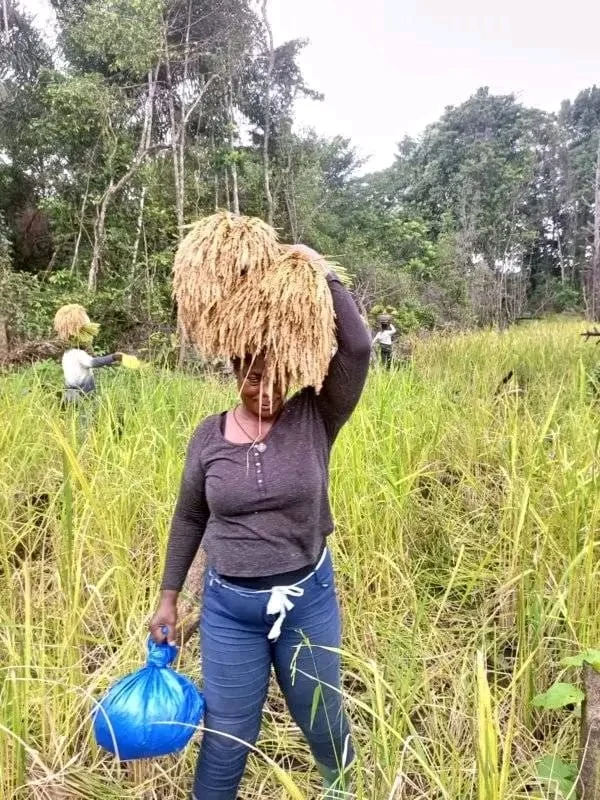
Without programs like RETRAP, farmers remain stuck producing cassava, rice, and vegetables mainly for household consumption. Limited access to improved seeds, fertilizers, and training makes it difficult to meet market demand or generate income to improve living conditions.
Even when farmers manage to produce surplus crops, poor road conditions make transporting harvests to markets nearly impossible. Most rely on motorbikes, which are costly and limit the volume of goods that can be moved. Toe described the cycle of discouragement: “Farmers hesitate to increase production because they are uncertain how they will move their crops to consumers.”
He argues that improving farm-to-market roads would reduce transportation costs, open access to markets, and encourage farmers to produce beyond subsistence. With the arrival of earthmoving equipment in Grand Kru, Toe is urging county authorities to prioritize road construction.
“Roads connecting farming communities to major markets would not only support farmers but also improve movement, create more economic activity, and make it easier for communities to access essential services,” he said.
While SAMJEBO Farm demonstrates the potential of private investment, Toe insists that individual farmers cannot solve the county’s wider challenges alone.
He is calling for coordinated support from government, NGOs, humanitarian groups, and private actors to expand farming activities and create more economic opportunities. “Private projects can complement government programs, but they cannot replace the need for public investment in roads, agricultural inputs, technical assistance, and other services,” he emphasized.
Finance and Development Planning Minister Augustine Kpehe Ngafuan, visiting Grand Kru this week, assured residents that development efforts will benefit citizens regardless of political affiliation.
Pointing to the arrival of heavy machinery, Ngafuan said, “The yellow machines will soon start doing the yellow things.” For farmers, the hope is that those machines will finally deliver the roads they have long awaited.
Experts caution that road improvements alone will not be enough. Farmers also need consistent access to improved seeds, tools, training, financing, and technical support if agriculture is to move from subsistence to commercial scale. Without these investments, Grand Kru’s agricultural potential will remain underused.
Toe’s vision is clear: the county already has the land and the people willing to farm. What is urgently needed is infrastructure, inputs, and investment to transform agriculture into a stronger source of food, jobs, and household income. For Grand Kru’s farmers, the future depends on whether promises of support translate into tangible action.

