

By Emmanuel Koffa | Grand Kru
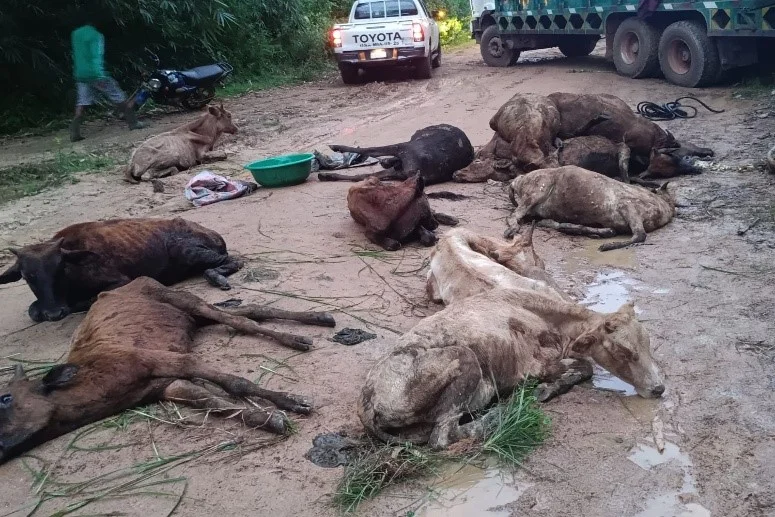
Liberia’s efforts to boost local livestock production have suffered an early setback after 24 Muturu cattle imported under a government-backed livestock development initiative reportedly died while being transported to Grand Kru County.
The deaths have sparked concerns among farmers and stakeholders about the management, transportation, and oversight of a program intended to expand domestic cattle production, strengthen food security, and create new income opportunities for rural households.
The Muturu cattle are part of a national livestock initiative under which the government reportedly allocated US$200,000 for the purchase of 200 cattle. The animals were expected to be distributed to farmers in Grand Kru as part of efforts to revive and expand the county’s livestock sector.
According to information cited by Liberia Early Warning Watch, the first shipment brought 47 cattle into the country. Of that number, 12 were reportedly sent to the Central Agricultural Research Institute (CARI), while the remaining 35 were transported to Grand Kru County.
However, the Ministry of Agriculture disclosed that 24 of the 35 cattle died before reaching their destination.
Agriculture authorities attributed the losses to the lengthy transportation process and inadequate feeding during the journey, factors that reportedly placed the animals under severe stress and contributed to their deaths.
The loss represents more than two-thirds of the cattle assigned to Grand Kru in the initial shipment and has raised questions about the planning and logistics behind the transportation exercise.
Despite the setback, reports indicate that the supplier has agreed to replace the animals that died, providing an opportunity for the program to continue.
For many residents of Grand Kru, however, the incident has highlighted the vulnerabilities associated with large-scale livestock transportation and the importance of proper handling practices.
Agriculture experts note that cattle transported over long distances require adequate food, water, ventilation, and regular monitoring to ensure their survival. Failure to meet these requirements can increase stress levels and expose animals to health complications.
The deaths have also intensified scrutiny of the overall livestock procurement process. While the government reportedly purchased 200 cattle, only 47 animals were included in the first delivery, prompting questions about the status and delivery timeline of the remaining cattle.
Stakeholders are calling for greater transparency regarding the number of cattle purchased, delivered, received, lost, and replaced as the initiative progresses.
Observers argue that maintaining accurate records will be critical in ensuring accountability and measuring whether public funds are being effectively utilized.
Records from the Public Procurement and Concessions Commission’s electronic procurement platform show that the Ministry of Agriculture advertised a national competitive bidding process for the procurement of Muturu cattle in April 2026.
Liberia Early Warning Watch has also raised concerns regarding an alleged procurement protest involving another vendor and questioned aspects of the ministry’s handling of the bidding process. Those allegations, however, remain subject to verification through official procurement records.
Beyond procurement concerns, agricultural stakeholders emphasize that the long-term success of the program will depend on much more than simply delivering cattle to farmers.
Beneficiaries will require access to veterinary services, proper animal shelters, quality feed, and training in cattle management practices. Such support is essential for disease prevention, breeding, herd management, and overall livestock productivity.
If successfully implemented, the initiative could provide significant economic benefits to Grand Kru. Increased local cattle production could reduce dependence on imported livestock, improve meat availability, and generate additional income for farming families. The program could also create opportunities for businesses involved in animal care, transportation, feed supply, and other agricultural services.
For young people in rural communities, livestock farming could offer a viable pathway to employment and entrepreneurship.
Still, the early losses serve as a warning that weaknesses in procurement, transportation, and distribution can undermine the broader objectives of agricultural development programs.
While the supplier’s commitment to replace the deceased cattle may help the initiative recover from its initial setback, many in Grand Kru say the government must ensure future deliveries are properly managed to prevent a repeat occurrence.
For farmers awaiting the arrival of livestock, the program’s success will ultimately be measured not by the number of cattle purchased, but by the number of healthy animals that reach communities, survive, reproduce, and contribute to household incomes and local food production.
The incident now stands as an early test of the government’s ability to effectively implement a livestock development program that promises long-term economic benefits for Grand Kru County and Liberia’s agricultural sector.

