

By Figo Mansaray |Grand Cape Mount County
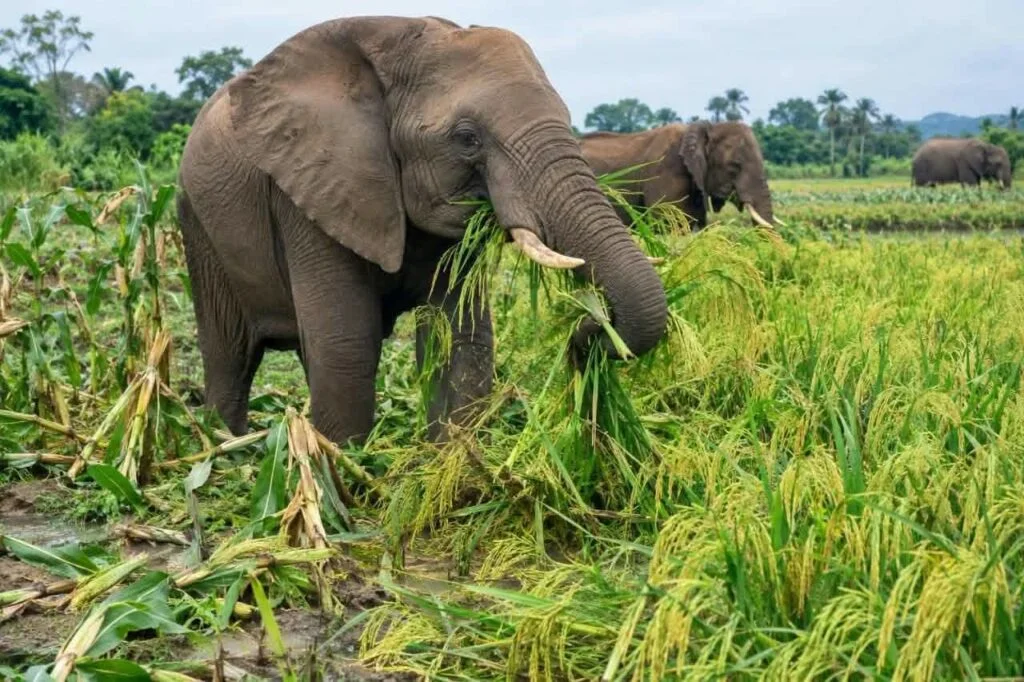
A farmer in Gola Konneh District is calling on the Liberian government and development partners to intervene as recurring elephant invasions continue to destroy crops and threaten agricultural livelihoods in parts of Grand Cape Mount County.
Momo Massaquoi, a local farmer, says persistent elephant incursions into farming communities have made agricultural production increasingly difficult, forcing many farmers to abandon fertile lowland farms and seek safer, but less accessible, farming areas in the mountains.
According to Massaquoi, the growing threat from elephants has significantly affected his ability to cultivate crops and maintain a stable source of income. He warned that unless authorities take concrete action to address the problem, many rural farmers could struggle to sustain their families and contribute to local food production.
“Farming has always been a part of my life,” Massaquoi said, recalling how he began working alongside his parents in the fields as a child. “It is how many of us survive, but the constant destruction of crops by elephants is making it harder to continue.”
Agriculture remains a primary source of livelihood for many residents of rural Liberia, providing food, income and economic stability for communities. However, Massaquoi said the increasing presence of elephants near farming areas has created major challenges for farmers who depend on their harvests to support their households.
To reduce losses, he has relocated much of his farming activity from lowland areas, where elephants frequently roam, to mountainous terrain. While the move has helped minimize crop damage, it has also introduced new hardships.
“The mountains are safer for farming, but getting there every day is difficult,” he explained. “The long and strenuous climbs make farming much more challenging.”
Massaquoi stressed that farmers should not be left to confront wildlife-related crop destruction on their own. He called on the Ministry of Agriculture and other relevant government agencies to work with local communities in developing practical solutions that protect both farmers’ livelihoods and wildlife conservation efforts.
He also appealed to nongovernmental organizations and international development partners to assist affected communities with farming tools, agricultural inputs and support programs aimed at reducing the impact of human-wildlife conflict.
According to him, timely intervention could help farmers recover losses, improve food production and encourage more people to remain engaged in agriculture despite the challenges.
Agricultural experts have long identified human-wildlife conflict as a growing concern in communities located near protected forests and wildlife habitats. In many cases, farmers suffer substantial losses when wild animals destroy crops, increasing food insecurity and economic hardship for rural households.
Massaquoi’s appeal underscores the broader challenges facing farming communities in Grand Cape Mount County, where farmers are striving to maintain production amid threats posed by wildlife and limited access to resources.
He is urging the government and development partners to implement sustainable measures to address elephant-related crop destruction and ensure that farmers receive the support needed to continue contributing to local food security and economic development.

