

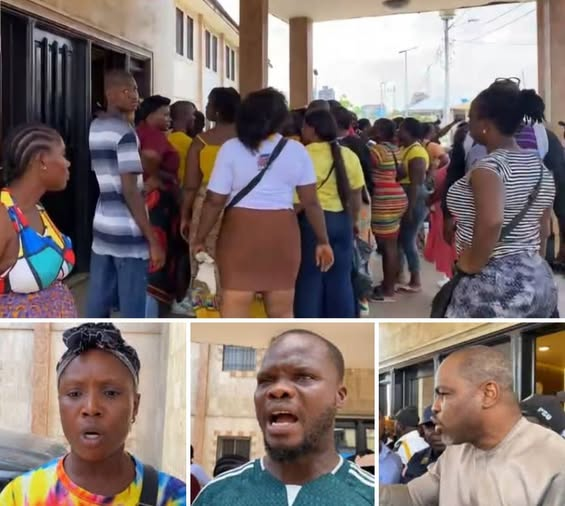
Market traders operating in the bustling commercial corridors of Waterside Market, Mechlin Street and the King Zulu Dumah Bridge, commonly known as the Old Bridge, are urging the Liberian government to reconsider its decision to remove them from their current trading locations, warning that the move could threaten their livelihoods if not accompanied by a clear and practical relocation plan.
The appeal follows a peaceful protest staged Monday by dozens of affected vendors after authorities began dismantling market tables as part of an ongoing effort to clear public spaces and enforce order in central Monrovia.
While the traders say they support government efforts aimed at improving sanitation, traffic flow and urban organization, they argue that the implementation of the removal exercise has left many vendors uncertain about their future.
At the core of their concerns is the lack of information regarding where they will be relocated and how they will continue earning a living once removed from their established trading spaces.
“We did not come here on our own. The Liberia Marketing Association, in collaboration with the previous government, brought us here, and we built solid tables, not just wooden planks. So, how do you expect us to survive?” one trader on Mechlin Street told reporters during the protest.
For many of the vendors, trading represents their primary source of income. Daily earnings are often used to purchase food, pay rent, support children’s education and meet other household obligations. Traders fear that losing access to their customer base without a suitable alternative location could result in severe financial hardship for themselves and their families.
Many of those affected say they have invested significant resources over the years to build permanent stalls, develop businesses and establish relationships with regular customers. The sudden dismantling of structures, they contend, places those investments at risk.
Rather than rejecting government regulation outright, several traders have proposed what they describe as a more balanced solution. They are calling for the establishment of clearly marked boundaries within the Waterside commercial district that would allow vendors to operate in designated spaces while keeping roads and walkways accessible.
Under the proposal, authorities would create demarcation lines separating market activities from vehicle corridors. Traders believe such an arrangement would help reduce congestion while preserving opportunities for small businesses to continue operating legally.
The dispute highlights a broader challenge facing Monrovia and many rapidly growing African cities: balancing urban planning objectives with the economic realities of thousands of people who depend on informal commerce for survival.
Across Liberia, informal trading provides employment and income for a significant segment of the population, particularly in urban centers where access to formal jobs remains limited. Commercial hubs such as Waterside serve as critical marketplaces where vendors sell food, clothing, household goods and other essential products to residents and commuters.
However, city authorities also face growing concerns related to road congestion, pedestrian safety, sanitation, drainage and the use of public spaces. Efforts to address those challenges frequently place municipal authorities and informal traders on opposing sides of difficult policy decisions.
Following their demonstration, the protesters marched to the Capitol Building, where they met Montserrado County District Seven Representative Emmanuel Dahn.
During the meeting, Representative Dahn encouraged the vendors to remain peaceful and assured them that efforts would be made to find a solution that benefits all parties.
According to traders who participated in the discussion, the lawmaker pledged to engage relevant authorities in pursuit of what he described as a “win-win” outcome.
Despite the assurances, many vendors remain skeptical.
Several traders noted that while promises of dialogue are encouraging, the continued dismantling of structures and the presence of law enforcement officers in affected areas have heightened fears about their immediate future.
They argue that concrete action is now more important than verbal commitments.
“We need to know where we are going, when we are moving and how our businesses will be protected during the process,” one protester said.
The timing of the dispute has added to traders’ anxiety. With the end-of-year festive season approaching, many vendors are concerned about losing one of the most profitable trading periods of the year.
Traditionally, demand for food, clothing, gifts and other household items increases during the holiday season, providing small businesses with an opportunity to boost sales and recover operational expenses.
Traders say any prolonged disruption during this period could significantly affect annual earnings and place additional pressure on already strained household budgets.
The affected vendors are therefore calling for urgent consultations involving the government, municipal authorities, the Liberia Marketing Association, law enforcement agencies and local lawmakers. They want authorities to develop a transparent relocation framework that clearly identifies alternative trading spaces, outlines timelines and addresses concerns surrounding existing market structures.
Observers say the unfolding situation presents an opportunity for government authorities to demonstrate that urban modernization and the protection of vulnerable livelihoods can coexist.
For now, however, uncertainty continues to hang over hundreds of traders whose businesses remain at risk.
As enforcement efforts continue, the vendors insist they are willing to cooperate with measures designed to improve the appearance and organization of Monrovia. What they seek, they say, is a fair and lasting solution that allows development to proceed without sacrificing the livelihoods of the thousands of Liberians who depend on small-scale trading to support their families.

