

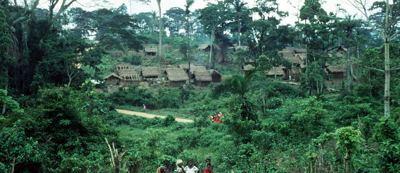
The carbon credit overhaul introduces safeguards requiring free, prior and informed consent before carbon projects on customary or community land can be registered.
Liberia is moving to establish its first carbon credit pricing framework as President Joseph Boakai tightens oversight of the country’s emerging carbon market, seeking to turn its forests and other natural resources into a source of climate finance and investment.
The West African nation is seeking to unlock more than US$30 billion in natural assets. It has about 6.6 million hectares of forest cover, equivalent to 69% of the country’s landmass, with 153.45 tons per hectare of carbon, according to the United Nations Development Program.
Boakai issued Executive Order No. 170 on Nov. 4, empowering the Liberia Carbon Markets Authority to develop carbon pricing mechanisms, regulate market activities and coordinate the country’s participation in international carbon trading.
The order also establishes a National Carbon Registry to track the issuance, transfer and retirement of credits generated in Liberia, creating a government-controlled record of transactions as the country prepares to enter global carbon markets.
Although no initial price per credit was announced, the framework gives the Authority responsibility for developing pricing mechanisms, paving the way for Liberia’s first formal valuation of carbon assets.
Each carbon credit typically represents one metric ton of carbon dioxide equivalent removed from the atmosphere or prevented from being emitted.
Liberia’s forests, wetlands and coastal ecosystems offer opportunities to generate credits through conservation, sustainable land management and blue carbon projects.
Renewable energy, agriculture, waste management and energy efficiency are also covered by the Authority’s mandate.
The registry’s information will be the sovereign property of Liberia, with the Authority required to publish quarterly reports detailing credit issuance, transactions and fiscal implications. Its first report is due within 60 days.
The order introduces safeguards requiring free, prior and informed consent before carbon projects on customary or community land can be registered. It also recognizes community and private rights over trees, biomass and blue carbon ecosystems, amid concerns that carbon projects could generate revenue without adequately compensating landowners and local communities.
The Authority can develop regulatory fees and procedures, but proposed levies and revenue-sharing arrangements require approval from the Finance Ministry. Fees must be based on cost recovery, and the Authority cannot impose taxes before passage of a Climate and Carbon Act.
Boakai also established an interim Steering Committee, chaired by the Minister of State for Presidential Affairs, to oversee the Authority’s strategy, budget and performance.
The Authority has six months to submit a draft Climate and Carbon Bill to the presidency. The proposed legislation will establish a permanent regulatory structure, define carbon revenue-sharing arrangements and provide for a Liberian Carbon Investment Fund.
The order builds on the Authority’s establishment in October 2025 and follows the presentation of Liberia’s National Carbon Market Policy to Boakai in September.
The government faces the challenge of attracting credible international buyers while ensuring that carbon projects deliver verifiable emissions reductions and tangible financial benefits for communities.
The credibility of its registry, pricing framework and revenue-sharing rules will be central to determining how much value Liberia can extract from its natural resources.

