

Prepared as an academic policy article in the context of Liberia’s upcoming December 2026 Presidency of the United Nations Security Council.
ABSTRACT AND INTRODUCTION
Abstract
Peace and security are increasingly shaped by events that cross borders and connect land, sea, air, cyberspace, trade, and human movement. Maritime insecurity is therefore not simply a shipping concern; it is a threat to national sovereignty, economic development, food security, human rights, and international peace.
Liberia’s election to serve as a non-permanent member of the United Nations Security Council for 2026–2027, together with its scheduled assumption of the Council’s rotating presidency in December 2026, creates an important diplomatic opportunity.
This article examines how Liberia can use its maritime experience, its history of post-conflict recovery, and its regional partnerships to advance practical global action. It argues that maritime security should be people-centred, legally grounded, and linked to stronger national institutions and regional cooperation.
Introduction
The United Nations Charter places the maintenance of international peace and security at the centre of collective international responsibility. Yet contemporary threats are complex. Armed conflict, piracy, trafficking, illegal fishing, maritime pollution, cyberattacks against port systems, and disruption of commercial shipping can affect states far beyond the immediate location of an incident. The sea is a shared space for commerce and communication, but it can also be exploited by criminal networks and become an arena in which conflicts endanger civilian workers.
Liberia’s present diplomatic moment is significant. Liberia was elected to the Security Council for the 2026–2027 term and is scheduled to hold the Council’s rotating presidency in December 2026. This does not make Liberia President of the United Nations as a whole.
Rather, for the month of its presidency, Liberia will preside over the work of the 15-member Security Council, guide its programme of work, and facilitate its meetings in accordance with the Council’s rules and established practice. The distinction is important for accurate public understanding.
The central argument of this article is that Liberia can turn this responsibility into a focused contribution: protecting civilian seafarers, strengthening maritime safety, preventing maritime crime, and promoting cooperation in the Gulf of Guinea and beyond.
LIBERIA’S DIPLOMATIC MOMENT AND GLOBAL RESPONSIBILITY
Liberia’s place on the Security Council
Liberia’s return to the Security Council is meaningful in light of its history. The country experienced a devastating civil conflict and later benefited from regional diplomacy, international peacekeeping, disarmament, institution-building, and sustained national reconciliation.
The completion of the United Nations Mission in Liberia in 2018 marked an important transition from an international peacekeeping presence to a greater national responsibility for sustaining peace. Liberia can therefore contribute a perspective shaped by the experience of conflict and the demanding work of rebuilding trust and public institutions.
The Security Council presidency is a rotating responsibility held by each Council member for one month, following the English alphabetical order of the members’ names. The president chairs meetings, represents the Council in certain functions, and helps manage the Council’s programme. The office does not give one country unilateral authority over the Council or the United Nations. Decisions remain collective and are governed by the UN Charter and the Council’s voting procedures.
For Liberia, December 2026 offers an opportunity to convene serious discussion, build consensus, and draw international attention to issues where maritime security intersects with human security. Recent statements by the Liberian Government and United Nations in Liberia identify maritime security and the welfare of seafarers as a major focus for the country’s presidency. President Joseph Nyuma Boakai has publicly emphasized the protection of civilian seafarers exposed to armed conflict, piracy, and other dangers at sea.
Leadership through credibility
International leadership is not measured only by speeches or ceremonial status. It is measured by the ability to identify practical problems, listen to affected communities, respect international law, and help states agree on implementable measures. Liberia’s credibility will be strongest when its international advocacy is matched by domestic investment in maritime institutions, professional training, transparent regulation, and effective justice.
MARITIME SECURITY AS A GLOBAL PEACE ISSUE
The strategic importance of the maritime domain
Oceans and seas sustain global trade, energy supplies, food systems, communications, and employment. Commercial vessels carry essential goods, including food, fuel, medicine, and industrial materials. Ports connect national economies to international markets, while seafarers keep shipping operations functioning under difficult conditions. When vessels are attacked, detained, diverted, or prevented from sailing safely, the consequences can reach consumers, workers, governments, and humanitarian operations far from the incident.
Maritime security should therefore be understood as a component of collective security and sustainable development. It includes the protection of ships, crews, ports, offshore installations, coastal communities, and the marine environment. It also includes respect for freedom of navigation, lawful maritime commerce, and the rights and welfare of seafarers.
Threats requiring coordinated action
Piracy and armed robbery at sea can expose crews to violence, kidnapping, and financial extortion. Drug trafficking and human trafficking use maritime routes to move illicit commodities and exploit vulnerable people. Illegal, unreported, and unregulated fishing weakens food security, deprives coastal states of revenue, and threatens livelihoods. Arms smuggling can support violent networks and destabilize communities. Maritime cyberattacks can disrupt navigation, port operations, cargo management, and safety systems.
Armed conflict creates a further danger. Civilian seafarers may find themselves operating near hostilities, mines, missile threats, blockades, or other hazards. They are workers, not combatants merely because they are aboard a commercial vessel. Their protection must be addressed through applicable international law, including the law of the sea, international humanitarian law where relevant, and international labour standards.
An effective global agenda must avoid treating all maritime incidents as identical. Piracy, armed conflict, trafficking, illegal fishing, and cybercrime require different legal tools and operational responses. States must cooperate while preserving due process, jurisdictional safeguards, and human rights.
LIBERIA’S MARITIME INTERESTS AND NATIONAL CAPACITY
A maritime nation with global responsibilities
Liberia’s maritime identity is central to its international profile. The Liberian Registry is one of the world’s largest ship registries, giving the country an important relationship with international shipping and flag-state responsibilities. This position brings opportunity, but also obligations: ships flying the Liberian flag must be subject to credible standards of safety, security, labour protection, environmental compliance, and accountability.
The country’s coastline, ports, fisheries, and offshore interests are also important to national development. Maritime activity can support employment, investment, trade, tourism, and public revenue. At the same time, weak coastal surveillance, limited equipment, inadequate infrastructure, corruption, and gaps in inter-agency coordination can create opportunities for criminal actors.
Strengthening domestic institutions
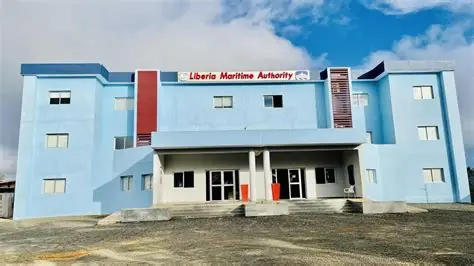
Liberia’s maritime security framework depends on cooperation among the Liberia Maritime Authority, Liberia Coast Guard, National Fisheries and Aquaculture Authority, Liberia Seaport Authority, law-enforcement bodies, customs authorities, immigration services, the judiciary, and relevant ministries. Clear roles and reliable information-sharing are essential. A national maritime security coordination mechanism can help reduce duplication, clarify command arrangements, and ensure that incidents are investigated and referred for prosecution.
Investment should prioritize trained personnel, patrol and rescue capability, communications, vessel monitoring, port security, forensic capacity, maintenance, and transparent procurement. Equipment alone cannot deliver security. Personnel need continuous professional development in maritime law, evidence handling, human rights, search and rescue, incident command, and inter-agency operations.
A strong maritime justice system is equally important. Arrests at sea must be followed by lawful investigation, preservation of evidence, fair prosecution, and appropriate judicial oversight. If offenders are apprehended but cases collapse because evidence is mishandled or institutions are poorly coordinated, maritime crime will remain profitable.
The domestic-global connection
Liberia’s international advocacy will carry greater weight when the country demonstrates progress at home. A state that promotes the safety of seafarers globally should also strengthen its own maritime workforce, coastal communities, and maritime institutions.
THE GULF OF GUINEA AND REGIONAL COOPERATION
A shared regional security space
The Gulf of Guinea is strategically important to West and Central Africa. Its maritime domain supports petroleum production, fisheries, ports, shipping, and regional trade. Insecurity in one coastal state can affect neighbouring states because criminal networks, vessels, cargoes, and financial flows move across national boundaries. No single country can effectively address these threats in isolation.
Regional cooperation is supported by frameworks such as the Yaoundé Code of Conduct, which promotes information-sharing and coordinated responses to maritime crime among participating states and regional institutions. ECOWAS, the Economic Community of Central African States, the Gulf of Guinea Commission, and international partners have roles in supporting coordination, training, and operational cooperation.
From commitments to operational results
Cooperation must be practical. States need reliable maritime domain awareness, secure communication channels, shared incident reporting, joint exercises, and clear procedures for requesting assistance. Coordination centres should be adequately staffed and connected to national authorities. Information-sharing must also respect privacy, sovereignty, confidentiality, and the legal requirements governing evidence.
Liberia can use its Security Council platform to encourage predictable support for regional maritime institutions, including training, technology, maintenance, and professional exchanges. It can also advocate for stronger cooperation between coastal states and flag states, port states, shipping companies, and seafarer organizations.
Regional action should address the conditions that make maritime crime attractive. Coastal poverty, youth unemployment, corruption, weak law enforcement, and limited lawful economic opportunities can increase vulnerability to recruitment by criminal networks. Maritime security is therefore linked to inclusive development, education, fisheries management, and accountable governance.
Liberia should promote a balanced approach: effective enforcement against organized crime, protection of legitimate livelihoods, and respect for the rights of coastal populations. Security operations must not become a pretext for unlawful detention, excessive force, or arbitrary interference with lawful fishing and trade.
SEAFARER WELFARE, INTERNATIONAL LAW AND HUMAN SECURITY
Protecting the people who keep trade moving
The safety and welfare of seafarers should be a central measure of maritime security. Seafarers may face abandonment, unpaid wages, unsafe working conditions, prolonged periods at sea, denial of shore leave, medical emergencies, and the danger of operating in conflict-affected waters. Their families may also experience uncertainty when communication is interrupted or crew changes are delayed.
The Maritime Labour Convention, 2006, as amended, establishes important standards concerning seafarers’ working and living conditions. The International Convention for the Safety of Life at Sea (SOLAS) and the International Convention on Standards of Training, Certification and Watchkeeping for Seafarers (STCW) provide further foundations for safety and professional competence. The United Nations Convention on the Law of the Sea (UNCLOS) supplies the broader legal framework for ocean governance, maritime zones, navigation, and state responsibilities.
Civilian seafarers in armed conflict
When commercial shipping is exposed to armed conflict, states and parties to conflict must respect applicable international law. The protection of civilians and civilian objects is a core principle of international humanitarian law. The precise legal assessment depends on the facts, the status of the vessel and persons concerned, and the applicable rules. Commercial seafarers should not be treated as legitimate targets simply because they are performing civilian work aboard a merchant ship.
Liberia can champion practical measures: prompt communication of maritime threats; safe passage arrangements where legally and operationally feasible; access to medical care and evacuation; timely crew changes; assistance for abandoned or stranded seafarers; and safe, dignified repatriation. These measures require cooperation among flag states, coastal states, port states, shipowners, insurers, labour organizations, and humanitarian actors.
A people-centred security approach
A maritime agenda focused only on ships, cargo, and trade would be incomplete. Security must also protect human dignity. The welfare of seafarers is not separate from international peace: when civilian workers are harmed, families suffer, supply chains are disrupted, and confidence in lawful commerce is weakened.
POLICY RECOMMENDATIONS AND CONCLUSION
Policy recommendations for Liberia
First, Liberia should use its December 2026 Security Council presidency to convene a focused, inclusive discussion on protecting civilian seafarers affected by armed conflict and strengthening maritime security. The discussion should seek practical outcomes rather than broad declarations alone.
Second, Liberia should encourage stronger implementation of existing international instruments, including UNCLOS, SOLAS, STCW, and the Maritime Labour Convention. The objective should be better compliance, coordination, and accountability, not the creation of overlapping rules without implementation capacity.
Third, Liberia should strengthen national maritime governance through a clearly coordinated inter-agency system, sustainable funding, professional training, reliable surveillance, search-and-rescue capability, and effective prosecution of maritime offences.
Fourth, Liberia should deepen cooperation in the Gulf of Guinea through the Yaoundé architecture and relevant ECOWAS and regional mechanisms. Joint training, information-sharing, and coordinated responses should be supported with respect for sovereignty and human rights.
Fifth, Liberia should promote the protection and welfare of seafarers through medical evacuation arrangements, timely crew changes, repatriation support, access to justice, and stronger engagement with seafarer unions and employers.
Sixth, the Government should connect maritime security with sustainable development by combating illegal fishing, protecting marine resources, expanding maritime education, and creating legitimate employment for coastal youth and communities.
Conclusion
Liberia’s upcoming presidency of the United Nations Security Council in December 2026 is a significant diplomatic responsibility, not a transfer of control over the United Nations. It gives Liberia a month-long opportunity to preside over the Council’s work and help shape discussion on matters of international peace and security. The country’s history of conflict and recovery gives it a meaningful perspective on the value of dialogue, partnership, and institution-building.
Maritime security offers a practical area in which Liberia can make a constructive contribution. By placing civilian seafarers at the centre, strengthening national capacity, supporting regional cooperation, and promoting international law, Liberia can help advance a security agenda that protects lives as well as trade. The measure of leadership will be the quality of the commitments achieved and the extent to which they are translated into lasting action.
REFERENCES
African Union. (2014). African Union maritime security strategy (2050 AIM Strategy). African Union Commission.
Economic Community of West African States. (2014). ECOWAS integrated maritime strategy. ECOWAS Commission.
International Labour Organization. (2006, as amended). Maritime Labour Convention, 2006. ILO.
International Maritime Organization. (1974, as amended). International Convention for the Safety of Life at Sea (SOLAS). IMO.
International Maritime Organization. (1978, as amended). International Convention on Standards of Training, Certification and Watchkeeping for Seafarers (STCW). IMO.
United Nations. (1945). Charter of the United Nations. https://www.un.org/en/about-us/un-charter
United Nations. (1982). United Nations Convention on the Law of the Sea. https://www.un.org/depts/los/convention_agreements/texts/unclos/unclos_e.pdf
United Nations in Liberia. (2026, October 26). From peacekeeper host to global peace advocate: Liberia marks UN Day with eyes on the world stage. https://liberia.un.org/en
United Nations Security Council. (n.d.). Provisional rules of procedure of the Security Council. https://www.un.org/securitycouncil/content/repertoire/provisional-rules-procedure
United Nations Security Council. (2026). Liberia: Member of the Security Council, 2026–2027. United Nations.
Government of Liberia. (2026, September 24). Statement by H.E. Joseph Nyuma Boakai, President of the Republic of Liberia, to the 81st Session of the United Nations General Assembly. https://estatements.un.org/
Global News Network Liberia. (2026, November 19). President Boakai pledges protection for seafarers. GNN Liberia.
Global News Network Liberia. (2026, November 17). Liberia positions for global maritime security leadership. GNN Liberia.
Yaoundé Code of Conduct. (2013). Code of Conduct concerning the repression of piracy, armed robbery against ships, and illicit maritime activity in West and Central Africa.
AUTHOR’S PROFESSIONAL PROFILE
Apostle Dr. Tarpeh Lasanah U-sayee, Jr.
Apostle Dr. Tarpeh Lasanah U-sayee, Jr. is a Liberian criminal justice educator, law-enforcement professional, firearms instructor, and Christian minister. He has served in law-enforcement training and professional instruction, including work associated with the Executive Protection Service Training and Firearms Division and the Liberia National Police Training Academy. His professional training includes attendance at police academies in Liberia, Nigeria, and the United States, including the Louisiana State Police Academy.
Dr. U-sayee holds a Doctor of Ministry (D.Min.) in Church Growth from T-Net International/Teleo University. His doctoral research focused on ministry multiplication and the advancement of the Great Commission in District 11, Montserrado County, Liberia. His academic background also includes a Master of Divinity, a Master of Arts in Foreign Service Leadership (International Relations), and undergraduate degrees in Sociology and Criminal Justice, alongside studies in Management and Public Administration.
As a criminal justice professor and lecturer, he is interested in law-enforcement professionalism, maritime and national security, criminal investigation, public safety, institutional accountability, peacebuilding, and the rule of law. His writing emphasizes the relationship between professional security institutions, democratic governance, human dignity, and sustainable peace in Liberia and across Africa.
His professional outlook is guided by the conviction that security must protect people, uphold the law, and contribute to national development. He advocates peace, unity, discipline, justice, and responsible leadership.
Contact: jrickdoe@gmail.com | Liberia

