

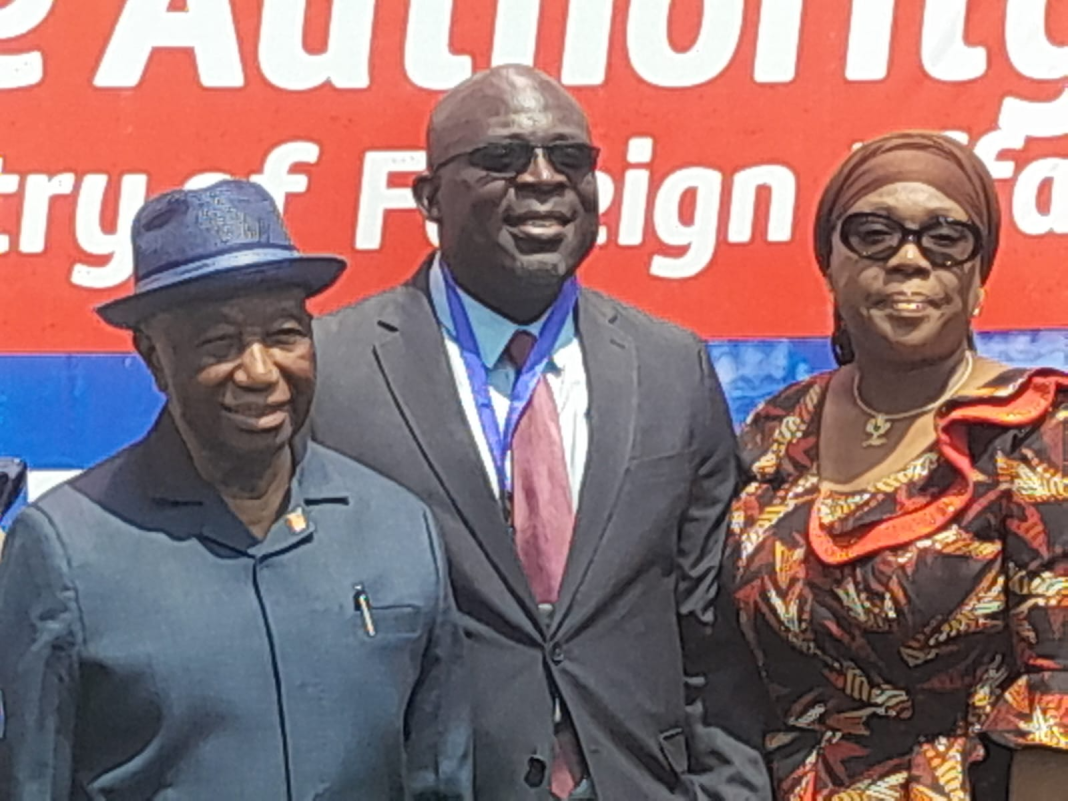
By E. J. Nathaniel Daygbor
President Joseph Nyuma Boakai has announced that Liberia will use its presidency of the United Nations Security Council next month to place the protection of civilian seafarers and commercial shipping at the center of global peace and security discussions, amid growing concerns over armed conflicts, piracy, cyberattacks and other threats facing the maritime industry.
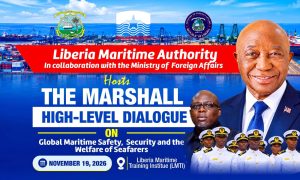
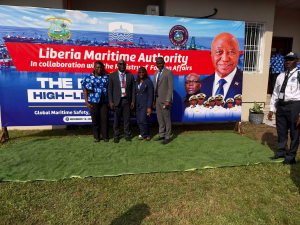
Addressing the Marshall High-Level Dialogue on Global Maritime Safety, Security and Welfare of Seafarers on Thursday at the Liberia Maritime Training Institute in Marshall City, Boakai said the safety and security of the world’s oceans have become increasingly critical to global peace and economic stability.
The event, held under the theme “Enhancing Global Maritime Security and the Welfare of Seafarers for International Peace and Shared Prosperity in a Period of Heightened Insecurity,” brought together diplomats, maritime regulators, security experts, development partners and maritime stakeholders ahead of Liberia’s assumption of the rotating presidency of the UN Security Council on December 1.
“Liberia cannot have lasting peace if our seas and oceans are not safe and secure, and if our seafarers cannot work in a peaceful environment,” the President declared.
As Liberia prepares to chair the world body’s most influential peace and security institution, Boakai said the country intends to draw international attention to the plight of civilian seafarers who increasingly find themselves caught in the crossfire of conflicts far beyond their control.
“At the Security Council in December, Liberia will draw attention to the protection of civilian seafarers affected by armed conflict,” he stated.
The President said the maritime sector occupies a central place in Liberia’s national identity and economic future, noting that the country remains home to the world’s largest maritime registry by tonnage.
“As a nation connected to the sea, much of our national story, including our livelihoods and survival, is written along the coastline,” he said. “Today, we are proud to have the world’s largest maritime registry by tonnage.”
Boakai used the occasion to officially endorse the launch of Liberian Maritime Week, describing the Marshall dialogue as its inaugural event and announcing that it would become an annual national observance.
According to him, the initiative is designed to celebrate Liberia’s maritime heritage while promoting investment, economic growth and broader national development through the maritime sector.
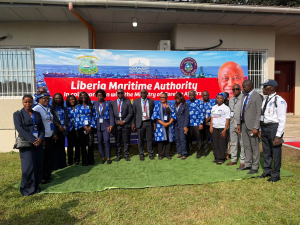
“Liberian Maritime Week will establish an annual national tradition that celebrates our rich maritime heritage while harnessing the enormous potential of our maritime sector to drive economic growth, attract investment and advance national development,” he said.
The President painted a troubling picture of the challenges confronting global shipping.
“When the sea is calm and safe, Liberia thrives. When it is troubled, our national security is threatened. And today, the sea is troubled,” he warned.
Boakai cited armed conflicts in several regions of the world that have disrupted shipping operations, endangered civilian crews and delayed the movement of essential goods and humanitarian supplies.
He also highlighted persistent security concerns in the Gulf of Guinea, where piracy, transnational organized crime, narcotics trafficking and illegal fishing continue to threaten maritime security.
“Pirates and transnational criminal networks continue to prey on ships and seafarers for ransom payments,” the President said. “Drugs are smuggled and trafficked across our waters, posing serious threats to national security. Foreign trawlers engage in illegal fishing, depriving our people of food and livelihoods.”
He further warned that cyberattacks targeting ships, ports and maritime infrastructure are emerging threats requiring urgent global attention.
Earlier in the program, Liberia Maritime Authority Commissioner Cllr. Neto Zarzar Lighe Sr. underscored the growing dangers facing maritime workers around the world.
Describing seafarers as the “unseen heroes” of international commerce, the Commissioner noted that nearly every commodity used in daily life depends at some stage on global shipping.
“Nearly everything we use, from fuel and rice to the goods in our homes, has travelled part of its journey by ship,” he said.
According to Commissioner Lighe, seafarers currently operating in conflict-prone maritime corridors, including the Black Sea, Red Sea, Strait of Hormuz and Gulf of Guinea, face heightened risks from armed conflicts, piracy, cybercrime and drug trafficking.
He disclosed that reports from the Liberia Maritime Authority and the International Maritime Organization indicate that approximately 100 attacks or attempted attacks on commercial vessels have occurred since hostilities escalated in parts of the Gulf region earlier this year.
Those incidents, he said, have resulted in at least 25 seafarers losing their lives, while the United Nations estimates that approximately 6,000 mariners remain stranded in conflict zones.
“Beyond every number is a human being,” Lighe said. “These seafarers did not start these conflicts and have no say in how they will end. We must not allow them to become collateral damage or forgotten casualties.”
President Boakai echoed those concerns, emphasizing the human dimension often overlooked behind maritime security statistics.
“Think of the cooks, engineers, deck crew members and captains who work aboard merchant ships,” he said. “He is someone’s son. She is someone’s daughter. She may be a mother, and he may be a father. But they sign on to deliver cargo, not to go to war.”
The Liberian leader condemned attacks on civilian vessels and called on all parties involved in armed conflicts to uphold international humanitarian law.
“Let me be very clear: all parties to armed conflicts must respect and protect civilian seafarers in accordance with applicable international humanitarian law,” he stated.
“Our seas and oceans should unite us in peace and prosperity, not divide us through conflict and turmoil.”
Boakai said Liberia’s status as the world’s largest maritime registry carries significant responsibilities.
For more than a quarter century, he noted, shipping companies from around the globe have chosen to register their vessels under the Liberian flag, resulting in a fleet exceeding 300 million gross tons.
“Our flag is not just a business,” he said. “Every ship flying the Liberian flag carries our name and our pride. The people on board, in a real sense, are under our care.”
The President reaffirmed his government’s commitment to maintaining Liberia’s registry as a quality flag administration committed to safety, security and seafarer welfare.
He also called for additional investments in maritime law enforcement and regulatory institutions, including the Liberia Coast Guard, fisheries authorities and the national justice system.
“We must continue strengthening our Coast Guard, our fisheries authority, our boats and our justice system so that when criminals are caught in our waters, they are fully prosecuted under our laws,” he said.
Boakai stressed that maritime security challenges cannot be addressed by any nation acting alone and reaffirmed Liberia’s commitment to regional cooperation under the Yaoundé Code of Conduct and through ECOWAS partnerships.
Reflecting on Liberia’s election to the UN Security Council for the 2026-2027 term, Boakai described the development as a significant milestone for a country that once depended on international peacekeeping support.
“Many of you will remember the time when Liberia was on the United Nations Security Council’s agenda, not as a member, but as a country in crisis,” he said. “Today, Liberia sits on the Security Council, elected by nations of the world for the 2026-2027 term, marking our first membership in more than six decades.”
During Liberia’s presidency in December, the President said the government will convene a high-level open debate focused on protecting commercial shipping and civilian seafarers as an essential pillar of international peace and security.
He said Liberia intends to work with fellow Security Council members, the wider UN membership, the International Maritime Organization and the International Labour Organization to strengthen protections for maritime workers and ensure uninterrupted delivery of food, fuel, medicine and humanitarian supplies during times of conflict.
As he officially opened the dialogue and the inaugural Liberian Maritime Week, Boakai urged participants to develop practical recommendations that would support Liberia’s advocacy efforts at the United Nations.
Addressing cadets of the Liberia Maritime Training Institute, he assured them that their country would continue to champion their welfare and safety.
“Many of you will stand on the bridge of a vessel, perhaps in waters far from home,” the President told the students. “When that time comes, know that your country stood up for you and will continue to stand up for you and for the welfare of every seafarer like you.”

