

By Sidiki Fofana | Truth in Ink
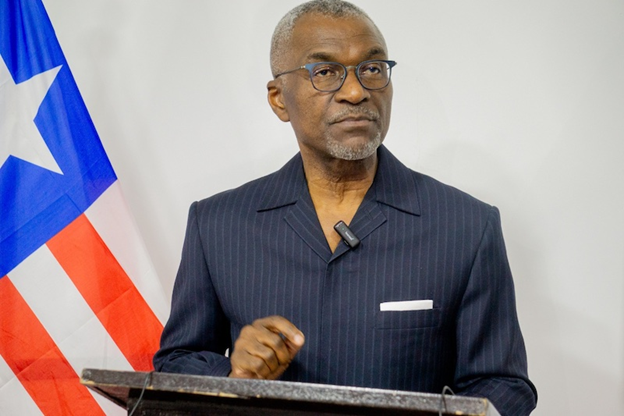
It was in Margibi this past week that Alexander B. Cummings tried to reset the story. Before a hall of cheering partisans at the Alternative National Congress (ANC) convention, but speaking clearly to Liberians beyond the room, he was reaffirmed as Political Leader to take the party into a third presidential run.
He refused to let the “gay” smear define the moment. Later on, Spoon Network, he pushed back hard, calling the claim a lie meant to undercut his family and marriage values, a desperate tactic by those with no better vision to offer.
Then he pivoted to Liberia’s real pain, broken roads, dark homes, a stagnant economy. It was a flash of discipline and a hint of how he might handle the dilemma that could decide his 2029 future.
Liberians have grown restless. The long years under the Unity Party promised reform but drifted into the old politics of insiders protecting insiders. The surge of the Congress for Democratic Change promised people’s power but left too many feeling the same hurt. Two great turns at leadership, yet the loudest cry remains; “fix the country.”
Into this national fatigue steps Cummings. He is not new to politics, but his rise has never been smooth. From the moment he left the boardroom for the ballot, one persistent weapon has been thrown at him, the “gay” label.
It was built not only to paint him as an outsider far removed from the cultural norms of the country, but also as a man who lacks the understanding of what it means to be a Liberian. As 2029 nears, he faces a choice; keep fighting to clear his name every election cycle, or step over the smear and speak to a country desperate for answers.
Liberian politics feeds on scandal because it is easier than ideas. But the mood is changing. People want lights, jobs, and stability in the market. They want an economy that works for ordinary families, not just those with connections. Each time Cummings lets his opponents drag him back into defending his identity, he loses the chance to own the conversation about fixing what is broken.
This is not to say character attacks should go unanswered. Silence can look like surrender. But to keep re-litigating the same insult is to fight in the wrong arena while real bread-and-butter issues go untouched. The man who would be president cannot seem smaller than the country’s pain.
Cummings has an opening because the two houses Liberia has tried have not provided the solutions people need evidence of their votes in 2023 and the growing cries of disappointment today. The Unity Party, despite its talk of reform, too often guarded privilege, using propaganda rather than strategy to govern.
The CDC carried the hopes of ordinary people but, in governance, lost its identity by prioritizing optics and elite politics over the economy tied to its own supporters. Liberians have seen both roads and remain unsatisfied.
According to Tomalin George of the Closing Arguments ” Perhaps this is Cummings’s chance to break through, to step forward not as a man nursing old wounds but as a builder with practical solutions.
“His record in the private sector and international business is rare in our politics. That can be turned from a supposed weakness, “outsider” into proof that he knows how to manage and deliver.
On Carey Street, an older woman selling bread and butter says, “If he doesn’t answer, they will say it’s true. But every time he answers, it’s all we hear; we don’t hear how we will get light or food.”
A university student in Sinkor puts it differently: “We know the story. If he wants to be president, he should talk about work and electricity. That’s what we care about now.”
Political analyst J. Nyemah argues: “The smear has weakened him before; it would be reckless to ignore it completely. But he can’t spend the whole campaign proving himself again. He has to set an agenda.”
Another commentator, Martha Kpoto, adds: “Liberians are tired of gossip politics, but culture and morality still matter to many voters. He should answer clearly, once, then pivot fast. That shows strength and focus.”
Cummings can close the culture fight with one strong, final statement; “Liberia has bigger problems than rumors; judge me by the work I will do.” Then pivot and refuse distraction.
Others have done this effectively. George Weah, when mocked for his education, countered in one line; “Judge me not by my eloquence, but by my action.” Musa H. Bility, the newest face now seeking the presidency, put it plainly: “Yes, I am a Mandingo man, a choice not of my making, but I am a Liberian who loves my country and wants to see it better.”
The question now is discipline. If Cummings wants to be seen as the credible alternative, he must not return to the trap. Say his piece once, stand firm, and move on.
Liberia is searching for someone who can speak past party noise and speak to the future. A political lecturer at the University of Liberia optimistically summed it up for Cummings ” After nearly three decades of UP-CDC political dominance, voters may be open to a third path by 2029.
“The challenge for Alexander Cummings is whether he will spend this new run reactively clearing his name again or proactively offering the country a pragmatic vision to finally fix the nation.

