

By Robtel Neajai Pailey/ Liberian academic
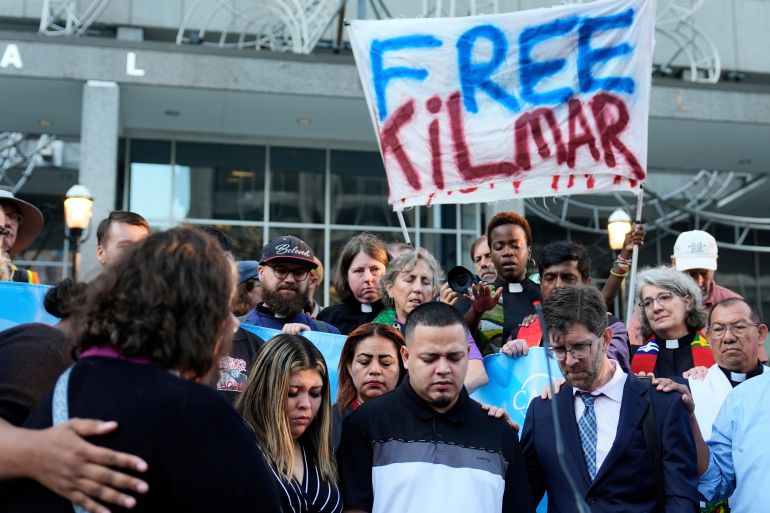
When Liberia announced late last month that it would temporarily host Salvadoran national Kilmar Armando Abrego García on “humanitarian grounds” if he were deported by the Trump administration for a second time, the West African country was broadcasting its unique history as a haven for Black migrants fleeing racism and economic servitude in the United States.
According to the Liberian government, the decision to welcome Abrego García, who was unlawfully deported from the United States in March only to return under a court injunction in June, follows its “longstanding tradition of offering refuge to those in need”.
Liberia was once a semi-autonomous territory funded in part by the Washington, DC-based American Colonisation Society (ACS) comprising powerful white men who viewed free Blacks as a threat to slavery and saw emigration (deportation) as the only solution to dispose of them. Its founders – repatriates from the US and Caribbean who joined recaptives (Africans rescued aboard illegal slave ships) from the Congo River basin – rebuffed ACS largesse and declared the country independent in 1847.
The free and formerly enslaved Blacks who founded Liberia were not unlike Abrego García, who has become an international symbol of the dangers of presidential overreach. They, too, were pawns in white America’s bid to “make America white again” – as if it ever were just white – through the framing of Black and brown bodies as undesirable, threatening and therefore disposable.
But the similarities end there. America once deported migrants of colour to Liberia, but not like this.
Although Trump’s impetus for mass expulsions – anti-migrant racism – aligns with the anti-Black bigotry of ACS agents who had deportationist sensibilities, Black people who opted to settle in Liberia did so primarily of their own volition. In fact, many paid for their emigration to West Africa in the 19th century.
America’s proposed deportation of Abrego García to Liberia in the 21st century would be neither voluntary nor defensible, especially since he has explicitly requested relocation to Costa Rica instead. His high-profile case represents a litmus test for upholding due process and respecting human rights under Trump-era MAGA mania. By agreeing to host Abrego García, Liberia has not only subjected itself to legal wrangling but also compromised its humanitarian credibility despite making vague assurances about consulting “relevant national and international stakeholders”.
It is the latest country in Africa – a continent previously described in pejorative terms by Trump – to cave in to the first felon-in-chief’s coercive tactics. The irony is that, as a convict himself, Trump, too, would be deported if he were a migrant of colour.
Africa a ‘dumping ground’ for deportees from America
The vast majority of countries under pressure to receive deportees from America are African. Eight men arrived in South Sudan in July after the majority-conservative US Supreme Court authorised their expulsion. As weeks of court disputes ensued thousands of miles away, nationals of Cuba, Laos, Mexico, Myanmar, South Sudan and Vietnam were held under American military guard in a converted shipping container in Djibouti.
Flights carrying other Black and brown deportees to Africa have followed in quick succession. In mid-July, after “months of robust high-level engagements”, five convicts from Cuba, Jamaica, Laos, Vietnam and Yemen were banished to the small, landlocked kingdom of Eswatini in Southern Africa. Shortly after, in mid-August, seven deportees arrived in the post-genocide central African country of Rwanda, which has in recent years positioned itself as an outpost for migrants expelled from Euro-America.
Deportation to third countries in Africa – or anywhere else for that matter – without due process is clearly a violation of human rights, even if the United States justifies ridding itself of alleged criminals by any means. Before enlisting Liberia’s cooperation most recently, the White House had been aggressively courting countries as diverse as Uganda, Libya, Gabon, Guinea-Bissau and Mauritania to host Abrego García. All of them are in Africa, and heads of state from the latter three countries attended Trump’s US-Africa summit held in July.
It appears the carrot of possibly benefiting from American commercial diplomacy followed the stick of accepting its deportees. But not all countries in Africa have complied when urged to do so. For instance, Nigeria – considered West Africa’s regional powerhouse – refused to kowtow to Trump, citing national security concerns. If a powerful ally can snub Washington’s request, why would its continental neighbours acquiesce?
What’s in it for Liberia – and Africa?
Although negotiations between the Trump administration and African governments have been largely shrouded in secrecy, countries that opt to take in deportees surely must be leveraging this diplomatically to secure concessions of their own, including the removal of US visa bans, the elimination of punishing tariffs, and the extraction of critical minerals for profit to power American technology ambitions.
Liberia appears to have been rewarded for its compliance. Following bilateral meetings held in October between American Secretary of State Marco Rubio and Liberian Foreign Minister Sara Beysolow Nyanti, Washington announced that, effectively immediately, it would extend the validity of certain non-immigrant visas issued to Liberians from one to three years with multiple entries permitted. This was a privilege Monrovia granted American citizens, but reciprocal arrangements were halted during Liberia’s protracted armed conflict from 1989 to 2003. Since Liberia has one of the highest US visa rejection rates in the world, the new extension policy may have been an allowance for agreeing to host Abrego García.
Washington’s inclusion of Monrovia in the much-touted US-Africa summit held this July may have been prompted by Liberia’s signing of a concession and access agreement with American mineral exploration company Ivanhoe Atlantic. Pending legislative approval, the 1.8 billion-dollar agreement would enable Ivanhoe to export Guinea’s iron ore using Liberia’s rail corridor. US companies have a chequered history in Liberia, though, so the concession has generated worthy speculation about its feasibility.
Despite the faulty assumption that Liberia has a “special relationship” with the United States, America’s contempt for the West African nation knows no bounds. The US was one of the last countries to recognise Liberia’s independence – in 1862.
American companies Firestone and LAMCO pillaged Liberia’s rubber and iron ore for decades with the complicity of local elites. US Assistant Secretary of State Herman Cohen dismissed Liberia as being of “no strategic interest” when war ravaged the country in the 1990s. And Trump asked Liberia’s President Joseph Boakai where he learned to speak “such good English” during a cringeworthy White House exchange in July.
Washington’s recent proposal to deport Abrego García to Monrovia is the latest blunder in US-Liberia relations.
If Trump were alive in the 1800s, he probably would have found affinity with deportationists of the American Colonisation Society. But we’re no longer in the 19th century. As a country that “historically extended protection and goodwill to individuals and communities needing assistance”, Liberia would do well to remember that it is a sovereign nation whose policy decisions must not be shaped by the whims of racist white men.
First Published by Al Jazeera /The views expressed in this article are the author’s own and do not necessarily reflect Oracle News Daily’s editorial policy.

