


The festival’s bright lights are a “heartless crown” that hides hunger and neglect. Jeety’s cooking pots and boreholes pierce that veneer, turning a symbolic holiday into real relief.
When most of Monrovia was trimming trees and exchanging greetings, rows of men behind the high walls of the Monrovia Central Prison waited for the one knock that has, for the past decade, meant a warm meal and a reminder that someone remembers them.

On a gray morning at the prison’s South Beach compound, Superintendent Roosevelt Varney presented a certificate of appreciation to business tycoon Upjit Singh Sachdeva known to many simply as Jeety.
The honor was short; the symbolism was not. For inmates and staff alike, the ceremony was a rare public acknowledgment of sustained, practical compassion in a system long battered by scarcity.
“Mr. Jeety has been a dependable humanitarian partner whose contributions have had a meaningful and lasting impact on inmate welfare,” Superintendent Varney said, noting the tycoon’s readiness to answer a phone call at any hour.

“We are bestowing this certificate to thank him for his continued support.”
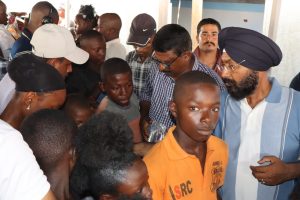
Jeety’s interventions are concrete and recurring. Since launching a food distribution program in February 2017, he has provided regular food supplies, assorted items and hot-cooked meals — a lifeline that intensified during the COVID-19 lockdowns.
He has repaired and upgraded critical infrastructure inside the prison: installing poly tanks and a generator for water storage, commissioning a borehole to ease a chronic water crisis and improving sanitation where possible.
Those fixes translate directly into cleaner water, fewer service interruptions and meals that wouldn’t otherwise exist.
The scale matters. The honoring ceremony ended with the feeding of more than 3,000 people at the prison and nearby communities.
Elsewhere, Jeety’s companies [Jeety Rubber and its subsidiary Salala Rubber Corporation] hosted a Christmas party for over 5,000 children in Margibi’s Cinta District and distributed bags of rice to more than 100 motorcyclists — gestures that extend the relief beyond the capital to rural communities that host his rubber operations.

Experts and officials say such private philanthropy is filling gaps left by a judicial and corrections system struggling with overcrowding, inadequate sanitation and limited medical care.
The United States Department of State’s 2021 human rights report singled out Jeety’s feeding programme as a critical effort to combat hunger among inmates.
Receiving the certificate on Jeety’s behalf, General Manager Chandra Mohan emphasized his boss’s simple creed: every human being deserves dignity and care.
“This honor makes him more resolute to continue no matter the situation,” Mohan said. “As you know, Mr. Jeety is just a call away.”

The accolade at Monrovia Central is one of many. Jeety’s humanitarian work has earned him national and international recognition: Liberia’s Knight Grand Commander of the Humane Order of African Redemption, awards from civic fraternities and media praise, and India’s Pravasi Bharatiya Samman for non-resident citizens. Those honors map the reach of what began as a steady, hands-on commitment to vulnerable people.

Yet the season that crowns such generosity can also be starkly indifferent. “Many go hungry on Christmas,” advocates remind us. For some, the festival’s bright lights are a “heartless crown” that hides hunger and neglect. Jeety’s cooking pots and boreholes pierce that veneer, turning a symbolic holiday into real relief.
Whether called a benefactor, a philanthropist or Monrovia’s “real Santa,” Jeety’s model is notable for its constancy.

In a system dependent on outside aid, one man’s routine compassion has become a recurring safety net. The question left behind the applause is simple: how many more hands will answer the next call?

