

By George K. Werner (former education minister)
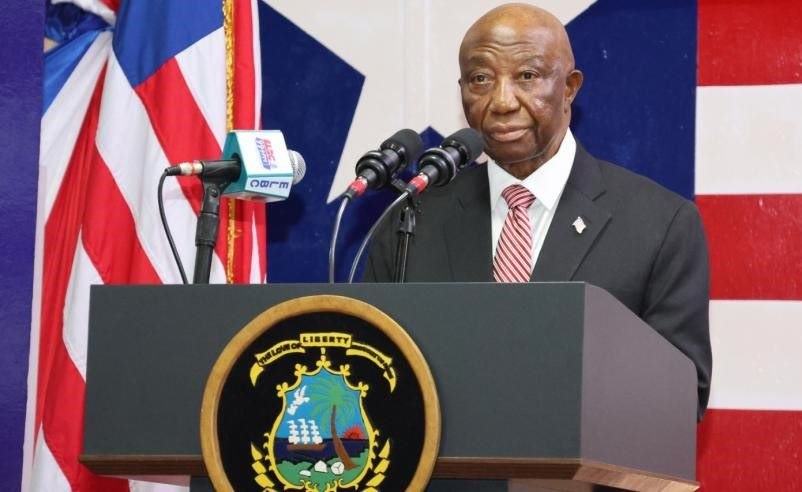
When President Joseph Nyuma Boakai presented his 2026 legislative agenda to a joint session of the Liberian Legislature, one proposal stood out for what it quietly acknowledged and what it wrongly prescribed.
The proposal to create a National Planning Commission was an admission that Liberia’s development planning function has weakened. On that point, the speechwriters were right. Where they went wrong was in assuming that weak planning is best fixed by creating a new institution.
Liberia has already confronted this problem and resolved it deliberately. After the war, government recognized that separating planning from finance produced a structural failure: plans that could not be funded and budgets that did not follow plans.
The Ministry of Planning and Economic Affairs generated strategies, while the Ministry of Finance controlled resources. The result was fragmentation. MFDP was created to end that divide by placing planning at the fiscal center of government, where development choices must be costed, sequenced, and disciplined through the budget.
Proposing a National Planning Commission quietly reverses that logic. It pulls planning back out of the institution that controls implementation and reintroduces the very fragmentation reform sought to eliminate. This is not a legal necessity. Liberia’s public finance framework already allows the President and the Minister to structure MFDP, delegate authority, and strengthen planning leadership internally. This is a problem of institutional use, not institutional absence.
Creating a new commission is not a neutral act. It carries immediate fiscal consequences. A National Planning Commission will require commissioners, a secretariat, offices, vehicles, salaries, allowances, and a recurrent budget line. In a country already struggling with a heavy wage bill and limited fiscal space, these costs are not theoretical. They are permanent. New institutions rarely come with old ones closing; they are layered on top, and the payroll expands quietly year after year.
There are also serious administrative consequences. Nearly one hundred professionals already work in MFDP’s planning functions. A new commission will either duplicate their roles, drain talent from the Ministry, or marginalize existing expertise. Institutional memory will be scattered, coordination will weaken, and competition—rather than coherence—will emerge between planners in the commission and budget officers in MFDP. Development planning will become advisory again, instead of authoritative.
Politically, the creation of a commission blurs accountability. When plans fail, who is responsible—the commission that planned or the ministry that budgeted? Diffused responsibility makes underperformance easier to explain and harder to correct. This is how governments end up with elegant strategies and poor results, because no single institution owns the full chain from planning to execution.
The decentralization consequences are equally troubling. A National Planning Commission will almost certainly be Monrovia-based. At the same time, government is rolling out the Local Government Act and promising to empower counties. Planning that sits in Monrovia while counties implement is not decentralization; it is recentralization under a different name. Counties will remain recipients of plans rather than partners in shaping them, and local development priorities will continue to be filtered upward instead of built from the ground up.
The deepest irony is that MFDP was created so planning would discipline finance, not disappear behind it. The Ministry was meant to ask hard questions: What can we afford? What must wait? What delivers the highest national return? If MFDP has drifted into being mainly a Ministry of Budget, that drift is not an argument for creating a new planning commission. It is an argument for restoring MFDP’s planning authority and confidence.
There is a cleaner, cheaper, and more coherent alternative available to the President. Through executive authority, government can establish a Deputy Minister for Planning and Development at MFDP, supported by two assistant ministers—one responsible for sectoral planning and another for national development coordination, monitoring, and results.
This approach strengthens planning where it already belongs, preserves institutional memory, avoids wage-bill expansion, and aligns planning with decentralization rather than undermining it.
The speechwriters were right to flag a weakness. They were wrong about how to fix it. Reform is not about creating new signboards; it is about making existing institutions work as they were designed to work. MFDP was created to shape Liberia’s future, not merely divide its revenue. Ignoring that history risks repeating it—and Liberia has already paid too high a price for institutional fragmentation to do so again.

