

Introduction
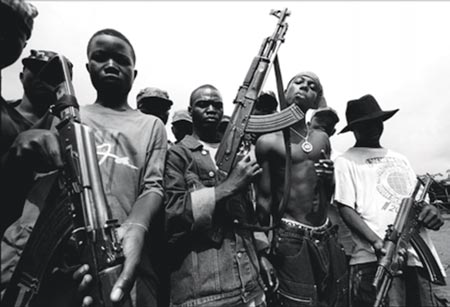
From the outset of the Civil War in Liberia in 1989, the Economic Community of West African States (ECOWAS) a sub-regional organization, undertook various initiatives aimed at achieving a peaceful settlement. ECOWAS initiative included the creation of a Military Observer Group. (ECOMOG) in August 1990.
The group initially comprised about 4,000 troops from Gambia, Ghana, Guinea, Nigeria, and Sierra Leone. Although the president of Liberia, Mr. Samuel K. Doe, had agreed to accept ECOMOG, as did Mr. Prince Johnson, the leader of an NPFL faction challenging the leadership of Samuel K. Doe, Mr. Charles Taylor of the National Patriotic Front of Liberia (NPFL) opposed ECOMOG intervention.
On 10 September 1990, President Doe was killed after having been taken prisoner by Johnson’s forces. The following year, in June 1991 former supporters of the late president were to create another group, the United Liberation Movement of Liberia for Democracy (ULIMO).. Accord issue (1) Civic Initiatives in the peace process October 1996
ECOWAS efforts to achieve a peaceful settlement in Liberia included the mediation of a series of agreements, which became the basis for the peace plan of November 1990, including the establishment of an Interim Government of National Unity (IGNU). Dr. Amos Sawyer was inducted into office as the President of the Interim Government. On 30 October 1991, ECOWAS brokered the Yamoussoukro IV Accord, which outlined steps to implement the peace plan.
The UN & Security Council Intervention
The United Nations supported the efforts of the ECOWAS member States through humanitarian assistance provided to the affected areas in Liberia through coordinated activities of the United Nations Development Program (UNDP), the Food and Agriculture Organization (FAO), the United Nations Population Fund, the United Nations Children’s Fund (UNICEF), the World Food Program (WFP) and the World Health Organization (WHO).
The United Nations Special Coordinator’s Office (UNSCOL) opened in December 1990; its operation, initially focusing on the desperate situation in the Monrovia area, was expanded throughout the country in 1991. Regional arrangements were also made to assist those who fled to the neighboring countries, mainly Guinea, Côte d’Ivoire, and Sierra Leone.
On 19 November 1992, the Security Council, by adopting resolution 788 (1992), imposed a general and complete embargo on all deliveries of weapons and military equipment to Liberia, except for those destined for the sole use of the peacekeeping forces of ECOWAS.
The Cotonou Peace Agreement
In July 1993, a three-day meeting was held in Cotonou, Benin. At the conclusion of the meeting on 25 July, IGNU, NPFL, and ULIMO signed the Cotonou Peace Agreement which outlined a plan from ceasefire through disarmament and demobilization to the holding of national elections.
The Establishment of UNOMIL
On 10 August 1993, the Security Council, through Resolution 856, authorized the Secretary‑General to dispatch an advance team of 30 United Nations military observers to Liberia. Subsequently, on 22 September 1993, Resolution 866 established the United Nations Observer Mission in Liberia (UNOMIL) as the first UN peacekeeping mission undertaken in cooperation with a regional force.
It was placed under the authority of the Secretary‑General, led in the field by his Special Representative, and composed of both military and civilian components. The Chief Military Observer reported directly to the Secretary‑General through the Special Representative.
Although financing ECOMOG was not a UN responsibility, the Secretary‑General proposed a trust fund to support African countries contributing troops, as well as to assist with humanitarian relief, elections, and demobilization. With Security Council endorsement, steps were taken to establish the fund.
The Akosombo Agreement
On 7 September 1994, ECOWAS Chairman President Jerry Rawlings of Ghana convened a meeting of Liberia’s warring factions at Akosombo. Attendees included the NPFL, both ULIMO factions, and the AFL, while the LPC and Lofa Defence Force declined to participate.
The Extension of UNOMIL Terms of Operations
On 21 October 1994, the Security Council adopted Resolution 950, extending UNOMIL’s mandate until 13 January 1995. By mid‑1994, humanitarian needs were immense: 1.5 million people required aid, of whom 1.1 million were reached, while 400,000 remained inaccessible due to fighting. By August, the number in need had risen to 1.8 million, with relief confined largely to Monrovia and Buchanan.
On 21 December, the factions signed two agreements in Accra. One clarified the Akosombo Agreement, while the other brought in non-signatories such as ULIMO‑Johnson, LPC, LDF, CRC‑, NPFL, and the Liberian National Conference. Together, these became known as the Accra Agreement.
The Security Council extended the mandate of UNOMIL until 13 April by its Resolution 972 (1995) of 13 January. By Resolution 972 (1995), the Security Council requested the Secretary-General to report on the role of UNOMIL and of ECOMOG in Liberia and the resource requirements of ECOWAS States to maintain their troops in ECOMOG.
The Government of Nigeria contributed the bulk of the force (4,908), while troops were also provided by the Governments of Ghana (1,028), Guinea (609), the United Republic of Tanzania (747), Uganda (760), and Sierra Leone (359). Smaller contingents were also provided by Gambia (10) and Mali (10).
The Security Council extended UNOMIL’s mandate and, through Resolution 1020 of November 1995, to include monitoring compliance with ceasefires, verifying disarmament and demobilization, supporting humanitarian assistance, investigating human rights violations, and observing elections scheduled for August 1996.
This expansion reflected lessons learned since UNOMIL’s establishment in 1993 and the need for closer coordination with ECOWAS. Operationally, ECOMOG divided Liberia into three sectors, with brigade headquarters in Gbarnga, Greenville, and Tubmanburg, while the overall force headquarters remained in Monrovia.
By October 1995, ECOMOG had 7,269 troops, but plans were made to expand to 12,000 to meet the demands of disarmament and security. Nigeria pledged two additional battalions, while Ghana and Guinea offered one each, though further contributions depended on financial and logistical support.
Renewed Instability
Despite these institutional adjustments, implementation of the Abuja Agreement fell behind schedule. Ceasefire violations persisted.
Tensions escalated further in March 1996 when the transitional government issued a warrant for Roosevelt Johnson’s arrest. On 6 April, an attempt by the national police, backed by NPFL and ULIMO‑K forces, to detain him triggered widespread violence in Monrovia. Johnson’s forces, supported by AFL fighters, resisted, and the confrontation spiraled into chaos. UNOMIL evacuated most personnel, though a small team remained to support political efforts.
Ceasefire and Continued Challenges
A ceasefire was arranged on 19 April 1996, with ECOMOG deploying in central Monrovia to establish checkpoints and patrols as fighters withdrew. However, fighters continued to move freely, and the ceasefire collapsed on 29 April. On 21 May, the Secretary‑General reported to the Security Council that insecurity in Monrovia and across Liberia severely limited UNOMIL’s ability to implement its mandate.
Resolution 1059 (1996) demanded full implementation of the Abuja Agreement. By late May, ECOMOG reported that 70 to 80 percent of NPFL and ULIMO‑K fighters had left Monrovia, though many remained in surrounding areas. ULIMO‑J and LPC fighters claimed their designated withdrawal zones were insecure, complicating redeployment.
Political Developments
On 3 September 1996, Ruth Perry was inducted as Africa’s first female Head of State, marking a historic milestone.
The New York Consultation and Liberia’s 1997 Elections
On 6 and 13 May, informal consultations were held in New York with the participation of ECOWAS member States and major donors to discuss a Special Conference to Support the Peace Process in Liberia. An Extraordinary Summit Meeting of the ECOWAS Committee of Nine on Liberia was convened in Abuja on 21 May to decide on the date of the Liberian elections, as well as on the electoral law and the budget. The Summit decided that the election for the legislative assembly and the presidency should take place on 19 July, with the new Government to be inaugurated on 2 August.
UNOMIL Leadership & Security Conditions
On 27 June 1997, the Security Council decided to extend the mandate of UNOMIL until 30 September 1997, in the expectation that it would terminate on that date. As at 13 June, the cumulative total of arms and ammunition recovered and verified by military observers was 10,036 weapons and more than 1.24 million assorted pieces of ammunition, while approximately 3,750 weapons had been reported surrendered to ECOMOG outside the official disarmament sites. In addition, ECOMOG cordon-and-search operations led to the recovery of approximately 3,500 weapons and 150,000 pieces of ammunition.
UNOMIL and ECOMOG continued to make their own preparations for the elections. ECOMOG’s strength stood at approximately 11,000 troops deployed at 48 different locations.
A key humanitarian challenge was also the repatriation of what UNHCR estimated to be 660,000 refugees in the subregion and the resettlement of 750,000 internally displaced persons. A United Nations consolidated inter-agency appeal for Liberia was launched in December 1996, requesting $31.2 million for priority humanitarian interventions.
The entire electoral process was organized and conducted by the Liberian Independent Elections Commission, with the assistance of UNOMIL, ECOMOG, the European Union (EU), and the International Foundation for Electoral Systems, which, in a coordinated effort, pooled their logistical, communications, and transport resources as well as their technical expertise to support the process. States members of ECOWAS, OAU, UNDP, donor countries, and the Liberian Council of State provided financial, material, and technical assistance.
Establishment of the Joint-Electoral Commission Mechanism of ECOWAS
The Joint Electoral Coordination Mechanism of ECOWAS and the United Nations, which was established before the elections, greatly assisted in the harmonization of electoral preparations. A total of 13 political parties fielded candidates for the presidential and legislative elections. The parties started their electoral campaigning on 16 June 1997 as scheduled under the electoral calendar.
The final result of the election was announced on 24 July, giving the National Patriotic Party (NPP) 75.3 per cent, the Unity Party (UP) 9.5 per cent, and the All-Liberia Coalition Party (ALCOP) 4 per cent of the national vote. Mr. Charles Ghankay Taylor was elected President, and his National Patriotic Party won 21of the 26 Senate seats, and 49 of the 64 seats in the House of Representatives.
UP led the opposition with three and seven seats in each chamber, respectively. The Alliance and United People’s Party (UPP) each received approximately 2.5 per cent, while the remaining eight parties received less than 2 per cent of the vote each. Voter turnout for the election was approximately 85 per cent of registered voters.
On 30 July 1997, the Security Council, in a Presidential statement, welcomed the successful holding of presidential and legislative elections in Liberia and noted that the outcome of the elections reflected the will of the Liberian voters.
UNOMIL Departure & New Trends
By mid-September, the Mission had closed all its field offices and withdrawn all personnel and assets to Monrovia in readiness for its departure from Liberia. Nearly all military observers had been repatriated.
However, it was decided to retain nine military observers until 30 September, in connection with the joint ECOMOG/UNOMIL custody of the approximately 10,000 weapons and 1.24 million pieces of ammunition surrendered by factional fighters during the disarmament and demobilization exercise.
The destruction of arms and ammunition collected during the disarmament process was completed by the Government of Liberia, in cooperation with ECOMOG and the United Nations, on 19 October 1999.
Conclusion
The Liberian peace process was long, complex, and fraught with setbacks, yet it ultimately demonstrated the critical importance of sustained regional and international engagement in resolving protracted civil conflicts.
Beginning with the outbreak of war in 1989, Liberia endured years of devastation, with nearly 150,000 civilian deaths, mass displacement, and the collapse of state institutions. The interventions of ECOWAS and its military arm, ECOMOG, marked the first significant regional attempt to stabilize the conflict. Despite accusations of bias and operational challenges, ECOWAS provided the framework for dialogue, ceasefire monitoring, and transitional governance.
The United Nations complemented these efforts by mobilizing humanitarian assistance, imposing arms embargoes, and establishing UNOMIL—the first UN peacekeeping mission to operate alongside a regional force. UNOMIL’s mandate to monitor ceasefires, verify disarmament, and support elections was ambitious, and its effectiveness was often constrained by insecurity, factional mistrust, and limited resources. Nevertheless, its presence lent legitimacy to ECOWAS’s initiatives and underscored the necessity of international oversight.
Peace agreements such as the Yamoussoukro IV Accord, the Cotonou Agreement, and the Akosombo Agreement reflected repeated attempts to bring warring factions into a political settlement. Each accord faced difficulties in implementation, with disarmament delayed, transitional governments contested, and humanitarian crises worsening. Yet these agreements laid the groundwork for eventual progress by establishing mechanisms for ceasefire monitoring, transitional governance, and electoral preparation.
The Liberian case illustrates several key lessons. First, regional organizations such as ECOWAS can play a decisive role in conflict resolution, particularly when international actors are slow to intervene. Second, the partnership between ECOWAS and the United Nations demonstrated the value of combining regional legitimacy with international resources and oversight.
Third, peace processes must address not only military and political dimensions but also humanitarian needs, reintegration of combatants, and the rebuilding of institutions. Finally, the persistence of mistrust, factionalism, and human rights abuses throughout the process underscores the fragility of peace agreements and the need for continuous monitoring and support.

