

By Festus Poquie
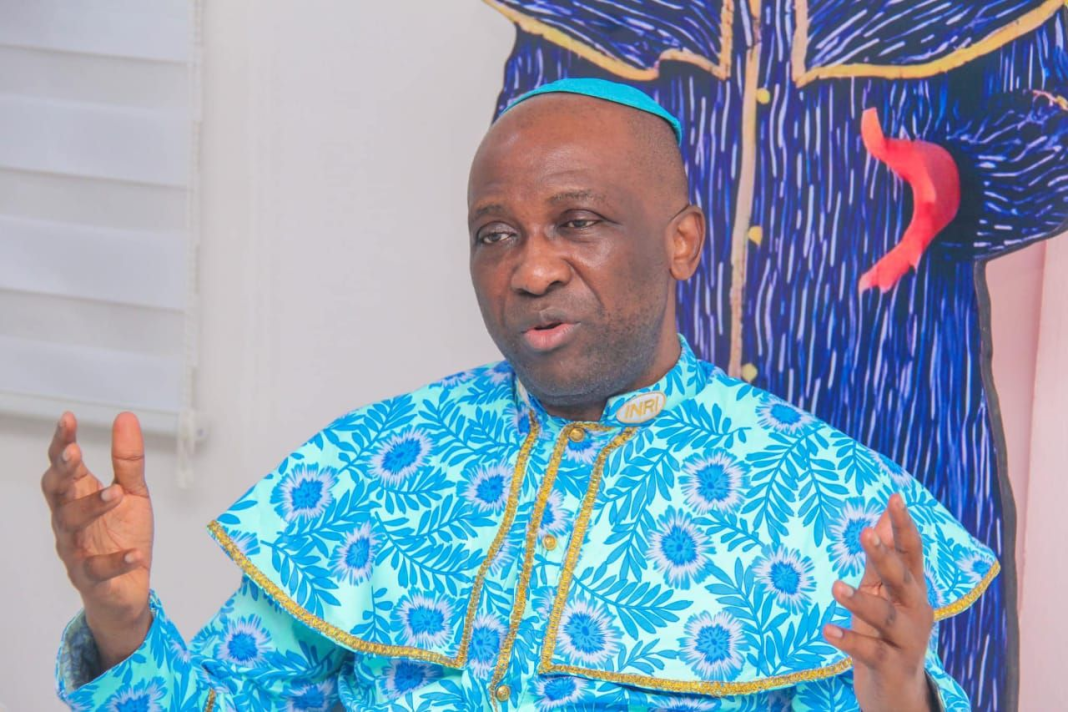
A controversial Nigerian cleric’s prophecy that Liberia will face intensified economic hardship under President Joseph Boakai has reignited political tensions and set social media abuzz, dividing supporters and opponents of the government.
Bishop Primate Elijah Ayodele of the INRI Evangelical Spiritual Church in Lagos said during a service that God had told him Liberians “should not expect a better economy” under Boakai’s Unity Party Alliance.
“Liberia, your president is confused. So, the economy of the country is confused. Everything about the country is confused,” Ayodele said, adding that the country would face “confusion from now to 2029” and that “hardship awaits Liberia.”
The prophecy — which also included a prediction that former President George Weah would return to power in 2029 — sharply divided reaction in Liberia. The preacher’s 2023 prophecy on Weah retaining power didn’t happen.
Government supporters described the cleric’s language as inflammatory, while opponents and social media commentators celebrated the warning as confirmation of concerns about the president’s capacity.
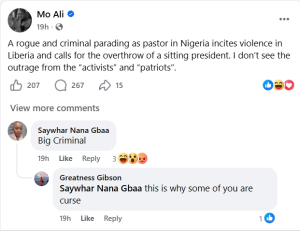
Mohammed Ali, former general secretary of the Unity Party, condemned Ayodele’s remarks as dangerous. “A rogue and criminal parading as pastor in Nigeria incites violence in Liberia and calls for the overthrow of a sitting president,” Ali said, questioning the lack of public outrage from civic activists.
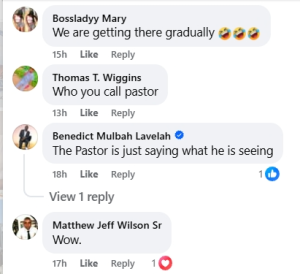
By contrast, critics of the government embraced the cleric’s message. Esiaka Sheriff, a former junior minister under the Weah administration, said the prophecy echoed public sentiment: “The pastor preached the exact thing he saw in his prophecy. La true the man talking, ownpa,” he wrote on social media. Other users posted approving comments and shared the sermon widely.
Ayodele doubled down during subsequent services, responding to online backlash by reiterating his prediction: “Your president is confused but you will not understand. You will suffer in Liberia. Hardship that you have not experienced, you will see.”
Economy shows mixed signals
Economic data, however, paint a more nuanced picture. The Central Bank of Liberia (CBL) reported that provisional fiscal operations for the first quarter of 2026 recorded an overall balance surplus of US$251.79 million — equivalent to 4.5% of GDP — reversing a deficit from the previous quarter.
The bank attributed the surplus to a sharp increase in government revenues and reduced public spending. Total government revenue in the quarter was US$461.69 million (8.2 % of GDP) against expenditures of US$209.89 million (3.7% of GDP).
On growth, the CBL projected real gross domestic product would expand by 5.1% in 2026, with positive momentum across most sub-sectors. Mining and panning, driven by higher iron ore and diamond output, recorded strong gains, while some agriculture commodities — rubber, cocoa and crude palm oil — faced double-digit declines because of smallholder production challenges. Fisheries grew by 30 percent and gold output rose modestly.
But analysts point to lingering risks. Government spending in the quarter was modest, with only about US$200 million deployed despite revenues above US$400 million, raising questions about fiscal policy and whether constrained public expenditure could translate into slower improvements in living standards.
At 81, President Boakai has weathered scrutiny over his leadership and pace of reform. Ayodele’s public critique — couched as prophecy — feeds into an already polarized political landscape as citizens debate the pace of economic recovery and governance competence.
Political analysts say the cleric’s sermon is unlikely to directly alter economic fundamentals but could exacerbate public anxiety and political polarization ahead of the next electoral cycle. “Religious pronouncements carry weight in this region and can amplify perceptions of crisis even when macro indicators show mixed or improving trends,” said a Monrovia-based researcher, asking not to be named.

