

By Amasi Kumeh, in collaboration with Christine Edwina Brooks Jarrett Global Health Equity Researcher and Policy Analyst
A Familiar Story in Our Communities
For many Liberian families, Parkinson’s disease does not feel distant or abstract. It feels familiar, even if it has never been named.
An elder’s hands begin to tremble while resting. Their steps grow shorter and slower. A once strong voice softens, sometimes to a whisper. Balance falters. Falls become more frequent. Families often explain these changes as “just old age,” something to endure quietly.
But these are not simply the marks of aging. They may be signs of Parkinson’s disease.
Parkinson’s is not witchcraft. It is not mental illness. And it is not an inevitable part of growing older.
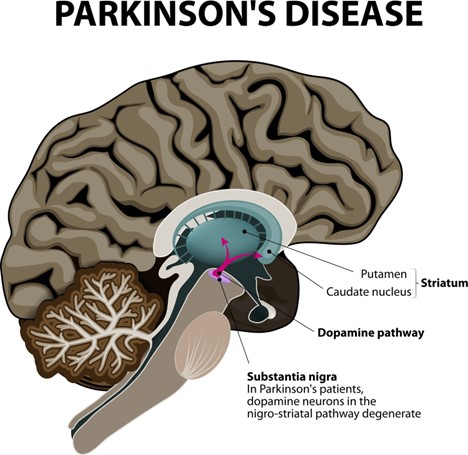
Parkinson’s disease is a movement disorder of the nervous system that worsens over time. The nervous system is a network of nerve cells that controls many parts of the body, including movement.
Symptoms start slowly. The first symptom may be a barely noticeable tremor in just one hand or sometimes a foot or the jaw. Tremor is common in Parkinson’s disease. But the disorder also may cause stiffness, slowing of movement and trouble with balance that raises the risk of falls.
In the early stages of Parkinson’s disease, your face may show little or no expression. Your arms may not swing when you walk. Your speech may become soft or slurred. Symptoms get worse over time.
Parkinson’s disease symptoms can be different for everyone. Early symptoms may be mild, and you may not even notice them. Symptoms often begin on one side of the body, then affect both sides. Symptoms are usually worse on one side than the other. Some Parkinson’s disease symptoms are similar to those of other disorders.
Although Parkinson’s disease can’t be cured, medicines may help symptoms get better. Sometimes a healthcare professional may suggest surgery to help control parts of the brain. This surgery may help lessen symptoms.
It is a neurological condition that affects movement, coordination, and speech. It develops gradually, often over years, which makes it easy to miss in its early stages. Families adjust around the changes without realizing that what they are seeing has a medical explanation.
Why We Are Not Talking About Parkinson’s Like Other Illnesses
Parkinson’s is present in Liberia, affecting our parents, uncles, aunties, and grandparents. The silence around it does not mean it is absent. It means it is under-recognized.
Liberians speak openly about cancer, diabetes, and high blood pressure. These illnesses are part of our public health conversation. But Parkinson’s remains less visible.
The reason is not rarity. It is limited recognition. Clinics may not routinely document it. Health workers may have limited exposure to movement disorders. Families may never hear its name. When a disease is not counted, it becomes more difficult to prioritize.
Across Africa, reported rates of Parkinson’s vary widely. Research suggests this reflects differences in awareness and diagnostic capacity rather than true absence of disease. Silence does not mean safety. It means the condition remains unrecognized and underserved.
Strengthening recognition is the first step toward improving response.
What Signs Should Families Look For?
Parkinson’s does not look the same in everyone, but common early signs include:
- Tremor or shaking in the hands or limbs
- Slowed movement or stiffness
- Changes in walking pattern
- Reduced facial expression
- Softer or lower voice
- Difficulty with balance, including frequent falls
These symptoms often begin on one side of the body and progress gradually. Recognizing them early does not cure Parkinson’s, but it helps families understand what may be happening and seek appropriate medical evaluation.
Shifting From Policy to Everyday Living
Liberia has shown that awareness can change lives. Community education around cancer and other chronic illnesses has reduced stigma and encouraged earlier care. Parkinson’s deserves similar attention.
This is not about complicated policies. It is about everyday recognition. It is about families knowing the signs, health workers being equipped to identify symptoms, and communities speaking openly.
Naming Parkinson’s creates clarity. Clarity allows action.
A Shared Responsibility
Liberian culture honors elders. Recognizing conditions that affect them is part of that responsibility.
When tremors and slowed movement are dismissed as “just old age,” families are left without answers. When we name the condition, we replace uncertainty with understanding.
Parkinson’s disease is a medical condition. It can be managed. Those affected deserve informed support and dignity.
If we begin to talk about Parkinson’s openly, at home, in clinics, and in communities, it will no longer remain invisible. Awareness is the first step. Recognition allows action to follow.
Liberian families deserve answers. Our elders deserve dignity. And neurological health deserves a place in our national conversation.
About the Authors
Amasi Kumeh works in global health equity and health systems research, with a focus on neurological conditions and data gaps in underrepresented populations. Her work examines how policy, research, and everyday lived experience intersect in African and diasporic communities.
Christine Edwina Brooks Jarrett is a health policy analyst and advocate focused on bridging the gap between clinical research and community impact in Liberia and West Africa.
If you or someone in your family is experiencing symptoms described in this article, please seek medical evaluation at your nearest health facility. Early recognition makes a difference.

