

By Festus Poquie
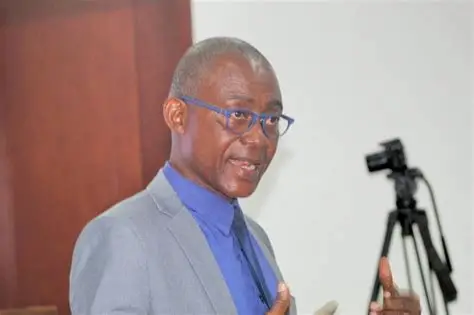
Liberia’s first ombudsman has resigned after an independent panel found he extorted funds from a staffer and recommended his dismissal and criminal prosecution.
Counselor Finley Karngar, who was appointed in April 2024 as the inaugural head of the Office of the Ombudsman, stepped down less than two years into the post, the presidency said Wednesday.
The move follows a formal investigative report dated Feb. 12, 2026, that concluded Karngar “clandestinely extorted” more than US$2,000 from his Special Assistant over a four-month period in 2025.
The panel — whose report was signed by Commissioners Amonia Martin and Lamii Kpargoi and Dr. Aaron Weah of the Ducor Institute for Social and Economic Research — said Karngar demanded 50 percent of the aide’s monthly salary (about US$500) between April and July 2025 and required additional monthly payments of US$30–35 for phone scratch cards.
On that basis the panel recommended his immediate dismissal and criminal prosecution for violations of Liberia’s National Code of Conduct.
President Boakai accepted Karngar’s resignation and publicly expressed appreciation for his service, saying the ombudsman had contributed to advancing ethical standards in public service.
The president also reaffirmed his commitment to strengthening integrity institutions and promoting transparency and accountability across government.
Karngar, who led a reactivated office that had operated with limited resources, had been overseeing more than 50 active investigations into allegations of administrative incompetence, nepotism, conflict of interest, political participation and sexual harassment in public offices.
His office earlier recommended the dismissal of nearly two dozen public officials for alleged violations of the National Code of Conduct, a report issued in August 2025 said.
That August report named a range of senior figures — including board chairs, ministers and county superintendents — whom the ombudsman found had engaged in prohibited political participation or management while holding government positions.
The office concluded the conduct violated several sections of the Code of Conduct and Article 90 of the 1986 Constitution and urged the president to remove those officials after due process.
Karngar’s office also opened an ethics probe in October 2025 into Chief Justice Yamie Quiqui Gbeisay after a complaint by lawyer Isaac Jackson over Gbeisay’s role in recommending his son for a magisterial post.
The chief justice reportedly defended the recommendation, saying in a quoted remark that “There is no law against nepotism. My son is of age; he is in law school. I recommended him to the President, and if the President saw it fit to nominate him, I see nothing wrong with that.”
The son was later appointed as an assistant magistrate but resigned following public outcry and opposition from the Trial Judges Association.
Karngar had acknowledged institutional challenges that limited the ombudsman’s effectiveness. He told reporters the office only received formal space and modest staffing in August 2024 after years of dormancy, and that it currently operates with roughly 20 staffers instead of the roughly 135 ideally needed.
Despite those constraints, Karngar said the office had launched wide-ranging investigations across the executive, legislative and judicial branches and planned outreach and expansion to Liberia’s 15 political subdivisions as resources allowed.

