

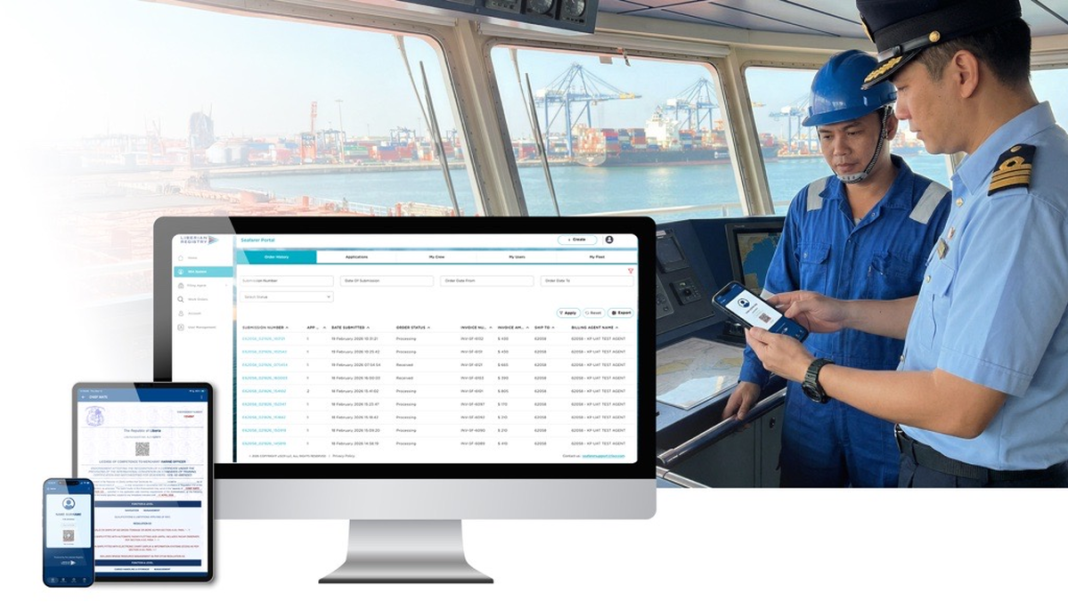
Liberian Registry says digital and QR-coded seafarer documents will complement hard copies and support faster verification and processing. Liberian Registry is preparing to introduce electronic seafarer documents, linking the move to digitalisation, compliance and document verification across its fleet.
The new system will add QR-coded, digitally verifiable credentials while retaining hard copy documents, rather than replacing them outright.
The registry said the change is being supported by a migration of its Seafarer Electronic Application System into a new ecosystem within the Seafarer Portal.
As part of that process, it is launching Crew 360, which it described as a compliance-focused solution applying additional vetting and verification checks to every seafarer application processed.
The registry said this would change how credentials are submitted, processed and issued, while tightening compliance oversight.
Following the launch, seafarer documents processed by the registry will include a QR code on physical documents, including Certificates of Receipt of Application, alongside electronic certificates for every application placed.
The registry said electronic seafarer documents will complement the hard copy documents currently issued, maintaining continuity between physical and digital copies while strengthening oversight and document integrity.
The registry is also preparing a mobile application, SEA360, for seafarers serving on Liberia-flagged vessels.
The app will allow seafarers applying for new documentation to access their Seaman’s Book, licences, certificates and recorded sea service from mobile devices.
Electronic documents available through the app will be digital equivalents to hard copy documents and will include QR codes for immediate verification within the registry’s systems.
The mobile application will create a direct link between Liberian seafarers and the registry, allowing seafarers to use electronic documents when dealing with port state control officials and other responsible parties, including designated persons ashore.
Liberian Registry believes shipowners will gain greater assurance that applications have passed enhanced vetting and verification, while seafarers will benefit from faster processing.
Liberian Registry chief executive officer Alfonso Castillero said, “The safety and security of our seafarers is our highest priority. Everything we do as a Registry, every system we build, every process we improve, is driven by one purpose: to support and empower the men and women who keep global trade moving.”
He added, “Beyond document access, SEA360 is a direct link between the Registry and the seafarer, a place where guidance, updates, and support are available.”
The registry said further details will be issued through Marine Notices as updates become available.
The ship registry comprises more than 5,900 vessels and 297M gross tonnes, representing more than 17% of the world’s oceangoing fleet.
- by Craig Jallal

