

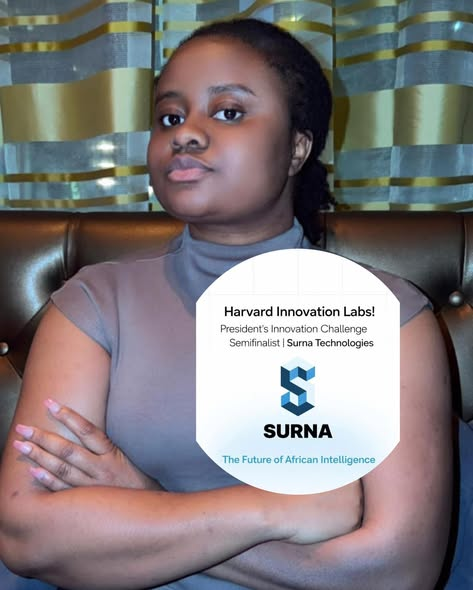
BOSTON – Liberia has earned a place on one of the world’s most competitive innovation stages. Hellen S. Momoh, founder of Surna Technologies, has been named a finalist in the Harvard President’s Innovation Challenge, distinguishing herself among the top five ventures selected from 180 semifinalists.
The announcement, made on March 25, 2026, signals a breakthrough moment for Liberia’s technology sector and highlights Africa’s growing role in shaping the future of artificial intelligence. Momoh’s recognition positions her startup at the forefront of efforts to redefine how governments and public institutions across the continent harness AI.
Unlike conventional models that depend heavily on external infrastructure, Surna Technologies is building what Momoh calls a “sovereign technology stack.” The company’s approach enables institutions to deploy advanced AI systems while maintaining full ownership and control of their data—a critical safeguard in an era when digital sovereignty is increasingly tied to national security and economic independence.
“Surna is building the infrastructure layer that lets African institutions benefit from their own intelligence,” the team said in a statement following the announcement. Already, the startup is gaining traction in Liberia and across the region, signaling a shift toward self-reliance in one of the world’s most dynamic emerging tech ecosystems.
The Harvard Innovation Labs’ President’s Innovation Challenge is widely regarded as one of the most competitive university-based startup competitions globally. Finalists will compete live for a share of more than $500,000 in prize funding, with entrepreneurs, investors, and academics watching closely to see which ventures secure the top prizes.
For Liberia, Momoh’s achievement carries symbolic weight. Her rise from semifinalist to finalist underscores the country’s potential to compete with leading global technology hubs—not merely as a consumer of innovation, but as a creator of it. The recognition also highlights the growing role of African entrepreneurs in shaping the future of artificial intelligence, particularly in contexts where local ownership of data and systems is paramount.
Supporters across Liberia and the broader African tech community have rallied behind Momoh, celebrating her success as both a personal triumph and a national milestone. Many see her journey as a testament to the resilience and creativity of African innovators who are determined to build solutions tailored to the continent’s unique challenges.
The final pitch event is expected to draw significant attention, with Harvard’s innovation ecosystem serving as a global platform for ideas that can transform industries and societies. Regardless of the outcome, Momoh’s presence in the competition has already cemented her reputation as a trailblazer in the movement for African technological sovereignty.
Her story reflects a broader narrative: African entrepreneurs are no longer waiting for external solutions but are instead designing systems that reflect their own priorities, values, and aspirations. For Liberia, it is a moment of pride—and for the continent, a glimpse of a digital future being shaped from within.

