

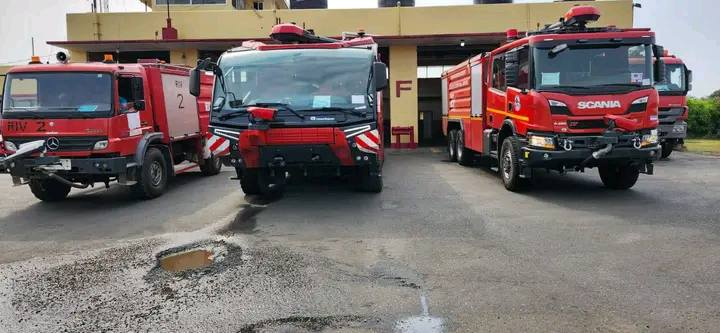
The Liberia Airport Authority (LAA) will tomorrow, Wednesday, April 8, 2026, commission a state-of-the-art fire engine and heavy-duty maintenance tractors at Roberts International Airport (RIA), marking a significant step toward achieving Category 9 certification.
In a statement Tuesday, the LAA confirmed that the arrival of the high-capacity fire engine fulfills a mandatory requirement for RIA to qualify for the upgraded category. Category 9 status is critical for the airport’s ability to accommodate larger aircraft and expand international flight operations.
Beyond firefighting, the authority disclosed that two new tractors have been procured to address persistent safety challenges, including wildlife hazards and vegetation overgrowth. These issues have historically affected visibility and runway safety, raising concerns among pilots and regulators. The new equipment is expected to enhance operational efficiency and reduce risks associated with runway incursions.
The LAA expressed appreciation to the Government of Liberia, under President Joseph Boakai, and its international partners for their continued support in strengthening the nation’s aviation infrastructure. “This investment demonstrates our collective commitment to safety and modernization,” the release noted, emphasizing that aviation growth is central to Liberia’s economic development strategy.
Industry analysts view the commissioning as a pivotal moment for Liberia’s aviation sector, which has long struggled with outdated equipment and regulatory gaps. Achieving Category 9 status would not only improve safety standards but also position RIA as a competitive hub in West Africa, capable of attracting new airlines and boosting tourism and trade.
Local communities and frequent travelers welcomed the announcement, citing the potential for increased connectivity and improved passenger confidence. “We want to see RIA meet international standards,” said traveler Emmanuel Kollie. “This is a step in the right direction.”
The commissioning ceremony is expected to draw government officials, aviation stakeholders, and international partners. With the new equipment in place, RIA moves closer to closing long-standing safety gaps and aligning with global aviation benchmarks.

