

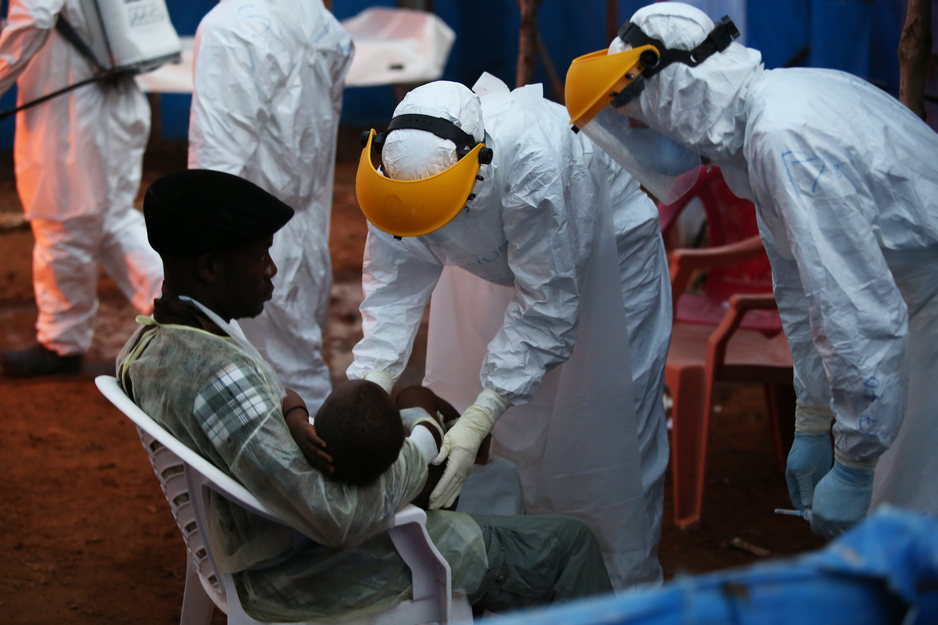
A rare strain of Ebola has prompted the World Health Organization to declare a public health emergency of international concern.
Most of the cases have occurred in the Democratic Republic of Congo, with at least 131 fatalities associated with the outbreak. There have been 516 suspected cases and 33 confirmed cases in Congo, according to a daily bulletin published by health authorities, and two confirmed cases in neighbouring Uganda.
The head of the World Health Organization expressed deep concern on Tuesday at the speed and scale of the Ebola outbreak, as the number of cases rises.
The virus can infect other animals before being transmitted to humans.
Transmission to humans can occur through close contact with the blood, secretions, organs or other bodily fluids of infected animals.
Human-to-human transmission can occur by direct contact or surfaces contaminated with the blood or bodily fluids of someone who is sick or has died from Ebola disease.
The current Ebola outbreak is due to a rare strain of the virus known as Bundibugyo, named after Uganda’s Bundibugyo province, where it was first identified during an outbreak in 2007-2008. A second Bundibugyo outbreak occurred in 2012 in the DRC.
Bundibugyo is one of the four species of ebolavirus genus that cause life-threatening illness in humans. All Ebola viruses are transmitted through direct contact with the bodily fluids of infected animals or humans or objects contaminated with such fluids.
People infected by the disease typically experience “dry” symptoms early in the course of illness.
After four to five days, patients may show “wet” symptoms as they become sicker, including Severe headache, fever, unexplained internal or
external bleeding, Sore throat, Aches and pains in the
muscles, and joints Loss of appetite, Symptoms of impaired kidney and liver functions, Weakness and fatigue
Vomiting, nausea, abdominal painor diarrhea.
On average, people who’ve been infected with Ebola begin to show symptoms 8 to 10 days after exposure.
Bundibugyo kills 30% to 40% of infected people, making it less lethal than the more common Zaire strain, which causes death in up to 90%, according to a global study, published in 2024.
Body fluid transmission is a particular risk for hospital workers. A U.S. doctor working in the DRC has been infected in the current outbreak.
According to the World Health Organization, ebolaviruses initially cause flu-like symptoms including fever, fatigue, malaise, muscle pain, headache and sore throat that can start suddenly, followed by vomiting and diarrhoea and eventually by internal and external bleeding and multi-organ failure.
There are no approved vaccines or drugs for Bundibugyo ebolavirus.
For now, response efforts will rely on public health measures such as rapid case detection, isolation, contact tracing, infection prevention and control, safe burials, and community engagement, said Dr. Daniela Manno of the London School of Hygiene & Tropical Medicine in a statement.
“These measures were critical in eventually controlling the 2014–2016 West Africa Ebola epidemic, the largest Ebola outbreak ever recorded, and if implemented rapidly and effectively they can also help control this outbreak,” Manno said.
—–By Anurag Rao and Mariano Zafra/Reuters

