

By Henry Gboluma | Gbarpolu
The House Committee on Mines and Energy has ordered the temporary closure of BAO CHICO Mining Company after an oversight visit on April 18, 2026, revealed what lawmakers described as “serious violations” of the Mineral Development Agreement (MDA) signed with the Liberian Government in March 2022.
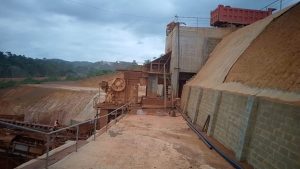
Led by Committee Chairman Jeremiah Garwo Sokan Sr., Representative of Grand Gedeh County District #1, the delegation inspected BAO CHICO’s two mining plants, extractive areas, and the prefab Chinese camp at the Gokala site. What they found was alarming: four years into operations, the company has employed 38 Chinese nationals but not a single Liberian worker.
Company officials admitted openly that no Liberians are on the payroll. Lawmakers condemned this as a blatant breach of the MDA, which requires the company to prioritize local employment. “This is unacceptable. Our people cannot be spectators while foreigners exploit their resources,” Chairman Sokan declared.
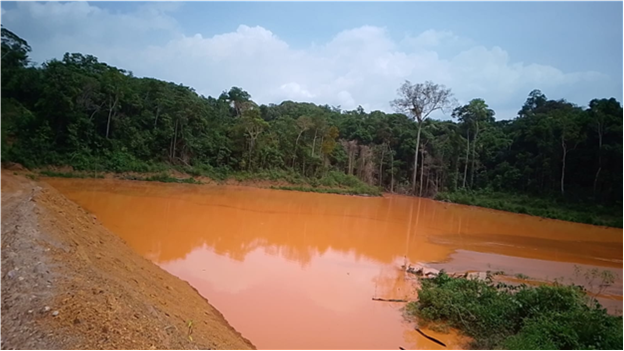
The oversight team also discovered that BAO CHICO has no safety department and no human resources office, leaving contractors to work without institutional safeguards. Pollution was evident around the Gokala plant, raising concerns about environmental degradation.
At the cleared relocation site, the company failed to produce a Relocation Action Plan when requested. The Committee instructed BAO CHICO to submit a detailed plan outlining the type of houses and facilities it intends to build for displaced communities.
Lawmakers further inquired about health facilities mandated under the MDA. Company staff could not provide any documentation, instead referring the Committee to the General Manager, who was reportedly aware of the visit but refused to attend. By the end of the tour, BAO CHICO had failed to produce a single requested report or document.
“The BAO CHICO Mining Company is in serious violation of the MDA they signed with the Liberian Government in March 2022,” Chairman Sokan stated. He announced the Committee’s decision to temporarily close the company until management meets lawmakers on Monday, April 20, 2026, at 10:00 AM. He warned that if BAO CHICO refuses to comply, the Committee will recommend that the Ministry of Lands and Mines revoke its mining license.
The demand for accountability is not limited to lawmakers. Citizens of Gungbaya have recently called on the government to enforce the MDA, citing broken promises on jobs, community development, and environmental protection. “We were promised opportunities and better living conditions, but all we see is neglect,” one community leader said.
Other lawmakers on the oversight team included Representatives Anthony Williams, Eugene Kollie, and Jacob Debee. The Ministry of Mines and Energy was represented by Bopolu District Mining Agent Paul Mulbah and Gbarpolu County Mines Officer Lawrence Gban.
The revelations paint a stark picture: four years of extraction, zero Liberian jobs, no safety office, no HR policy, and no compliance documents. For the House Committee on Mines and Energy, this is not mining but impunity.
The Committee’s intervention signals a growing determination by lawmakers to hold concessionaires accountable. It also highlights the broader national debate over resource governance and equitable benefit-sharing. Liberia’s mining sector has long been criticized for enriching foreign companies while leaving host communities impoverished. The BAO CHICO case may become a test of whether government institutions can enforce agreements and protect citizens’ rights.
As the April 20 deadline approaches, all eyes will be on BAO CHICO’s management. Will the company comply with lawmakers’ demands, or will it risk losing its license? For communities in Gbarpolu, the answer could determine whether promises of development finally move from paper to reality.

