

By Festus Poquie
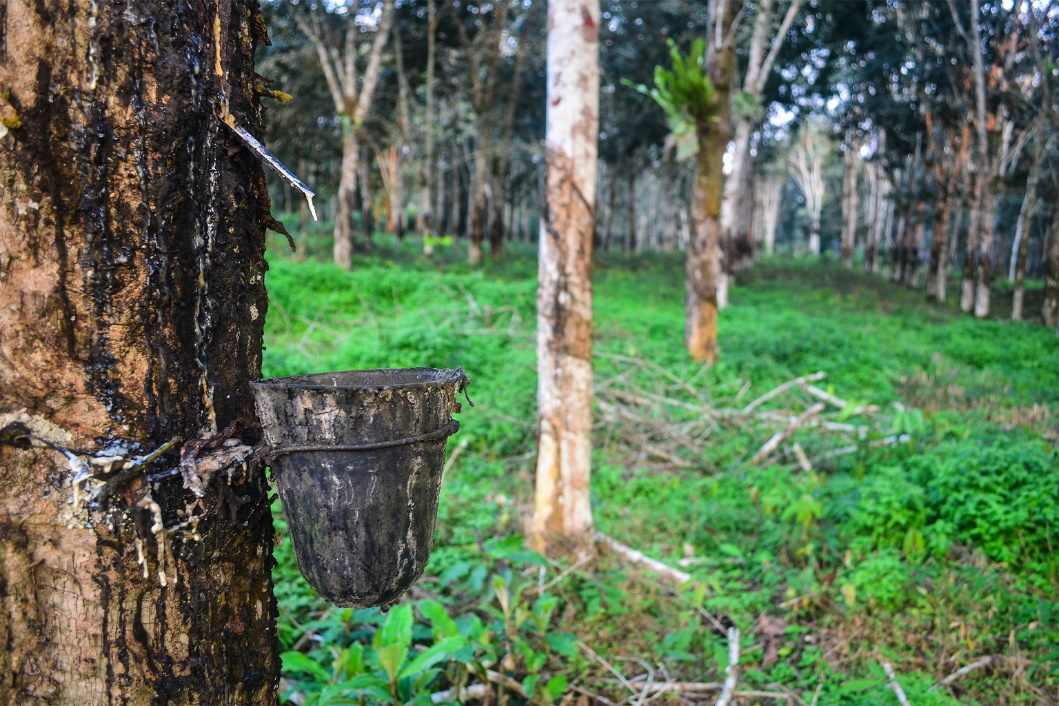
Liberia’s rubber production tumbled 20.4% in the first quarter of 2026 as smallholder output slumped, the Central Bank of Liberia said in its Financial and Economic Bulletin.
Rubber output fell to 18,645 metric tons in the three months to end-March from a revised 23,427 tons in the fourth quarter of 2025, the central bank said.
On a year-on-year basis rubber production was down 35.5%, it added, blaming the decline mainly on weaker harvests among smallholder farmers.
“The declines were partly offset by strong performance in the mining and panning subsector,” the bulletin said.
Iron ore production surged 30.7% to 6.7 million metric tons in the quarter from 5.1 million tons at end-December 2025, driven by the installation of additional production facilities and sustained demand in Asian markets.
Iron ore was up about 300% year-on-year. Diamond output rose 228.3% to 9,322 carats, the bulletin said, citing improved regulatory measures and strengthened border controls. Gold output increased 3.5% to 112,410 ounces, helped by higher artisanal activity and favorable global prices.
Other agricultural indicators were mixed. Cocoa production plunged 56.9% to 4,175 tons, and crude palm oil fell 51.4% to 7,353 tons — both largely reflecting seasonal dry conditions and pressures on smallholders. Fisheries expanded 30. % to 11,885 tons, while sawn timber rose on a quarterly basis but remained down year on year.
The central bank maintained a positive near-term outlook for the economy, forecasting growth of 5.1% in 2026 and a slight acceleration to 5.4% in 2027, driven largely by mining sector gains. But the data highlight vulnerabilities in agriculture: natural rubber output slipped 2.3% in 2025 to 73,769 tons, despite a 14.34% increase in supply since 2022.
The Joseph Boakai administration has targeted the sector under its 2024 2030 National Agriculture Development Plan, aiming to develop 20,000 hectares of new smallholder rubber plantations and rehabilitate 10,000 hectares of existing holdings to shore up production.
Natural rubber remains Liberia’s leading agricultural export, generating nearly $115 million in 2025, according to the central bank.

